Hire UGC Creator: The SaaS Playbook From First Brief to a Repeatable Content Partnership
Ready to hire a UGC creator? Turn a SaaS use case into a clear commission, prepare product access, review the first video and build a repeatable partnership without vague briefs or unsupported promises.
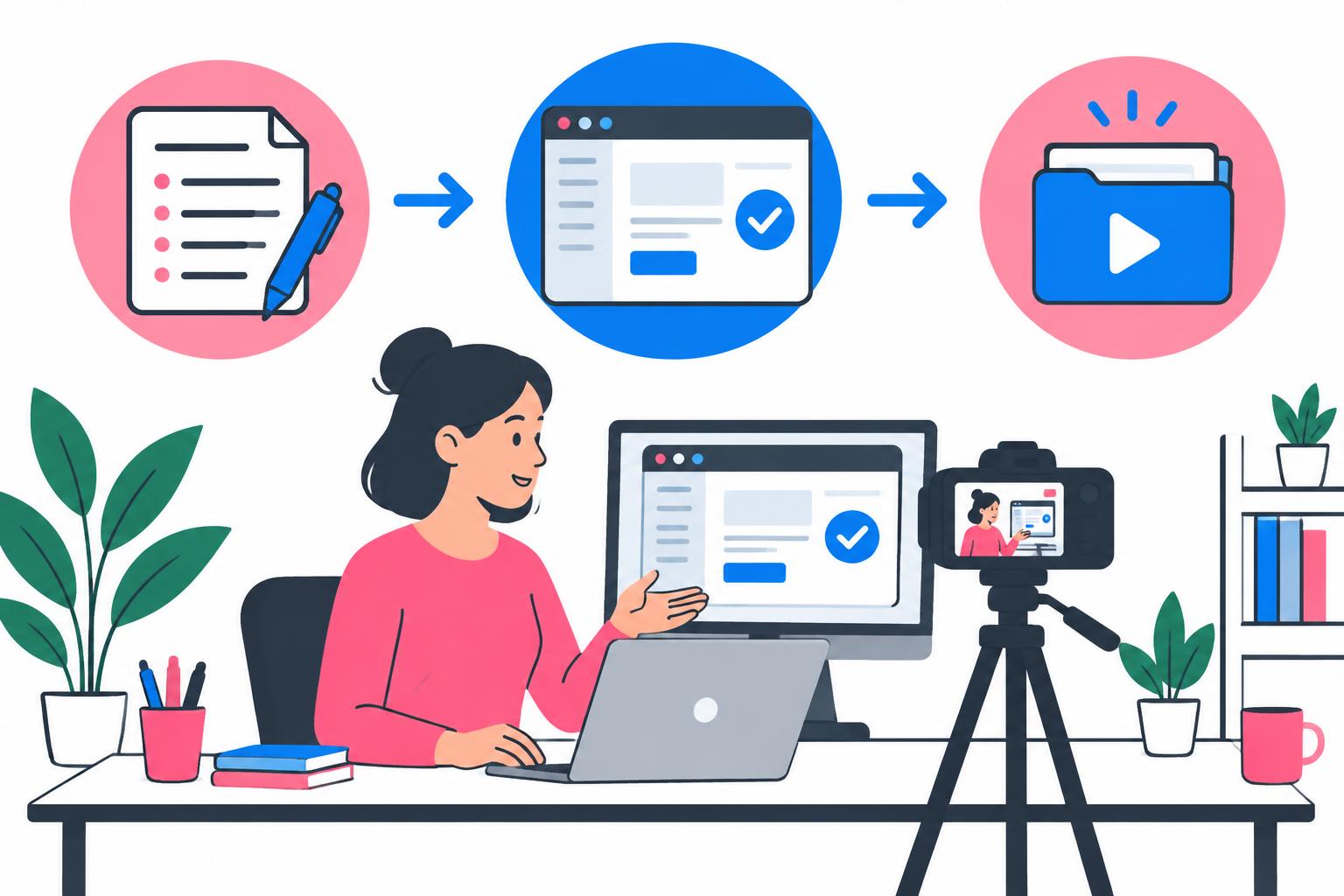
You have decided to hire a UGC creator. Now comes the part that determines whether the purchase becomes useful content or another file sitting in a shared folder: turning the decision into a commission the creator can actually deliver.
This guide focuses on starting and operating the engagement. If you are still comparing candidates, the UGC creator for hire guide covers selection, interviews and quote evaluation. If you need discovery channels, use how to find UGC creators. Here, we move from “we should hire someone” to a concrete production and learning loop.
When You Hire a UGC Creator, What Are You Actually Buying?
In commercial briefs, UGC often refers to commissioned creator-style content rather than spontaneous customer content. A human presenter can demonstrate your software in an approachable way. That does not make them a long-term customer, and it does not give permission to script a fictional testimonial.
| Arrangement | Primary purchase | Do not assume |
|---|---|---|
| Production commission | Files for agreed brand channels and uses | The creator will publish them |
| Audience collaboration | A defined placement on the creator’s channel | You own unrestricted advertising rights |
| Real customer story | An actual user’s supported experience | A paid presenter can impersonate the customer |
| Ongoing content partnership | A repeatable scoped production cadence | Unlimited revisions, access or deliverables |
The distinction changes the brief, contract and measurement. Production needs a usable asset and suitable rights. Collaboration also needs audience fit, publication terms and tracking. A genuine testimonial needs a real participant whose experience and claims can be supported. Do not combine all three into a vague request for “authentic content.”
Are You Ready to Commission—or Is the Product Story Still Missing?
You do not need a perfect messaging document before hiring. You do need enough product truth to make a specific demonstration possible. If nobody can identify the first useful action a buyer should see, the creator will have to guess. That guess becomes your script, then your paid production, then your landing-page mismatch.
- A defined viewer. Name a role and the situation that makes them care.
- A repeatable workflow. The product can reliably perform the action you want filmed.
- An approved promise. Features, prerequisites and limitations are known.
- A real next step. The destination lets the viewer pursue the demonstrated job.
- An available reviewer. Someone can answer questions and approve accuracy.
If the feature is unstable, commission a different supported workflow or postpone that demonstration. If you only have positioning ideas, a creative scoping conversation may be appropriate before recording. Do not ask the creator to disguise a product limitation or invent an output because the launch date is close.
A Commissioning Message You Can Adapt
This message supplies the ingredients of a quote without demanding an unpaid script. Include your constraints and ask the creator what needs clarifying. Do not hide the need for screen recording, extra hooks or paid-media rights until after a price is agreed.
If you are buying publication, add the channel, proposed placement and audience you want to reach. Ask for relevant aggregate audience context, not identifiable follower data. Production skill and audience relevance are separate decisions; the SaaS influencer marketing guide explores the second.
Build a Deliverable Map Instead of Counting “Videos”
A video can mean one concept, one finished edit, one aspect ratio or one opening variant. Those are different units of work. Give every deliverable a name and describe what changes between versions. This prevents a quote for one recording from silently turning into a request for a full creative-testing library.
| Asset | What it contains | Why it exists |
|---|---|---|
| Main demo | One scheduling conflict, one resolution and one CTA | The complete proof-led concept |
| Alternative opening | Different first line; agreed shared body | Test problem recognition |
| Captioned export | Reviewed captions matching the narration | Support the intended viewing context |
| Clean export if scoped | Same edit without embedded captions | Enable authorised brand adaptations |
| Additional ratio if scoped | Reframed output with legible software | Serve a different placement |
Name who writes, records and edits each component. For software content, assign screen capture explicitly. If the creator records it, prepare access and a repeatable demo. If your team supplies it, agree technical quality, framing and the timing needed for the spoken explanation.
For complex products, a presenter supported by a creative team can combine human explanation with specialised editing and screen work. That is the model I use. It is not the same as hiring a traditional agency to run every part of your marketing, and the scope should not pretend otherwise.
The Product Handoff: Supply Proof, Not a Folder of Features
Provide a short walkthrough of the exact task, a starting state, the action to record and the output to show. Include the reason the viewer should care. A creator can interpret and simplify the explanation, but they should not have to discover a complicated workflow by clicking through an unfamiliar live account.
| Input | What it should answer |
|---|---|
| Buyer context | Who encounters the problem, and when? |
| Demo sequence | How does the workflow start, proceed and finish? |
| Claims sheet | What is supported, conditional or off limits? |
| Demo account | Which permitted account and sample data should appear? |
| Brand assets | Which approved logo and product visuals may be used? |
| Destination | Where does the viewer go after the video? |
| Reviewer | Who can resolve questions without conflicting instructions? |
The Atlassian/Loom product-demo guide is a useful reference for audience-focused demo planning. In a commission, the same discipline keeps the recording focused on the buyer’s job rather than an exhaustive feature tour.
Give Access Safely—and Test It Before Filming
Use a dedicated demo workspace with the least access needed. Replace real contacts, payments, conversations and documents with synthetic examples. Check notifications, browser tabs, profile details, API keys and logs. Screen recording can expose information outside the main interface, so review the actual capture environment.
Repeat the workflow from its starting state before handing it over. Confirm integrations, credits, device requirements and any permitted location restrictions. Tell the creator whom to contact if access fails. Do not ask them to bypass security controls or use your administrator credentials as a workaround.
After production, revoke temporary access and follow the agreed handling process for project files. If a product update makes the recorded workflow obsolete, record that limitation and plan a new asset or agreed revision rather than publishing misleading proof.
Approve Product Truth Before the Expensive Part
Review the concept and must-show proof before recording. The creator needs freedom to speak naturally, but the product reviewer should confirm the claims, feature names, prerequisites and output. Approving those early reduces reshoots caused by factual changes that were knowable before filming.
| Category | Example | Practical response |
|---|---|---|
| Factual correction | The script names a feature the product does not have | Correct before capture; verify the demonstration |
| Clarity improvement | The viewer cannot tell what changed on screen | Adjust framing or explanation within the agreed work |
| New direction | The brand changes the buyer and workflow after approval | Reassess scope and any additional work |
The FTC’s influencer disclosure guide explains material connections for U.S.-directed endorsements. Review the relevant rules for your placement and market. Honest disclosure and supported claims are separate checks; neither substitutes for the other.
A creator can say they tested a feature if that is true. They should not say it transformed their business when that experience never happened. If the concept needs a genuine customer result, involve that customer and substantiate the claim rather than asking a presenter to borrow the story.
Make Usage a Decision, Not an Assumption After Payment
Settle where, how and for how long the assets may be used. Final exports, raw footage, translations, stills, voice and likeness are not necessarily the same licence. Creator-account advertising may also need platform permissions beyond permission to use a file.
For example, TikTok’s Spark Ads documentation explains authorisation for promoting creator posts. Discuss that separately when it is part of the campaign. Do not ask for a creator’s account password or assume a content purchase grants control of their profile.
The U.S. Copyright Office’s work-made-for-hire guidance explains why commissioned work does not automatically meet that category merely because it was paid for. A licence and ownership assignment are different arrangements. Use suitable legal advice for your jurisdiction and record the actual agreement.
Accept the First Video Against the Brief
At delivery, watch on the intended device and in the intended context. Can the viewer read the essential software state? Is the audio clear? Do the captions match? Does the spoken claim match the visible action? Are the agreed versions present and the next step correct?
- 1
Commission
Buyer, proof, scope, rights and owners
- 2
Prepare
Demo access, approved truth and review window
- 3
Accept
Accurate usable files matching the brief
- 4
Learn
Campaign evidence informs the next assignment
Do not make payment or acceptance depend on a conversion result unless a specific performance arrangement was knowingly agreed. A creator supplying a file does not control your targeting, landing page, price or onboarding. Equally, do not accept unreadable software or unsupported claims simply because the edit looks polished.
A First-Purchase Plan That Teaches You Something
Choose one representative use case rather than the easiest generic introduction. A hypothetical meeting-notes SaaS pilot might show a permitted sample recording becoming an actionable summary. The brief should make the input, output and limitation clear, with the CTA leading to the same supported workflow.
Keep the first hypothesis narrow: does this explanation help the intended buyer recognise the problem and pursue the next step? The output can satisfy production acceptance before the campaign has enough evidence to assess that hypothesis. Set the measurement plan in advance rather than searching for flattering numbers after publication.
| Layer | Question | Useful evidence |
|---|---|---|
| Delivery | Did the creator deliver what was agreed? | Acceptance and file review |
| Understanding | Is the buyer’s question answered clearly? | Relevant viewer feedback and proof visibility |
| Intent | Did suitable viewers pursue the next step? | Tagged visits and qualified requests |
| Activation | Did users reach the demonstrated first value? | Product-specific activation events |
| Commercial outcome | Did the acquired cohort become valuable customers? | Paid and retained outcomes where available |
Keep denominators separate. Views, visitors, referrals, leads and customers are not interchangeable. A small result can justify another test without proving causation or establishing a universal conversion benchmark. Do not label every registration a customer to make the hire look successful.
When to Turn One Hire Into an Ongoing Partnership
Expand when the first project demonstrates relevant product understanding, reliable delivery and a useful learning process. Campaign results matter too, but interpret them alongside distribution conditions. A promising first video is a reason for a better next brief—not a guarantee that a large retainer will pay for itself.
- Keep a product truth document. Record supported claims, interface changes and approved terminology.
- Build a buyer-question queue. Prioritise questions from authorised customer research rather than random content ideas.
- Name each asset. Track its workflow, audience, placement, licence and status.
- Consolidate review. One owner resolves competing product and brand feedback.
- Plan renewals and updates. Track rights expiry and content affected by feature changes.
Avoid vague commitments such as “ongoing content support” without deliverables and boundaries. Agree the cadence, queue ownership, approval process and handling of new requests. A good partnership reduces repeated briefing, not the need for accurate scope.
Budget for Usable Work, Not the Cheapest Isolated Clip
Compare creative development, presenter footage, screen capture, editing, versions, rights and publication. A low recording fee can still require substantial internal editing. A larger bundle can be reasonable if it includes the work you need and the boundaries are explicit.
My site lists a $250 single-video offer; broader content and audience collaborations require a scope discussion. That is a provider-specific offer, not an industry average or a promise that every commission fits that fee. Check the current packages and SaaS UGC pricing before comparing unrelated quotes.
Hire UGC Creator: Commissioning Readiness Checklist
First commission readiness
8 items still to confirm.
Hire UGC Creator: Frequently Asked Questions
How do I hire a UGC creator for my SaaS?
Choose a buyer problem and visible workflow, shortlist relevant work, request a scoped quote and agree rights. Prepare a safe demo environment, review product truth and begin with one representative paid assignment.
How is this different from finding a UGC creator for hire?
The companion hiring guide helps compare candidates. This playbook focuses on running the commission: product handoff, deliverable mapping, access, review, acceptance and a repeatable ongoing partnership.
Do I need to hire someone with a large following?
Not if you are purchasing files for your own channels. Audience size and relevance become a separate consideration when you purchase publication to the creator’s followers.
Should I hire a UGC creator near me?
Only if local capture solves a real requirement. For software-first content, product understanding, permitted access and clear communication may matter more than distance. See UGC creator near me.
Can a UGC creator guarantee conversions?
A production commission can define deliverables and acceptance, not guarantee downstream conversion. Results also depend on the audience, offer, placement and product experience. Agree any separate performance arrangement explicitly rather than assuming one.
Share
Article footer · AI discovery
Want to explore this topic further?
Ask questions about this article or use it as a starting point for deeper research.
Want content that makes your SaaS product click?
Email promotions@fuelyourdigital.com or explore my content packages.