UGC for Health & Fitness Apps: Formats, Hooks & Claim Rules (2026)
Creator video formats for workout, nutrition, meditation and period-tracking apps—with hooks, honest before/after rules, health-claim boundaries and a production checklist.
Search for UGC advice for health and fitness and you will find directories, agency lists and guides written for supplement brands. Almost none of it is written for app founders—and apps are a different job. A supplement ad sells a physical product with a before/after photo. A fitness app ad has to sell a habit: logging, streaks, plans, reminders. The creative that works shows the app doing its job, not a body transformation.
This guide is written for app teams: the formats that demonstrate a workout, nutrition, meditation or tracking app; the hooks that fit each type; and the health-claim rules that keep your ads honest. It sits alongside our UGC for fintech apps and UGC for edtech apps guides—same production discipline, different claim risks.
Apps Are Not Supplements: The Creative Difference
Supplement UGC leans on transformation imagery, which is exactly where health advertising gets into trouble. App UGC has a cleaner path: the product itself is the proof. A screen recording of a logged workout, a completed week, a meditation streak or a meal plan is verifiable evidence that needs no body in the frame at all. Lead with the product doing something real, and let the human provide the story around it.
This also widens your creator pool. You do not need fitness models; you need believable people who will genuinely use the app for two to four weeks and document it. A slightly out-of-breath creator finishing a real workout in your app beats a polished athlete reading a script.
Five Formats That Work for Health and Fitness Apps
1. Workout With Face Cam
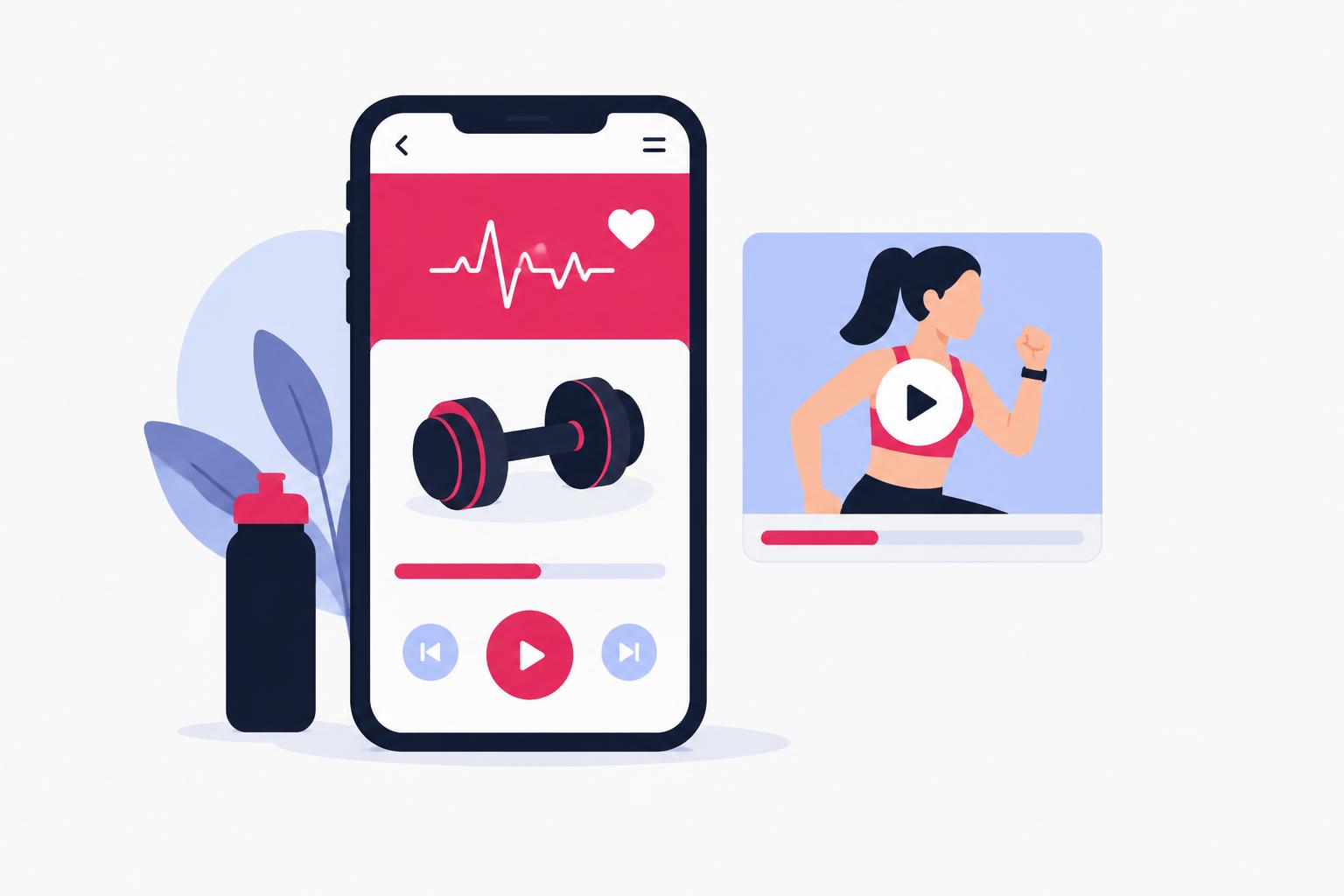
The creator does a real workout from the app while the app screen runs in a corner of the frame. The viewer sees the exercise, the timer, the cueing—actual product evidence—and the creator's genuine reaction. Sample hook: ‘I let this app plan my workout for a week. Day one was humbling.’ Scene list: hook to camera, app choosing the session, two or three real exercise clips with the screen visible, honest verdict, where to download.
2. ‘30 Days With This App’ Results
The highest-effort, highest-trust format: a creator commits to using the app daily for a month and documents it. The rules that keep it honest: the timeline is real, the creator actually used it, and the results described are theirs—framed as one person's experience, not a promised outcome. ‘I worked out 22 times in 30 days, the most consistent month I've had’ is a strong, defensible claim. ‘I lost 15 pounds’ invites substantiation problems you do not want.
3. Habit Streak and Progress-Screen Reveal
The lowest-production format: screen recording plus voiceover. ‘This is what 60 days of ten-minute workouts looks like.’ The app supplies the evidence; the creator supplies the meaning. Works for workout, meditation, hydration and habit-tracking apps alike. Add one honest limitation—‘I still skip leg day’—and trust goes up, not down.
4. Coach or Trainer Point of View
A qualified trainer, dietitian or therapist reviewing the app's method carries weight a lifestyle creator cannot. As with any expert content: the expert must genuinely evaluate the product, the payment must be disclosed, and the review must be allowed to include criticism. ‘A physiotherapist tried this posture app’ only works if the physiotherapist actually tried it.
5. Screen-Recorded Logging
For nutrition and tracking apps, the logging flow is the product. A screen recording of logging a real meal—searching the food, scanning a barcode, seeing the totals—answers the exact question a potential user has: is this going to be annoying? Sample hook: ‘I logged everything I ate for a week. The barcode scanner is the reason I lasted.’
Hooks by App Type
| App type | Hook | Proof shot |
|---|---|---|
| Workout / training | I let this app plan my workouts for a week. | App-generated session, real exercise clips |
| Nutrition / calorie tracking | I logged everything I ate for 7 days. | Barcode scan, daily totals screen |
| Meditation / sleep | Ten minutes a day for a month—here's my streak. | Streak screen, session history |
| Period / cycle tracking | This app predicted my cycle better than I could. | Calendar view (synthetic demo data) |
| Habit / step tracking | I hit my step goal 26 days out of 30. | Monthly grid or chart |
For fifty more paid-ad hooks, see the SaaS UGC hooks swipe file, and for full script structure, the six-beat UGC script guide.
Health Claim Rules: Where Fitness Ads Go Wrong
Health claims are regulated advertising territory. In the US, the FTC requires that health-related claims be truthful, not misleading, and substantiated—its Health Products Compliance Guidance is the reference to read with your legal reviewer. The practical rules for app UGC:
- No medical claims. Your meditation app does not treat anxiety; your period tracker does not diagnose anything. Creators must not imply treatment, cure, diagnosis or prevention of any condition. ‘It helps me wind down’ is experience; ‘it fixed my anxiety’ is a medical claim.
- Before/after results must be real and typical-framed. Genuine footage only, real timelines, and no implication that one person's result is what every user should expect. Weight-loss and body-change claims carry the highest substantiation burden—avoid them unless you have the evidence and legal sign-off.
- Disclose the relationship. Paid creators must disclose the material connection clearly, per the FTC's endorsement guidance. A free subscription counts as a material connection too.
- Sensitive data stays out of frame. Cycle tracking, weight, heart rate and mental-health logs are sensitive. Use demo accounts with synthetic data—never a real user's health data, including the creator's own identifiable records.
| Risky draft | Why it is risky | Safer direction |
|---|---|---|
| This app will get you shredded | Guaranteed physical outcome | Show the plan and one real, bounded experience |
| It cured my insomnia | Medical treatment claim | I fall asleep faster since I started the sleep stories |
| Lose 10 pounds in a month | Specific weight-loss claim needing substantiation | I logged every meal for 30 days—here's what I learned |
| Doctors recommend it | Unverified professional endorsement | Show one real, disclosed expert review |
| It knows your body better than you do | Implied diagnostic capability | It spots patterns in your cycle data |
Production Notes Specific to Health and Fitness
- Real effort, real sweat. Audiences detect performed workouts instantly. Brief creators to actually do the session, and keep the imperfect moments—they are the proof.
- Film the app, not just the athlete. Every format above includes a screen element. Without it, you have made a fitness video, not an app ad.
- Gym and home versions. If the app supports both, brief both. The viewer's first question is ‘will this work in my living room?’
- Music and gym audio. Gym background music can trigger content-ID claims on paid placements. Record clean audio and license music properly.
Rates follow standard SaaS UGC logic—scope, versions, usage rights and whitelisting drive price, not the fitness niche. See the SaaS UGC pricing guide for ranges, and the SaaS UGC creator guide for a copyable brief template. Add two health-specific lines to every brief: the approved-claims list, and the rule that no real health data appears on camera.
Health & fitness creator production readiness
6 items still to confirm.
UGC for Health & Fitness Apps FAQ
Can we use before/after body transformations in app ads?
Only with genuine footage, real timelines, substantiation and legal review—and even then, frame results as one person's experience. For most app campaigns, progress-screen and streak evidence is both safer and more product-relevant than body imagery.
Can a creator say the app helped their anxiety or sleep?
They can describe their own experience in personal terms (‘it helps me wind down’). They cannot claim the app treats, cures or diagnoses a condition. The line is between personal experience and medical efficacy—keep scripts on the experience side and have a reviewer check them.
Do we need fitness influencers, or will everyday creators work?
Everyday creators usually work better for app UGC. The product is the proof, so believability matters more than physique. A creator genuinely completing a 30-day challenge is more persuasive—and cheaper—than a fitness model reading lines.
What does health and fitness app UGC cost?
The same drivers as any SaaS UGC: production scope, number of versions, usage rights and whitelisting. The SaaS UGC pricing breakdown covers ranges and the questions to ask before comparing quotes.
Share
Article footer · AI discovery
Want to explore this topic further?
Ask questions about this article or use it as a starting point for deeper research.
Want content that makes your SaaS product click?
Email promotions@fuelyourdigital.com or explore my content packages.