UGC Whitelisting for SaaS Ads: Setup, Pricing and Contract Clauses (2026)
Whitelisting explained for software companies: when it is worth it, Meta Partnership Ads and TikTok Spark Ads setup, what creators charge for 30/60/90 days, and the contract clauses both sides need.
Whitelisting—running paid ads through a creator's social account instead of your brand's—is one of the best-documented tactics in ecommerce and one of the least explained in SaaS. The guides that rank are written for clothing brands or for creators themselves. This one is for software companies, written from the creator side of the table: I grant whitelisting access on my own content, so I know exactly what both sides should agree before anyone touches an ads manager.
You will learn when whitelisting is worth the premium for a SaaS, how Meta Partnership Ads and TikTok Spark Ads actually get set up, what creators charge for 30/60/90-day access, and the contract clauses that prevent the disputes you see creators complaining about on Reddit.
What Whitelisting Actually Is
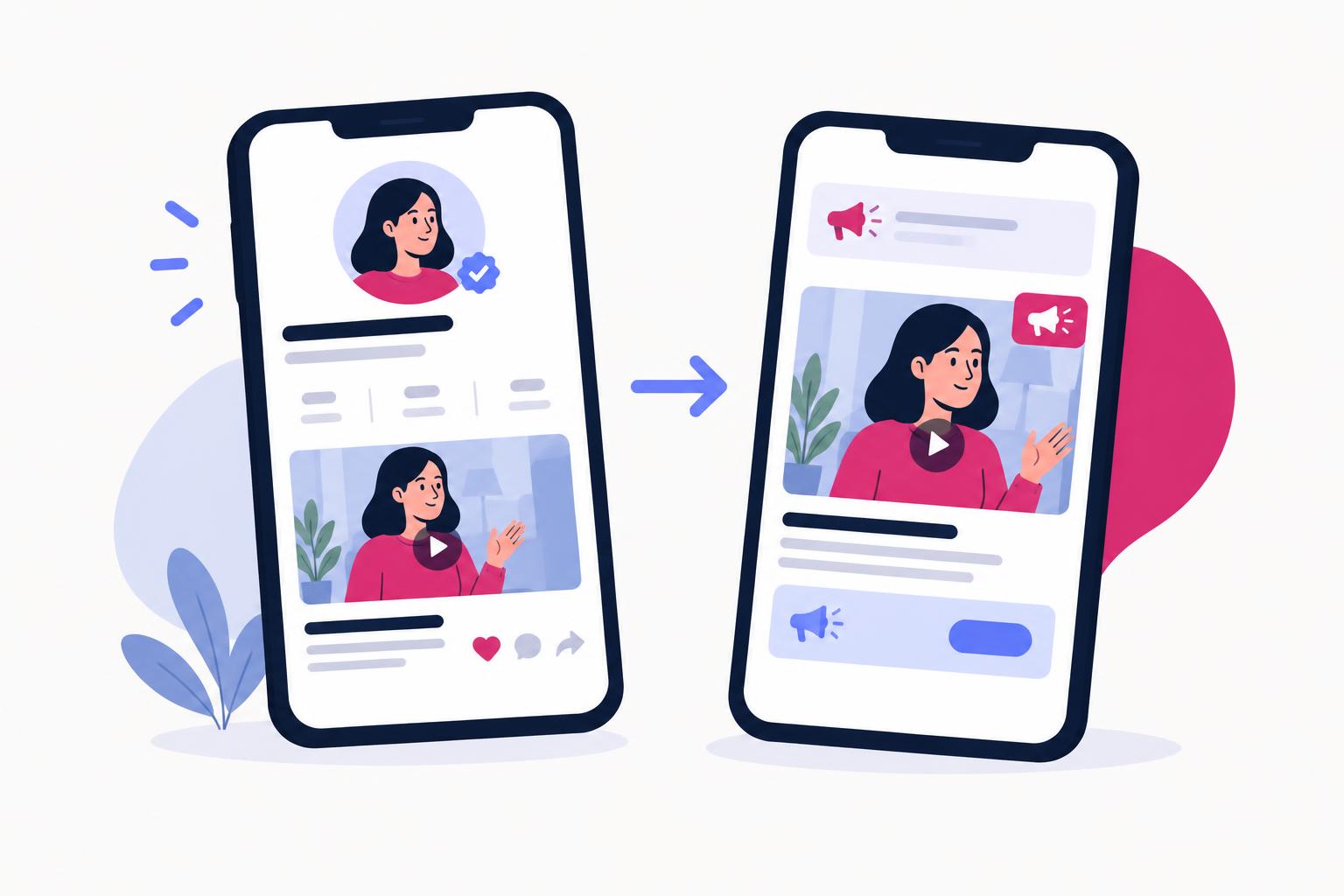
Whitelisting (also called creator licensing or allowlisting) means the creator grants your brand permission to run paid ads from the creator's own social identity. The ad appears in feeds as coming from the creator—@creatorname, with a ‘Sponsored’ label—not from your brand account. The content is usually the UGC video you already commissioned; whitelisting changes whose name is on the ad, not the creative itself.
Two platform-native versions dominate: Meta Partnership Ads (the successor to branded content ads, run through Meta Ads Manager with the creator's permission) and TikTok Spark Ads (the creator generates an authorisation code for a specific post, which you enter in TikTok Ads Manager). Both keep the post on the creator's profile and let you put budget behind it.
| Model | Whose identity | Who controls targeting & budget | Typical use |
|---|---|---|---|
| Brand-account ad | Your brand | You | Standard paid social with creator-made creative |
| Whitelisting / Partnership / Spark | The creator | You (with creator permission) | Cold audiences where creator credibility matters |
| Creator's own boosted post | The creator | The creator | Awareness plays where the creator owns the relationship |
When Whitelisting Is Worth It for a SaaS
- Cold audiences that don't know your brand. An ad from a person earns a scroll-stop that an ad from an unknown software logo does not. For top-of-funnel SaaS campaigns, the creator's face and handle do the trust-building your brand account cannot.
- The creator has credibility in your space. A known productivity creator running an ad for your productivity app borrows real authority. A random creator's handle adds less—whitelisting amplifies existing credibility, it does not manufacture it.
- Social proof compounds on the post. Spark Ads accumulate likes and comments on the creator's organic post. A SaaS ad sitting on a post with 400 genuine comments converts differently from the same video on a dark post.
- You are testing founder-led or expert angles. If your creator is positioned as a practitioner (‘how I manage my freelance clients’), the ad only makes sense from their identity.
When it is not worth it: retargeting warm audiences who already know you (brand-account ads are fine and cheaper), creative you plan to edit heavily (whitelisting locks you to the creator's post), or creators with no audience credibility in your niche (you would be paying a premium for a name that carries no weight).
Setup: Meta Partnership Ads, Step by Step
- The creator posts the video organically (or approves it as a partnership ad) and tags your brand using the paid partnership label, or grants partnership ad permissions in their professional dashboard.
- In Meta Ads Manager, you create a campaign and, at the ad level, choose to run an existing post as a partnership ad.
- You select the creator's account and the specific post—Meta shows only posts the creator has permitted.
- Set your targeting, budget and schedule as normal. The ad runs with the creator's identity and a ‘Paid partnership’ or ‘Sponsored’ label.
- Both sides can see performance: you in Ads Manager, the creator in their own insights.
Meta's partnership ads documentation covers the current permission flow—check it at campaign time, because Meta renames and reshuffles these settings regularly. The label is not optional: the paid partnership disclosure is built into the format, which also keeps you aligned with FTC disclosure expectations.
Setup: TikTok Spark Ads, Step by Step
- The creator posts the video on their TikTok account with ad authorisation enabled in the post's settings.
- The creator generates an authorisation code for that post and chooses how long the code stays valid (7, 30, 60 or 365 days).
- They send you the code. In TikTok Ads Manager, you add it under the Spark Ads post library.
- You build the campaign, select the authorised post, and set targeting and budget.
- When the code expires, the ad stops. Renewal means a new code—which is your natural renegotiation point.
TikTok's Spark Ads help documentation has the current flow. The expiring code is a feature, not a bug: it gives the creator control and gives both sides a clean end date. Build your contract around it.
What Creators Charge for Whitelisting
Whitelisting is priced on top of the content production fee, because the creator is licensing their identity and audience trust, not just a video file. There is no universal rate card, but the structures you will encounter in real negotiations are consistent:
| Structure | How it works | When it makes sense |
|---|---|---|
| Duration-based fee | A fixed fee per 30/60/90 days of ad access, often 20–50% of the base production fee per 30 days | Most SaaS campaigns; predictable and easy to budget |
| Percentage of base fee | Whitelisting adds an agreed percentage (commonly 20–100%) depending on duration and creator reach | When the creator's audience is the main value |
| Spend-based percentage | A small percentage of ad spend | Rare for SaaS; more common in ecommerce with large budgets |
| Bundled package | Production + 90 days whitelisting + paid usage as one price | Simpler procurement; check what renewal costs |
Negotiate duration in 30-day increments and keep renewal prices agreed in advance. A creator who charges a modest fee for the first 30 days and an arbitrary number for month two is a budget risk; a contract that pre-agrees renewal rates is not. For the production-fee side of the budget, the SaaS UGC pricing guide covers rate ranges and the full rights table.
The Contract Clauses That Prevent Disputes
The top creator complaint about whitelisting—visible in every Reddit thread on the topic—is losing control of their identity: brands running ads longer than agreed, editing the content into something the creator would not say, or spending unlimited budget behind their face. Good contracts fix this for both sides:
- Duration and renewal. Exact start and end dates per platform, the renewal price, and what happens when a Spark code expires (ads stop; renewal requires a new code and written agreement).
- Spend limits. A cap on total or monthly ad spend behind the creator's identity. Creators reasonably worry about their face becoming ubiquitous; a cap protects them and forces you to budget honestly.
- Edit approval. What you may change (captions, aspect ratios, end cards) and what requires the creator's written approval (any change to their spoken words, claims or the order of statements).
- Content boundaries. The claims the creator approved. If your legal team later wants a stronger claim added via text overlay, that is a new approval, not an edit.
- Ending access. Either side can end the arrangement with defined notice; on termination, ads stop within an agreed window and the creator revokes platform permissions.
- Exclusivity. Whether the creator can work with competing products during the whitelisting period, and for how long after. Exclusivity is a separate fee line.
- What the creator keeps. The organic post stays on their profile and keeps its engagement; you are licensing ad access, not buying their account.
Measuring Whitelisted SaaS Ads
Judge whitelisted ads against the same video run from your brand account, not against a blank slate. The metrics that matter for software: thumb-stop and hold rates at the creative level, cost per qualified landing-page view, and—because SaaS cycles are long—assisted conversions and signup quality, not just last-click installs. Give a whitelisting test at least two to four weeks and a stable audience before calling it; the format's advantage compounds as social proof accumulates on the post.
Keep the creative testing discipline from the UGC script testing playbook: change one variable at a time. ‘Whitelisted versus brand account’ is already a variable—do not also change the hook in the same test.
Whitelisting readiness before you spend a dollar
6 items still to confirm.
UGC Whitelisting FAQ
Is whitelisting the same as boosting a post?
No. Boosting is the creator (or brand) putting simple budget behind a post with limited targeting. Whitelisting gives the brand full ads-manager control—custom audiences, placements, optimisation goals—while the ad keeps the creator's identity. Spark Ads and Partnership Ads are the platform-native whitelisting formats.
Who owns the post and its engagement?
The creator. The organic post lives on their profile and keeps its likes and comments. You are licensing the right to run ads through that identity for an agreed period—not buying the post, the handle or the audience.
What happens when a Spark Ads code expires?
The ads stop delivering. Renewing requires the creator to generate a new code, which is why contracts should pre-agree renewal pricing—otherwise the expiry date becomes an unplanned renegotiation.
Is whitelisting worth it for early-stage SaaS?
Usually only once you have a creative that already converts from your brand account. Whitelisting amplifies proven creative into cold audiences; it does not fix a weak hook. Start with brand-account UGC ads, find a winner, then license it.
Share
Article footer · AI discovery
Want to explore this topic further?
Ask questions about this article or use it as a starting point for deeper research.
Want content that makes your SaaS product click?
Email promotions@fuelyourdigital.com or explore my content packages.