Content Marketing for SaaS: The Execution Playbook for Small Teams
A hands-on playbook for doing content marketing for SaaS with a small team: finding buyer-intent topics, building a weekly production system, repurposing one piece into ten, and proving ROI.

Every SaaS founder knows they “should be doing content.” Very few have a system that ships useful content every week without draining the team.
This guide is the execution side. If you want the strategy — positioning, funnel mapping, and channel choices — start with my SaaS content marketing guide. Here we focus on how a team of one to three people actually researches, produces, repurposes, and measures content that brings in customers.
Why Content Marketing Works So Well for SaaS
- Buyers self-educate. Gartner's research on the B2B buying journey shows buyers spend only a small share of their time talking to vendors — the rest is independent research.
- Software needs explaining. A tutorial or demo does the job a sales rep would otherwise do on every call.
- It compounds. A ranking tutorial keeps bringing sign-ups for years; an ad stops when the budget does.
- It lowers CAC over time. Each new piece adds to a library that keeps working without extra spend.
Step 1: Find Buyer-Intent Topics
The biggest mistake is writing about what's interesting to you instead of what your buyers type into Google and YouTube. Sort ideas into four buckets:
| Bucket | Example query | Intent | Priority |
|---|---|---|---|
| Problem | how to track brand mentions in ChatGPT | Aware of problem | High |
| How-to / workflow | how to build a funnel in GoHighLevel | Ready to act | Highest |
| Comparison | tool A vs tool B | Evaluating | Highest |
| Industry / thought leadership | future of AI search | Browsing | Low |
Where to find topics
- Sales call recordings and support tickets — the exact words customers use.
- Google autocomplete and “People also ask.”
- YouTube search suggestions for your category.
- Reddit and niche communities where your ICP asks questions.
- Keyword tools like Semrush for volume and difficulty estimates.
I used exactly this approach in the SEOBuddy YouTube SEO case study: each video targeted one feature-level problem the ICP was already searching for.
Step 2: Choose the Right Format
| Format | Effort | Lifespan | Best use |
|---|---|---|---|
| YouTube tutorial | Medium | Years | How-to and workflow queries |
| Blog article | Medium | Years | Comparison, problem, and how-to queries |
| Short-form UGC | Low | Days–weeks | Awareness and message testing |
| Case study | Medium | Years | Decision stage, sales enablement |
| Email newsletter | Low | Days | Retention and nurture |
| Templates / free tools | High | Years | Lead capture, backlinks |
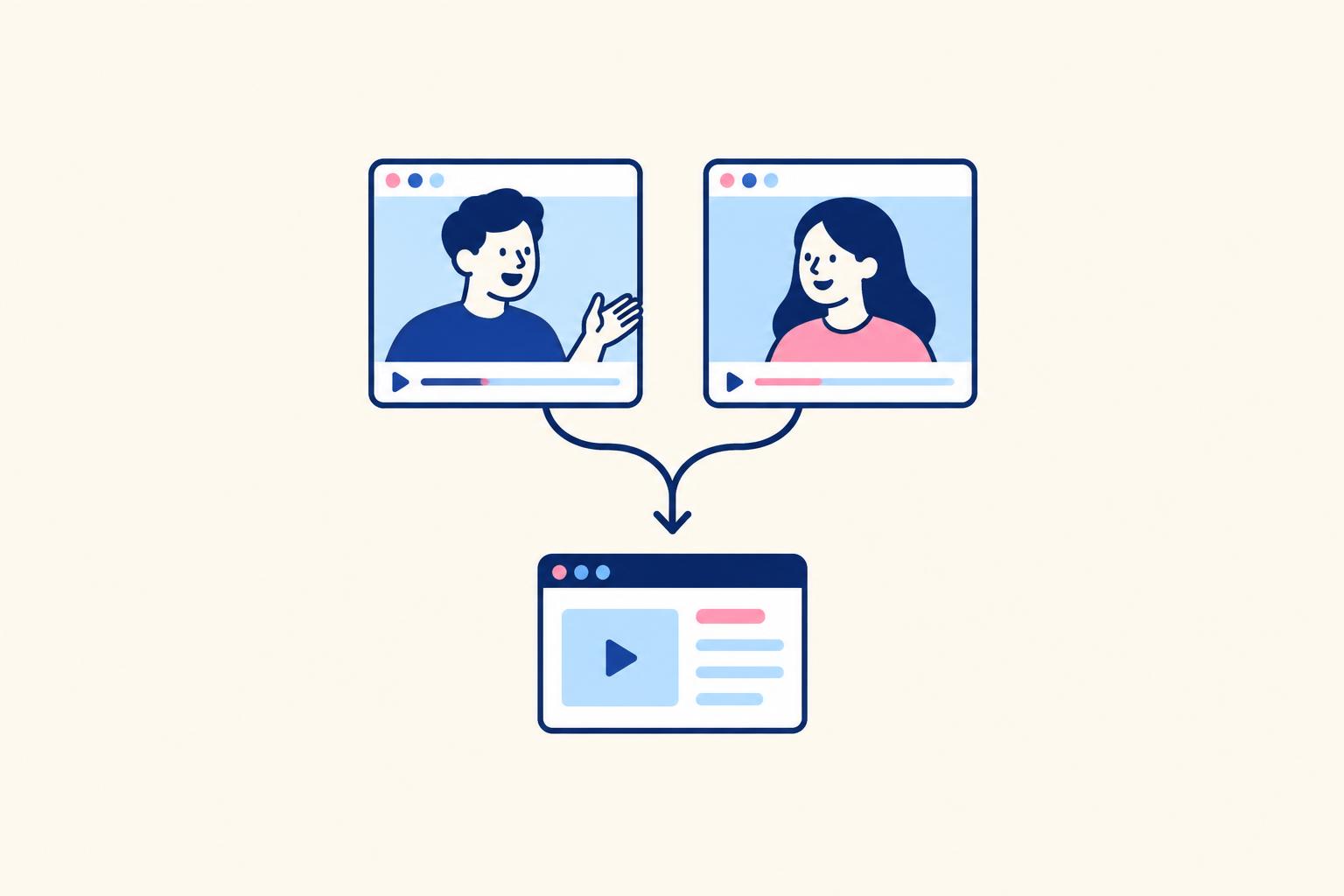
If you only pick one, pick the search tutorial. It works as a video, embeds in a blog post, and feeds short clips. See SaaS video production for how to make one.
Step 3: Build a Weekly Production System
| Day | Task | Output |
|---|---|---|
| Monday | Pick topic, outline, prepare demo account | Brief |
| Tuesday | Record screen + face | Raw footage |
| Wednesday | Edit long-form | Tutorial video |
| Thursday | Write the blog version, embed the video | Article |
| Friday | Cut 3 shorts, schedule email and social | Distribution assets |
To see these formats in practice, study these B2B content marketing examples and note how each one leads the reader to a clear next step.
Step 4: Anatomy of a Piece That Converts
- Promise the outcome in the title. Match the query; YouTube's guidance on titles and thumbnails stresses accuracy.
- Show the result first. Let people see where they'll end up.
- Walk through the workflow in your product. The product is the tool, not the topic.
- Address the obvious objection. Price, learning curve, integrations.
- One clear CTA. Free trial, template, or demo — not all three.
Example of a converting SaaS tutorial
Loading this video connects to www.youtube-nocookie.com, which may collect your IP address and use cookies.
Step 5: Turn One Piece Into Ten
| From one tutorial | You get |
|---|---|
| Long-form video | YouTube tutorial |
| Transcript | Blog article + FAQ section |
| Best 3 moments | TikTok, Reels, Shorts |
| Key steps | LinkedIn carousel |
| Summary | Newsletter issue + onboarding email |
| Screenshots | Help-center article |
Short-form clips work best when a real person is on camera — that's the core idea behind user generated content for SaaS products.
Step 6: Distribution
Publishing is not distribution. For every piece:
- Optimize it for search (title, description, chapters) so it keeps getting found.
- Send it to your email list and add it to onboarding if it teaches a core workflow.
- Post clips on social platforms where your ICP scrolls.
- Give it to sales to send after demo calls.
- Partner with creators who already have your audience — borrowed distribution is the fastest kind.
Step 7: Measure ROI
| Stage | Metric | Tool |
|---|---|---|
| Visibility | Impressions, rankings, search views | Search Console, YouTube Studio |
| Engagement | Watch time, scroll depth | YouTube Studio, analytics |
| Conversion | Signups from content (UTM-tagged) | Product analytics |
| Revenue | Paid customers influenced by content | CRM attribution |
Add UTM links to every CTA and ask “How did you hear about us?” at signup. Self-reported attribution often catches what software misses.
In-House, Freelance, or Creator?
| Option | Pros | Cons |
|---|---|---|
| In-house | Deep product knowledge | Slow to hire, hard to keep consistent |
| Freelance writer | Affordable for articles | Rarely does video or has an audience |
| Agency | Full service | Expensive, often generic |
| SaaS content creator | Video + audience + distribution | Needs a clear brief |
FAQ
How long does SaaS content marketing take to work?
YouTube tutorials can start getting search views within weeks; blog SEO usually takes 3–9 months. Judge the program after about six months of consistent publishing.
How many pieces should I publish per month?
Four strong, search-targeted pieces per month is plenty for most small teams, as long as each is repurposed.
Should I start with a blog or YouTube?
For most SaaS products, start with YouTube tutorials and embed them in blog posts. You get two search surfaces from one recording.
Share
Article footer · AI discovery
Want to explore this topic further?
Ask questions about this article or use it as a starting point for deeper research.
Want content that makes your SaaS product click?
Email promotions@fuelyourdigital.com or explore my content packages.