B2B Content Marketing Examples: 15 Campaigns (and the UGC Shift) Every SaaS Founder Should Study
Fifteen B2B content marketing examples from HubSpot, Ahrefs, Gong, Notion, Canva and more — and why creator-led, user-generated content is quietly rewriting how SaaS companies win buyers.
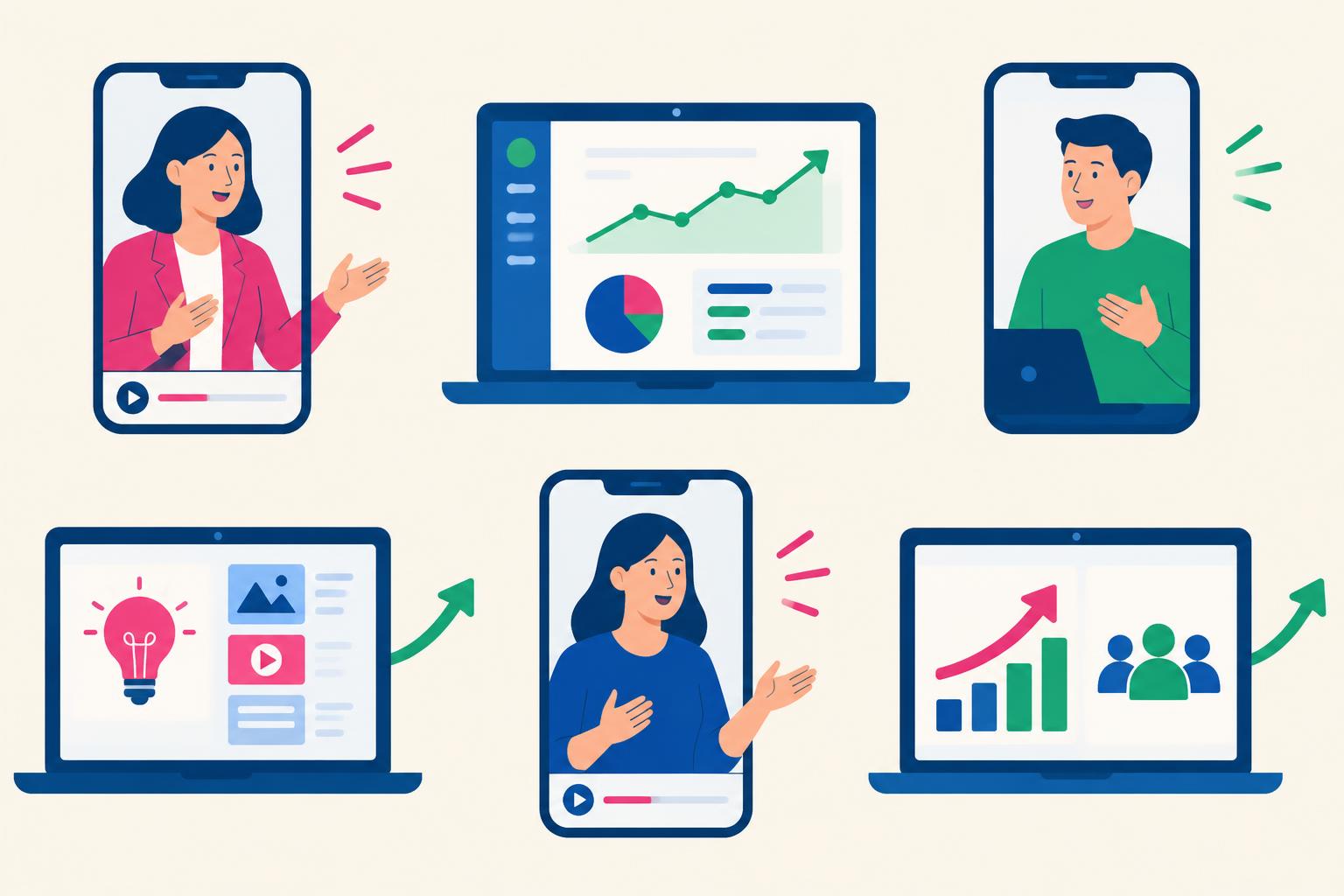
Most lists of B2B content marketing examples are museums: famous campaigns from huge budgets you'll never have. Useful for inspiration, useless as a plan. This guide is different. Each example is broken down into the mechanism that made it work, so you can copy the mechanism — not the budget.
I'll also cover the biggest shift happening in B2B right now: buyers trust people more than brands, and SaaS companies are moving budget from polished brand content to creator-led and user-generated content. I make that content for AI and SaaS products, so I'll show you real examples from my own work too.
Why Most B2B Content Marketing Fails
B2B content usually fails for the same three reasons: it's written for the company instead of the buyer, it has no distribution plan, and it's faceless. The Content Marketing Institute's annual B2B research repeatedly shows that most teams struggle less with producing content and more with making it resonate and measuring its impact. See CMI's B2B research.
Every example below solves at least one of those problems. Look for the pattern, not the logo.
Classic B2B Content Marketing Examples (and What to Steal)
1. HubSpot — the free tools and academy flywheel
HubSpot built a library of free courses, templates, and tools around "inbound marketing" — a category it effectively named. HubSpot Academy turns learners into practitioners who already know the product's language. Steal this: teach the job your product does, and the product becomes the obvious next step.
2. Ahrefs — product-led content
Ahrefs writes articles where the product is the tutorial. Their team has openly described scoring topics by "business potential" — how naturally the tool fits into the answer. Read their approach. Steal this: only write content where your product genuinely helps solve the problem.
3. Gong — data nobody else has
Gong publishes sales insights pulled from analyzed calls. Original data earns links, press, and LinkedIn shares in a way opinion posts can't. Steal this: even a small SaaS has usage data. One honest stat beats ten generic tips.
4. Canva — templates as content
Canva's template pages rank for thousands of "[thing] template" searches, and every template is a product trial in disguise. Steal this: make your output the content.
5. Notion — the creator ecosystem
Notion's growth leaned heavily on independent creators sharing templates, setups, and YouTube walkthroughs. That's UGC at scale, and it's the bridge to the rest of this article.
6. Zapier — integration landing pages
Zapier created pages for app-to-app combinations, capturing very specific, high-intent searches. Steal this: programmatic pages work when each one answers a real use case.
7. Salesforce — the annual report
Salesforce's "State of" reports give journalists and marketers something to cite every year. Steal this: one recurring flagship asset is easier to promote than fifty one-off posts.
How UGC Is Changing SaaS Companies
For years, B2B assumed buyers wanted polish: brand films, whitepapers, glossy webinars. That assumption is breaking. Gartner found that B2B buyers value third-party interactions — reviews, experts, creators — over supplier-owned channels. Gartner's survey.
At the same time, LinkedIn's B2B Institute and Edelman's thought-leadership research point in the same direction: decision-makers are influenced by credible individual voices. Edelman–LinkedIn B2B Thought Leadership Impact Report.
Here's what that shift looks like in practice:
| Old playbook | UGC-era playbook | |
|---|---|---|
| Messenger | The brand | Creators, users, founders |
| Format | Whitepaper, brand video | Short vertical video, screen recording, tutorial |
| Production | Agency, 6–12 weeks | Creator, 1–2 weeks |
| Distribution | Paid ads + email | Creator audience + search + paid |
| Trust signal | Logo wall | A real person using the product |
| Cost per asset | High | Low to moderate |
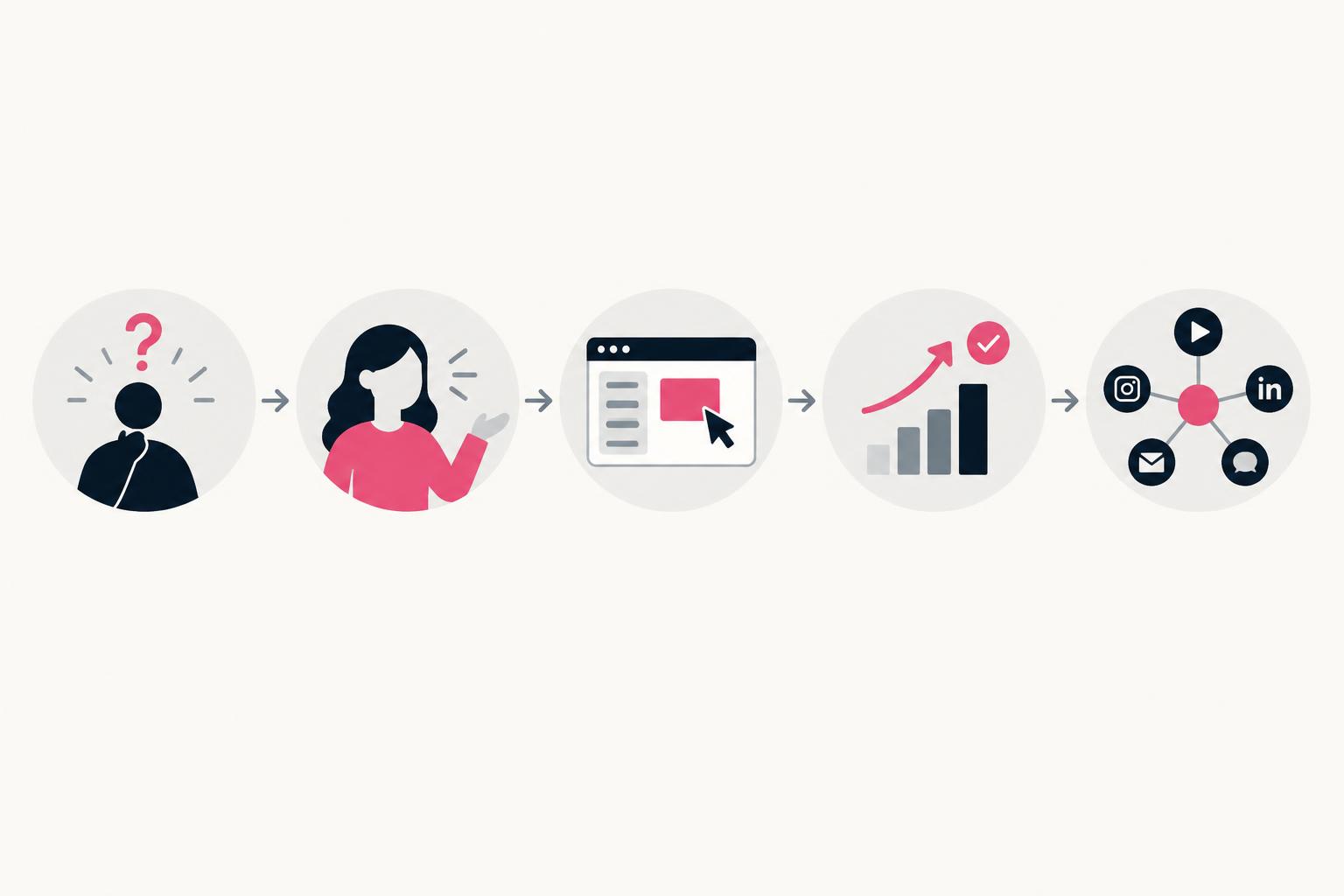
I go deeper on why in User-Generated Content for SaaS Products, but the core idea is simple: software is invisible until someone shows it working. A creator showing it is more believable than a brand saying it.
UGC-Led B2B Content Marketing Examples
8. Figma — community files
Figma's Community lets users publish files, plugins, and kits. Every shared file is content the company didn't have to make, and each one teaches the product.
9. Canva — creator tutorials on TikTok and YouTube
Search "Canva tutorial" on any platform and most results aren't from Canva. Independent creators do the teaching. The brand's job becomes enabling them.
10. AI tools — creator-first launches
A large share of AI SaaS launches now go creator-first: a batch of short demos on TikTok, Instagram, and YouTube before or alongside Product Hunt. The demo is the ad.
11. G2 and review videos
Reviews on G2 are text UGC. Smart SaaS teams turn their best reviewers into 30-second video testimonials and use them on pricing pages and in retargeting.
12. Founder-led content
Founders posting daily on LinkedIn or X are producing UGC about their own company. It works because it's a person, not a page.
13. Affiliate creators
Affiliate programs turn creators into a performance-based content team. I've seen this firsthand — more below.
B2B Content Examples From My Own Work
These aren't hypotheticals. Here are two campaigns you can study in detail.
14. GoHighLevel — affiliate tutorials on YouTube
I made tutorial-style YouTube videos targeting what agency owners search for. Over time those videos drove over $100K in affiliate payouts. The full breakdown is in my GoHighLevel affiliate case study.
15. SEOBuddy — five feature videos for search
For SEOBuddy I broke the product into five feature videos, each targeting a buyer-intent search on YouTube. Read the SEOBuddy case study for the framework.
You can also browse the short-form work on my homepage portfolio — SlidesGPT tutorials, OnePage AI feature videos, FaithGPT ads, and more.
Here are three short-form examples — the kind of vertical UGC that runs as organic TikTok/Reels content or paid ads:
B2B Content Formats Compared
| Format | Best for | Time to results | Cost | Example |
|---|---|---|---|---|
| SEO article | Capturing problem searches | 3–9 months | Low | Ahrefs |
| Original research | Links and PR | 1–3 months | Medium | Gong, Salesforce |
| Templates/tools | Product-led signups | 3–6 months | Medium | Canva, HubSpot |
| YouTube tutorial | Search + trust | 1–6 months | Low–medium | GoHighLevel, SEOBuddy |
| Short-form UGC | Awareness + ads | Days–weeks | Low | AI tool launches |
| Video testimonial | Conversion | Immediate | Low | G2 reviewers |
| Founder posts | Brand + pipeline | 1–3 months | Time only | LinkedIn founders |
How to Apply These Examples to Your SaaS
- Pick one problem your buyer searches for. Not your category — their pain.
- Write or record one asset that answers it with your product. Product-led, like Ahrefs.
- Turn it into a creator video. A real person showing the workflow.
- Distribute three ways. Search (YouTube/Google), a creator's audience, and paid retargeting.
- Repeat monthly. Consistency beats one viral moment.
For the full system, see my guides on B2B SaaS marketing, SaaS content marketing and UGC examples.
Frequently Asked Questions
What is an example of B2B content marketing?
A SaaS company publishing a tutorial that solves a buyer's problem using its product — like Ahrefs' SEO guides or a creator's YouTube walkthrough of GoHighLevel.
Does UGC work for B2B?
Yes, especially for software. Buyers trust peers and creators, and UGC shows the product in a real workflow. It works best paired with search and retargeting.
What B2B content performs best in 2026?
Search-led tutorials, original data, and creator-led video. Short vertical video is the fastest-growing format for SaaS awareness.
Want content that makes your SaaS product click?
Email promotions@fuelyourdigital.com or explore my content packages.