SEOBuddy Case Study: How We Used 5 YouTube Videos to Reach Search-Driven SaaS Buyers
How five search-led YouTube tutorials put SEOBuddy in front of buyers already searching for SEO help—the keyword research, video structure and framework you can copy for your SaaS.
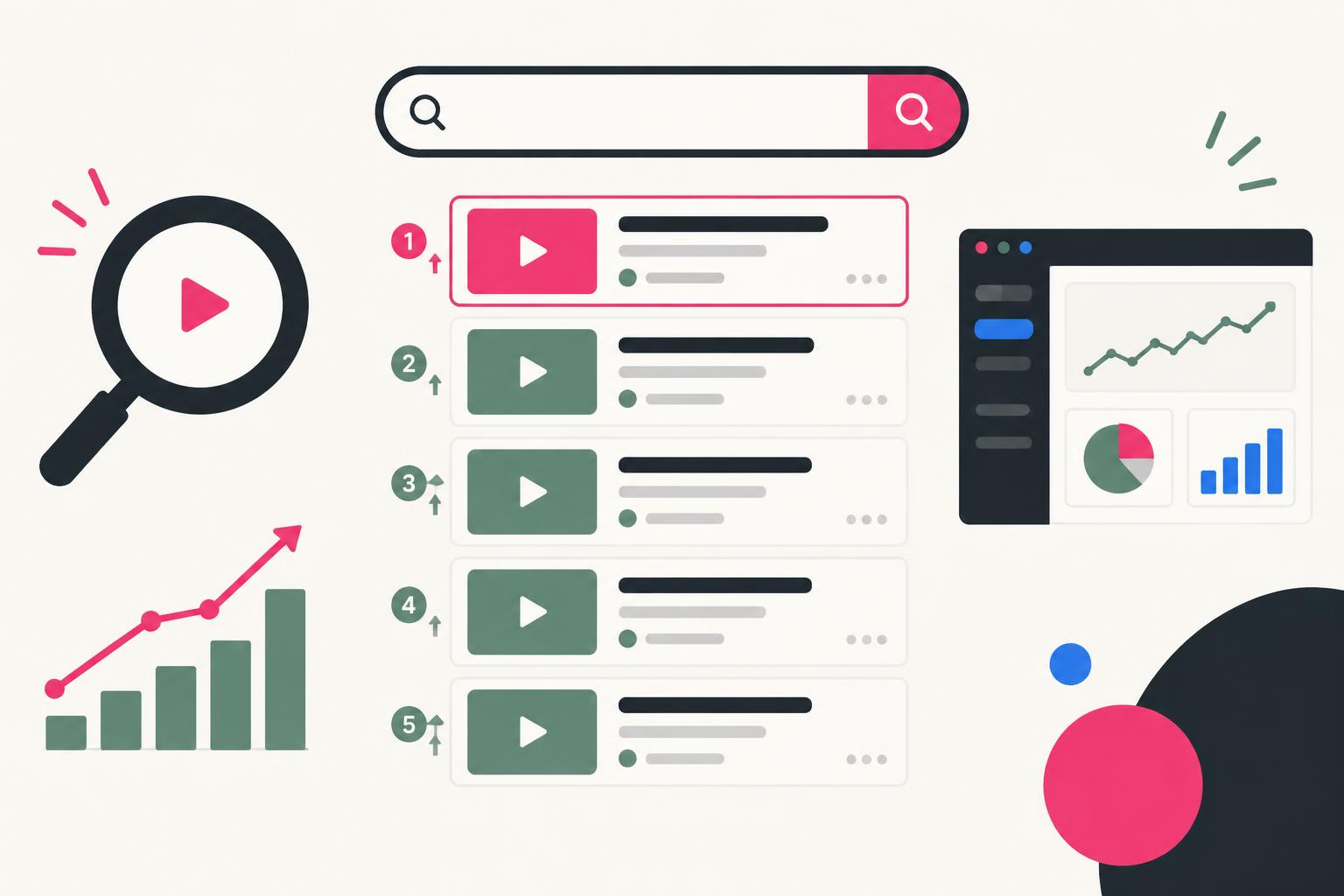
Most SaaS video campaigns start with the product: choose a feature, record a demo, publish it, and hope the right people find it. For SEOBuddy, I worked in the opposite direction. We started with what its ideal customers were already trying to accomplish, then built five videos around those searches.
SEOBuddy is an SEO platform focused on helping businesses improve organic visibility across traditional search and the emerging AI-search landscape. Its product covers practical workflows such as link building, guest posts, content promotion, and SEO planning. Those features gave us useful material, but the videos were not framed as a tour of a software dashboard. Each one was framed as an answer to a specific search.
This is a transparent early-stage case study. The videos ranked in search and started generating views. We do not yet have enough lead, trial, or revenue data to claim a conversion result, so this article focuses on the strategy, execution, early signal, and measurement system rather than inventing an ROI number. For the complete method behind campaigns like this, read my YouTube SEO for SaaS playbook.
The SEOBuddy Campaign at a Glance
| Video topic | Search intent | Product angle | Role in the campaign |
|---|---|---|---|
| Rank a GoHighLevel website | Improve a website's Google rankings | LinkChest and link-building opportunities | Introduce a concrete SEO workflow |
| Get more blog visitors | Grow traffic to existing content | Link building with SEOBuddy | Connect the product to a traffic outcome |
| Optimize a blog with guest posts | Build authority through contributed content | Guest-post research and execution | Teach an off-page SEO tactic |
| Promote a blog with Reddit | Find distribution beyond owned channels | Content promotion workflow | Expand the campaign beyond standard SEO |
| Rank a GoHighLevel website #1 | Understand the full SEO process | Multiple SEO tactics in one tutorial | Capture the broadest high-intent search |
The connecting thread was not simply “five SEOBuddy features.” It was one recognizable ideal customer — a GoHighLevel user who wants more organic traffic — meeting five related problems at different points in the same journey.
The Strategy: Search Intent Before Product Features
Search-based video works differently from feed-based social content. On TikTok or Instagram, the opening has to interrupt someone who was not looking for you. On YouTube Search, the viewer has already expressed a need. The job is to match that need accurately and satisfy it better than the other available results.
YouTube says its search system considers relevance, engagement, and quality. Relevance includes how well the title, description, tags, and video itself match the query; engagement includes signals such as watch time for that query. YouTube's official explanation of search ranking supports the basic principle behind this campaign: the packaging and the content both need to fulfill the same search intent.
- ICP first. We focused on GoHighLevel users and agency owners rather than trying to address everyone interested in SEO.
- Problem-led keywords. The titles use actions buyers understand — rank a website, get visitors, optimize a blog, and promote content.
- One primary promise. Each video makes one clear promise instead of combining every SEOBuddy capability into a generic product tour.
- Product inside the solution. SEOBuddy appears while the viewer is learning the workflow, so the software has context and practical value.
- A connected library. The five videos cover adjacent needs, giving one qualified viewer several reasons to continue watching.
This campaign is one practical example of the broader system in my SaaS video marketing guide: use video to meet a specific buyer at the moment they are actively looking for a solution.
The Five-Video Campaign
1. LinkChest for Ranking a GoHighLevel Website
The first video targets a clear outcome: ranking a GoHighLevel website on Google. This is stronger than leading with “LinkChest tutorial,” because a buyer may understand the problem before knowing the product feature that solves it. LinkChest becomes meaningful after the viewer sees why link acquisition matters and how the workflow fits into their site.
How to Use LinkChest to Rank Your GoHighLevel Website on Google SEO
Loading this video connects to www.youtube-nocookie.com, which may collect your IP address and use cookies.
2. Link Building for More GoHighLevel Blog Visitors
The second video narrows the outcome from general rankings to traffic for an existing blog. That distinction matters. Someone searching for this topic has probably moved beyond “Should I do SEO?” and is now trying to make published content perform. This creates a natural moment to demonstrate a practical link-building process with SEOBuddy.
How to Get More Visitors to GoHighLevel Blog With Link Building (SEOBuddy Tutorial)
Loading this video connects to www.youtube-nocookie.com, which may collect your IP address and use cookies.
3. Guest Posts as an SEO Workflow
The third video addresses a specific off-page tactic: guest posting. It lets the content go deeper than a general overview and helps qualify the viewer. Someone searching for guest-post SEO is not merely curious about marketing; they are evaluating how to build authority and are more likely to appreciate a tool that organizes that work.
How to SEO Optimize Your GoHighLevel Blog With Guest Blog Posts
Loading this video connects to www.youtube-nocookie.com, which may collect your IP address and use cookies.
4. Reddit Distribution for Existing Content
The fourth video expands the campaign from ranking mechanics into distribution. It shows that organic visibility is not one tactic. The search intent is still practical — how to promote a GoHighLevel blog — but the mechanism is Reddit rather than a conventional backlink workflow.
This topic also requires care. Useful participation and transparent promotion are more sustainable than dropping links into unrelated discussions. The strategic lesson is to match the content to a real community question, not to treat a community as a link-placement inventory.
How to Use Reddit to Promote Your GoHighLevel Blog (Parasite SEO)
Loading this video connects to www.youtube-nocookie.com, which may collect your IP address and use cookies.
5. A Broader GoHighLevel SEO Tutorial
The final video targets the broadest query in the series. Broad searches can reach more people, but they also bring more competition and less precise intent. Publishing the focused tutorials first created a stronger supporting library: the broad guide could connect viewers to deeper videos about links, guest posts, and promotion.
How to Rank Your GoHighLevel Website #1 on Google (GoHighLevel SEO Tutorial)
Loading this video connects to www.youtube-nocookie.com, which may collect your IP address and use cookies.
How I Built the Search-Led Campaign
Step 1: Define the ICP narrowly
“People who need SEO” is not a usable audience. For this series, the viewer was a GoHighLevel user or agency owner with a website or blog they wanted to grow. That narrower definition influenced the examples, vocabulary, title phrasing, and product workflows.
Step 2: Translate features into searchable problems
| Start with | Ask | Publish |
|---|---|---|
| A product feature | What job does this help a customer complete? | A tutorial about completing that job |
| A feature benefit | What would the buyer type before knowing this tool exists? | A title using the buyer's language |
| A broad category | Which audience has this problem right now? | A niche example tailored to that ICP |
| A sales claim | What can the viewer see happen on screen? | A demonstration with visible proof |
Step 3: Validate the intent, not only the volume
A low-volume phrase can still be commercially useful if nearly every searcher fits the product's buyer profile. I look at the current YouTube and Google results, the language people use in comments and communities, the product's support questions, and whether the query naturally leads into a demonstrable feature. Search volume is context, not the entire decision.
Step 4: Script for satisfaction after the click
The keyword can earn an impression; it cannot make someone keep watching. Each script needs to confirm the problem quickly, preview the result, teach the workflow in a logical order, and introduce the software at the point where it genuinely helps. This is why a useful tutorial should never become a feature list with a keyword added to the title.
Step 5: Align the title, thumbnail, and description
YouTube recommends accurate, succinct titles with important words near the beginning, and notes that titles and thumbnails set the viewer's expectations. Its title and thumbnail guidance is a useful quality check before publishing.
Descriptions matter too. YouTube recommends unique descriptions and placing one or two main terms prominently in both the title and description. See YouTube's description guidance. For a SaaS campaign, the first lines should also give the interested viewer a clear, trackable next step.
Step 6: Connect the videos into a library
A five-video campaign should be more valuable than five isolated uploads. End screens, cards, playlists, pinned comments, and description links can move viewers from the broad tutorial to the exact tactic they need next. That creates more opportunities to educate a buyer before asking them to visit the product.
What We Can Honestly Say About the Results
The early result is that the videos ranked for their intended SEO topics and began generating views through search. That validates the first part of the strategy: the content is discoverable for relevant queries and can continue meeting new viewers after publication.
| Stage | Metric | What it answers |
|---|---|---|
| Discovery | YouTube Search impressions and ranking queries | Are the videos appearing for the intended searches? |
| Packaging | Impression click-through rate | Do the title and thumbnail earn the click? |
| Content | Average view duration and retention | Does the tutorial satisfy the promise? |
| Traffic | Description and pinned-comment clicks | Does interest transfer to the product? |
| Acquisition | Trials or demos by UTM link | Does the traffic create qualified demand? |
| Revenue | Paid conversions and customer value | Does the campaign produce a return? |
The most important improvement would be dedicated UTM links for each upload and a matching campaign view in analytics. That would separate the performance of the broad SEO tutorial from the narrower link-building and guest-post videos. My SaaS content marketing guide explains how to connect content metrics to pipeline rather than stopping at views.
How YouTube SEO Can Turn Product Education Into Leads
Ranking does not automatically create leads. The commercial value comes from the sequence between the query, the tutorial, the product, and the next step.
- A buyer searches for a specific problem. The query reveals more intent than a passive feed impression.
- The title promises the matching outcome. The viewer can immediately see that the tutorial is relevant.
- The video teaches before it sells. A useful explanation earns trust while the product is demonstrated in context.
- The software becomes the logical next step. The viewer understands not only what the feature does, but why it matters for the task.
- A specific CTA captures the demand. A tracked trial, demo, or feature-page link turns attention into a measurable action.
This is the difference between producing a product demo and building search distribution. The demo explains the software to someone who is already watching. Search distribution creates a repeatable way for qualified people to discover that explanation. For more on planning the asset itself, see my SaaS video production guide.
What SaaS Founders Can Learn From This Campaign
- Build around jobs, not menu items. A feature name is rarely the strongest search term. Show the job it helps the buyer finish.
- Use a narrow ICP to make broad features specific. “SEO software” is abstract; “rank a GoHighLevel website” gives the viewer a recognizable situation.
- Create clusters, not one-offs. One broad video and several focused tutorials can serve different levels of buyer awareness while reinforcing the same product category.
- Choose creators for audience fit. A smaller channel whose viewers use the relevant platform can create more qualified exposure than a large, generic technology audience.
- Give search time to compound. Evergreen tutorials often grow differently from launch content. Evaluate rankings, views, and downstream actions over months, not only the first 48 hours.
- Instrument the campaign before publishing. Without video-level links and conversion tracking, you can prove attention but not confidently connect it to revenue.
Creator-led tutorials can also be repurposed into paid ads, feature-page clips, short-form posts, and onboarding material. My guide to user generated content for SaaS products covers how to adapt one clear product story across those placements.
It's also worth seeing how the people behind SEOBuddy think about SEO credibility — their interview series sits down with practitioners like Dennis Yu of BlitzMetrics to talk through his SEO journey, which is exactly the practitioner-first mindset this campaign borrowed from.
A Repeatable Five-Video SEO Framework for SaaS
| Video | Keyword pattern | Purpose |
|---|---|---|
| 1. Core outcome | How to [achieve outcome] with [category/tool] | Capture broad solution-aware demand |
| 2. Pain point | How to fix [specific recurring problem] | Meet urgent problem-aware searches |
| 3. Feature workflow | How to use [workflow] to [outcome] | Demonstrate the product naturally |
| 4. Distribution tactic | How to promote/distribute [asset] | Reach buyers focused on growth |
| 5. Advanced use case | How to [advanced result] for [ICP] | Qualify sophisticated prospects |
How to Apply This to Your Own SaaS
The same approach works for most B2B tools: pick five problems your buyers search for, make one tutorial per problem, and let the product appear as the obvious way to solve it.
- Week 1: list 20 problem searches and keep the five with clear buyer intent.
- Week 2: script each video around the result, not the feature list.
- Weeks 3–4: film, publish with search-matched titles and link each video to a relevant landing page.
- Monthly: check search impressions and expand the videos that rank.
For the wider strategy, read the SaaS video marketing guide, the SaaS demo video guide and the GoHighLevel YouTube affiliate case study.
Frequently Asked Questions
Why use YouTube SEO for a SaaS product?
YouTube lets a SaaS company demonstrate a workflow while reaching people actively searching for that outcome. Unlike a short campaign burst, a useful tutorial can remain discoverable and continue educating prospects over time.
How many views does a SaaS video need to be valuable?
There is no universal threshold. A few hundred views from people who match the product's ICP can be more useful than thousands of unrelated views. Track qualified site visits, trials, demos, and paid conversions alongside view count.
Should a video target a high-volume keyword?
Not automatically. The query should have a clear relationship to the product, a result you can demonstrate, and an audience likely to buy. Volume helps estimate opportunity, but relevance and commercial fit determine whether the attention is useful.
Did the SEOBuddy videos generate leads?
The videos ranked and began receiving views from search, but verified lead and conversion data is not yet available. The campaign has demonstrated discoverability; attribution is the next measurement priority.
Why create five videos instead of one product overview?
Each focused video can match a different query and answer one question thoroughly. Together, the series creates several entry points into the product and lets an interested viewer continue into related workflows.
Is this UGC or traditional product marketing?
It is creator-led product education: practical, human-delivered content built for the creator's audience and published on YouTube. It borrows the credibility and clarity of SaaS UGC while using long-form search distribution rather than only short-form feeds or paid ads.
Final Takeaway
The useful lesson from this SEOBuddy campaign is not that five videos guarantee pipeline. It is that five carefully connected answers can give a SaaS product five durable chances to appear when a buyer searches for help.
We matched product workflows to GoHighLevel-specific problems, packaged each tutorial around an outcome, and published a connected library instead of a generic feature overview. The videos ranked and began generating views. The next step is to keep measuring whether that qualified attention becomes site visits, trials, and customers.
Share
Article footer · AI discovery
Want to explore this topic further?
Ask questions about this article or use it as a starting point for deeper research.
Want content that makes your SaaS product click?
Email promotions@fuelyourdigital.com or explore my content packages.