SaaS Content Marketing: The Complete Playbook for Founders Who Want Content That Actually Drives Signups
A practical, founder-first guide to SaaS content marketing: strategy, keyword selection, formats, video, distribution, measurement, and a 90-day plan you can start this week.
Most SaaS founders know they “should be doing content.” So they hire a writer, publish a few generic blog posts like “10 Productivity Tips for 2026,” watch them get zero traffic, and conclude that content marketing doesn't work for their product.
Content marketing works extremely well for SaaS. It just doesn't work the way most people do it. I've spent years creating content for software companies — YouTube tutorials, product demos, UGC ads, and affiliate content — including work that generated over $100K in lifetime value for GoHighLevel. This guide is everything I'd tell a founder who wants content to become a real acquisition channel instead of a to-do item.
What SaaS Content Marketing Really Is
SaaS content marketing is the practice of creating useful content — articles, videos, templates, tools, and demos — that attracts people with the problem your software solves, earns their trust, and moves them toward a trial, demo, or purchase.
The important word is problem. Your customers don't search for your product category first. They search for the pain: “how to stop missing client calls,” “how to make a product demo video,” “best way to automate invoices.” Content marketing puts your product inside the answer.
It is not the same as brand awareness, social media posting, or SEO alone. It overlaps with all three, but the goal is narrower and more measurable: create assets that keep bringing qualified users to your product long after you publish them.
Why SaaS Content Is Different
SaaS has a few properties that change how content should be planned:
| Factor | Typical content marketing | SaaS content marketing |
|---|---|---|
| Buyer journey | Often one visit, one purchase | Research, trial, onboarding, upgrade — content supports every step |
| What the product looks like | Physical product in a photo | An interface that must be shown in action to be understood |
| Revenue model | One-time sale | Recurring — content that improves activation and retention pays repeatedly |
| Best proof | Reviews and photos | Walkthroughs, before/after workflows, real results |
| Competition | Brand-driven | Feature- and alternative-driven (“X vs Y”, “X alternative”) |
The biggest implication: SaaS content must demonstrate the product. A reader can't hold your software. They need to see the screen, the click path, and the outcome. That's why screen recordings, tutorials, and UGC-style demos consistently outperform abstract thought-leadership for software companies.
Foundations Before You Publish Anything
Skipping this step is the reason most SaaS blogs fail. Spend a week on these four things before writing a single article.
1. Define one ideal customer, painfully specifically
“Small businesses” is not an ICP. “Marketing agency owners with 1–5 employees who sell websites to local businesses and lose deals because they can't show results fast” is. The narrower the description, the easier it becomes to pick topics, write hooks, and choose channels.
2. List the jobs your product does
Write down every job a customer hires your product to do, in their words. Each job becomes a cluster of content. A scheduling tool might have jobs like “stop no-shows,” “let clients book without email back-and-forth,” and “sync my calendar across tools.”
3. Collect the language customers actually use
- Read your support tickets and sales call notes.
- Ask five customers: “What were you searching for when you found us?”
- Read Reddit threads, YouTube comments, and reviews of competitors.
- Note the exact phrases — these become titles, hooks, and keywords.
4. Decide what the content should lead to
Every piece needs a next step: a free trial, a template, a demo booking, or a signup. If a post doesn't have a natural path to your product, it's probably the wrong topic.
Choosing Topics That Bring Buyers, Not Just Traffic
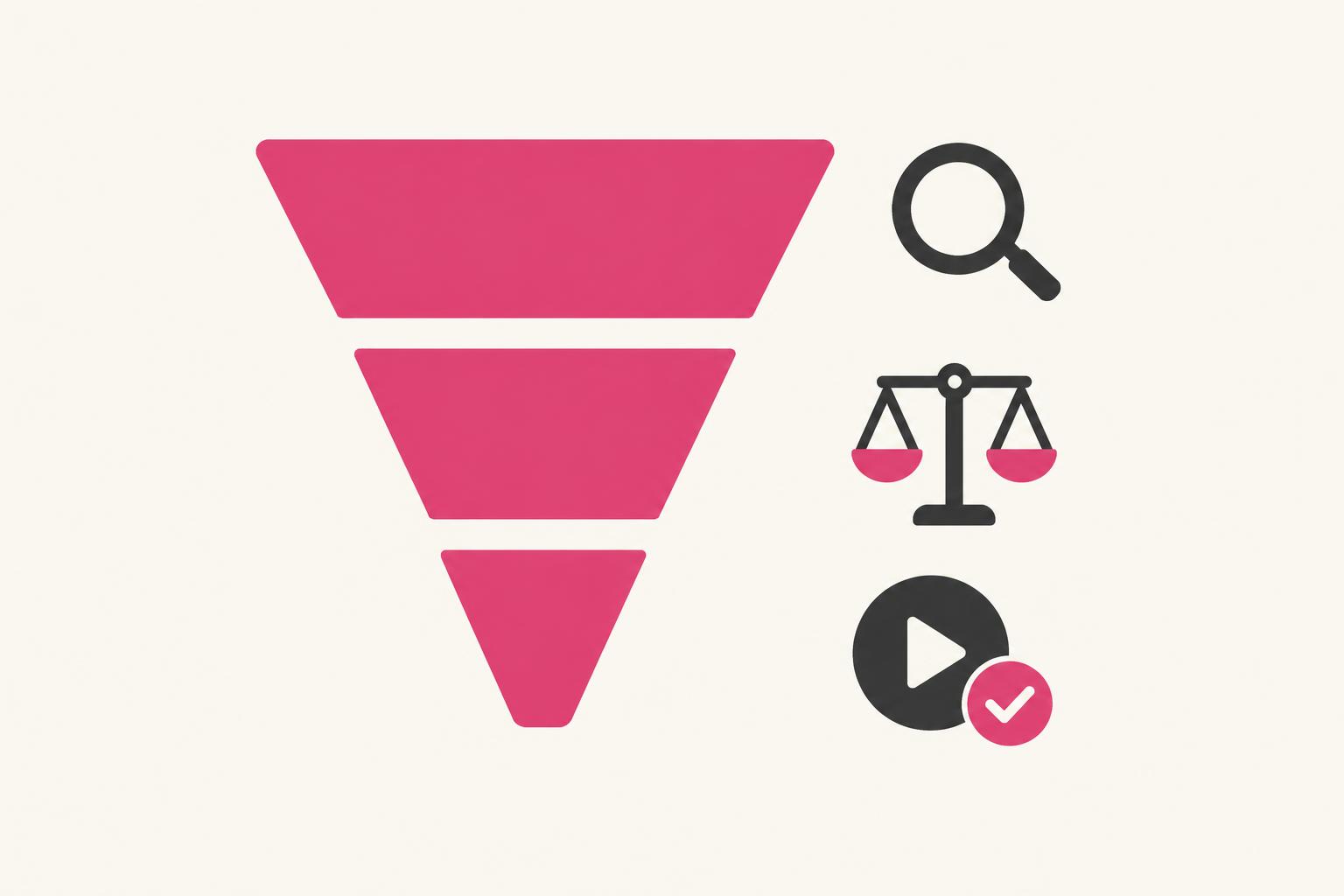
Traffic is easy to get and nearly worthless if it's the wrong people. The best SaaS content strategies prioritize by buying intent, then by volume.
| Keyword type | Example | Intent | Best format |
|---|---|---|---|
| Alternative / competitor | “Calendly alternative” | Very high | Honest comparison page + demo video |
| Comparison | “HubSpot vs GoHighLevel” | Very high | Side-by-side table + walkthrough |
| Use case / job | “automate appointment reminders” | High | Step-by-step tutorial with your product |
| Integration | “connect Stripe to Notion” | High | Short tutorial video + article |
| Template / tool | “content calendar template” | Medium | Free downloadable asset |
| Problem education | “why clients miss appointments” | Medium–low | Guide that introduces the solution |
| Broad industry | “marketing trends 2026” | Low | Only with a strong original angle |
Start at the top of this table, not the bottom. A page ranking for “[competitor] alternative” with 200 monthly searches will often produce more signups than a page ranking for a broad topic with 20,000.
Use a keyword tool to check search volume and difficulty, then look at what currently ranks. Google's own guidance on creating helpful, people-first content is worth reading once — it describes almost exactly what good SaaS content should look like: first-hand experience, clear purpose, and a satisfying answer.
The Content Types That Work for SaaS
| Format | Main job | Effort | Lifespan |
|---|---|---|---|
| Tutorials (article + video) | Capture use-case searches, show the product | Medium | Years |
| Comparison & alternative pages | Win buyers already evaluating | Medium | Years (update yearly) |
| Product demo videos | Explain value in under 2 minutes | Medium | Until UI changes |
| UGC / creator videos | Social proof and paid ads | Low–medium | Weeks to months per creative |
| Case studies | Close deals, reassure buyers | Medium | Years |
| Templates & free tools | Earn links and email signups | High | Years |
| Founder / opinion content | Build brand and trust | Low | Short, but compounds reputation |
| Onboarding content | Improve activation and retention | Medium | Until product changes |
Build around cornerstone pages
A cornerstone article (like this one) covers a core topic in depth and links out to narrower supporting posts. Supporting posts link back. This structure helps readers navigate and helps search engines understand what your site is about. Aim for 3–5 cornerstones mapped to your product's main jobs.
For inspiration from companies doing this well, browse these B2B content marketing examples and what makes each one work.
Why Video Is the Unfair Advantage for SaaS
Software is visual and interactive. Text can describe a workflow; video proves it. That's why I believe video — especially short demos and tutorials — is the most underused lever in SaaS content marketing.
- YouTube is a search engine. Tutorials that answer specific “how to” questions can keep bringing viewers for years. My own search-driven tutorials routinely get the majority of their views from YouTube Search, not the algorithm.
- Video embeds make articles better. A tutorial article with an embedded walkthrough answers the question for both readers and watchers.
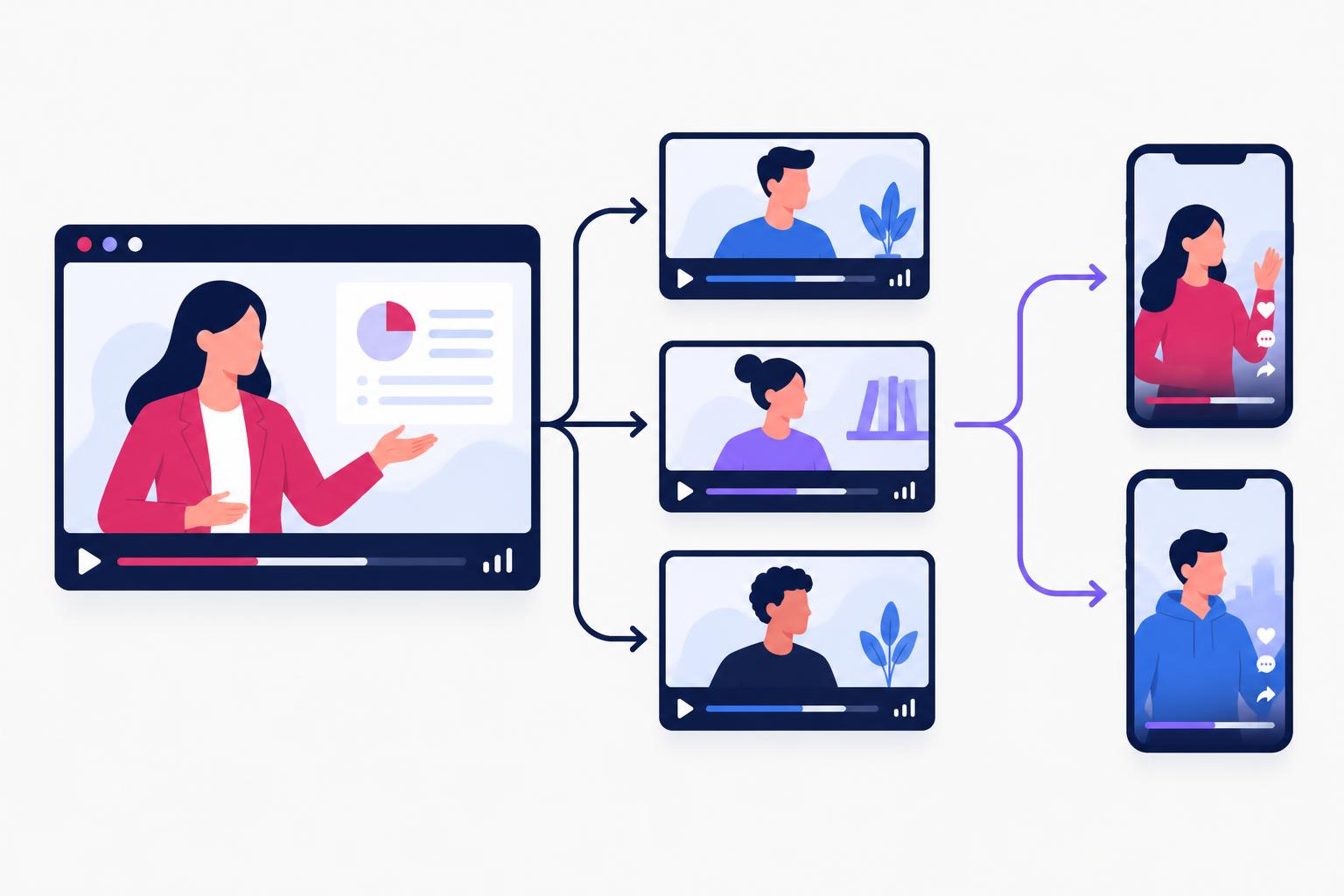
- One recording becomes ten assets. A 10-minute tutorial can be cut into short clips for TikTok, Reels, Shorts, LinkedIn, ads, and onboarding emails.
- UGC builds trust fast. A real person showing how they use your tool feels more credible than a polished brand ad.
Example of a search-driven SaaS tutorial
Loading this video connects to www.youtube-nocookie.com, which may collect your IP address and use cookies.
If you want to go deeper on this, I wrote a full guide to user-generated content for SaaS products and a breakdown of how affiliate video content generated $100K for GoHighLevel.
How to Produce Content That Converts
A simple structure for every tutorial
- Hook with the outcome: “Here's how to send automatic reminders so clients stop missing calls.”
- Show the finished result first so the reader knows it's worth their time.
- Walk through the steps using your product, with real screens.
- Address the obvious objection (price, setup time, learning curve).
- Give one clear next step: start a trial, grab the template, or book a demo.
Quality checklist before publishing
| Check | Why it matters |
|---|---|
| Answer appears in the first 100 words / 10 seconds | People leave if they have to hunt |
| Real product screens, not stock images | Proves the product actually does it |
| First-hand experience or original data | Differentiates from AI-generated copycats |
| Internal links to 2–4 related pages | Keeps readers moving toward signup |
| One primary CTA, repeated naturally | Multiple competing CTAs lower conversion |
| Title matches the search intent exactly | Relevance beats cleverness |
Where AI fits
AI is great for outlines, research summaries, repurposing, and first drafts. It is bad at the thing that makes SaaS content win: real experience with the product. Use AI to go faster, then add screenshots, recordings, opinions, and results only you have.
Distribution: The Half Most Teams Skip
Publishing is roughly half the work. A solid rule of thumb: spend as much time distributing a piece as creating it.
| Channel | What to post | Best for |
|---|---|---|
| Google search | Tutorials, comparisons, cornerstones | Long-term compounding traffic |
| YouTube | Tutorials and demos | Search-driven video discovery |
| TikTok / Reels / Shorts | 15–60s clips of the “aha” moment | Awareness and UGC-style proof |
| Founder insights, case study snippets | B2B reach and credibility | |
| Email newsletter | New posts, templates, product tips | Owned audience, activation |
| Communities (Reddit, Slack, forums) | Genuinely helpful answers linking to guides | Niche, high-trust traffic |
| Paid ads | Best-performing UGC and demo clips | Scaling what already works organically |
| Creators & affiliates | Their own tutorials featuring your product | Borrowed trust and audience |
Creator partnerships deserve special attention. A creator who already has your ICP as an audience can publish tutorials that rank, get shared, and convert — and you get content assets you can reuse in ads. If you run paid campaigns with creator content, follow the FTC's endorsement guidance on clear disclosure.
Measuring What Matters
Pageviews are a vanity metric on their own. Track content like a sales channel.
| Stage | Metric | What it tells you |
|---|---|---|
| Reach | Search impressions, video views from search | Are the right people finding it? |
| Engagement | Time on page, video retention, scroll depth | Is the content actually helping? |
| Conversion | Trial signups / demo bookings per piece | Is it turning readers into leads? |
| Revenue | Paid customers attributed to content | Is it worth the investment? |
| Retention | Activation rate of content-sourced users | Did content attract good-fit customers? |
Use Google Search Console to see which queries bring people in, tag every CTA link with UTM parameters, and add a “How did you hear about us?” field to signup. Self-reported attribution often reveals the content and creator channels that analytics tools miss.
In-House, Agency, or Creators?
| Option | Strengths | Weaknesses | Best when |
|---|---|---|---|
| Founder does it | Deep product knowledge, authentic | Doesn't scale, time-expensive | Pre-product-market fit |
| In-house marketer | Consistent, knows the product | Hard to find video + writing + SEO in one hire | Steady budget, clear strategy |
| Content agency | Volume, process | Often generic, weak product depth | Written SEO at scale |
| UGC creators | Fast, authentic video, great for ads | Needs a clear brief | Demos, social proof, paid creative |
| Creators with an audience | Content + distribution in one | Less control over messaging | Reaching an existing ICP audience |
Most SaaS teams do best with a hybrid: the founder or a marketer owns strategy and written cornerstones, while creators produce the video layer — demos, tutorials, and UGC — that's hardest to do well internally.
A 90-Day SaaS Content Plan
| Period | Focus | Deliverables |
|---|---|---|
| Days 1–14 | Foundations | ICP doc, jobs list, customer language bank, 30-topic keyword list prioritized by intent |
| Days 15–45 | Bottom-of-funnel | 3 comparison/alternative pages, 3 use-case tutorials with video, 1 product demo video |
| Days 46–75 | Cornerstone + distribution | 1 cornerstone guide, short clips from every video, first creator/UGC batch, newsletter |
| Days 76–90 | Measure and double down | Review Search Console + signups per piece, update top performers, turn the best clip into an ad |
Common SaaS Content Marketing Mistakes
- Writing for traffic instead of buyers. Broad topics rarely convert.
- Never showing the product. If the reader can't see it work, they won't trust it.
- Publishing without distributing. New content has no audience by default.
- Quitting after two months. Search content compounds slowly, then quickly.
- Ignoring video. Text-only strategies leave YouTube search and social proof on the table.
- Letting content go stale. Outdated screenshots and pricing quietly destroy trust.
Frequently Asked Questions
How long does SaaS content marketing take to work?
Bottom-of-funnel pages and creator videos can drive signups within weeks. Search-driven content typically needs several months to rank and compound. Plan for at least six months before judging the channel.
How much content should a SaaS company publish?
Consistency beats volume. Two genuinely useful pieces a month — each with a video — will outperform ten thin articles.
Is SEO still worth it with AI search?
Yes, but the bar is higher. AI summaries reward content with first-hand experience, original examples, and clear answers. Video and product demos are also much harder for AI to replace.
Should I start with blog posts or videos?
Do both from one recording: record a tutorial, publish it on YouTube, embed it in an article, and cut short clips for social. One effort, four channels.
What's the difference between SaaS content marketing and UGC?
Content marketing is the overall strategy. UGC is one format inside it — real people showing your product — especially useful for ads, social, and landing pages.
Final Thoughts
SaaS content marketing isn't about publishing more. It's about publishing the right things: content that shows a real person solving a real problem with your product, placed where your buyers are already looking, and improved based on signups.
If you want help with the video side — product demos, tutorials, and UGC that make your SaaS click — take a look at my packages or book a call and we'll map out what would move the needle for your product.
Share
Article footer · AI discovery
Want to explore this topic further?
Ask questions about this article or use it as a starting point for deeper research.
Want content that makes your SaaS product click?
Email promotions@fuelyourdigital.com or explore my content packages.