flAim AI Case Study: 669 Clicks From a $51 UGC Ad With a Negative Hook
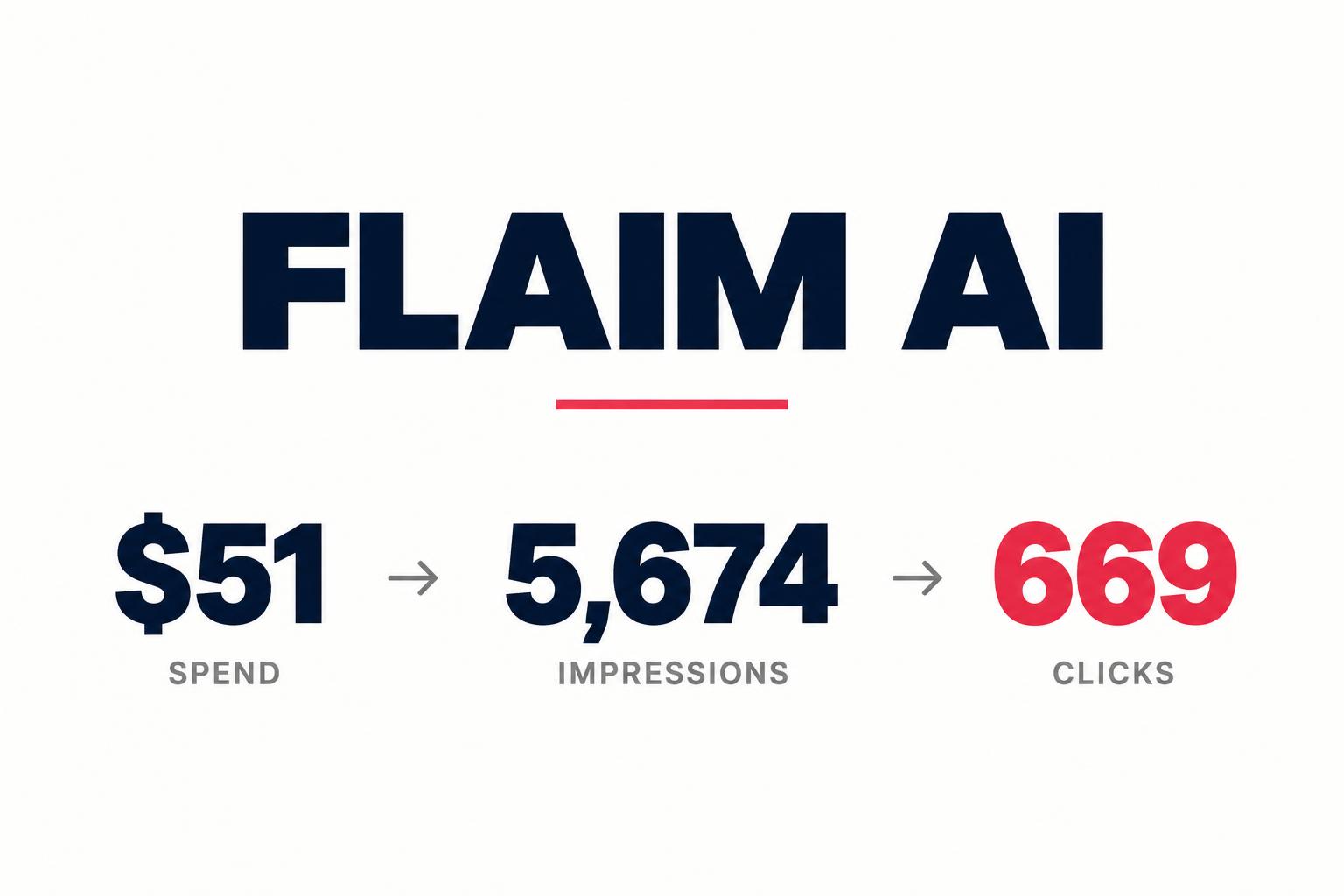
One 40-second UGC video for flAim AI, an all-in-one multi-model AI workspace, opened with a negative hook. On about $51 of spend it reached 5,539 people and drove 669 clicks to the site at $0.08 per click.
flAim AI is a workspace that puts ChatGPT, Claude, Grok, DeepSeek, Gemini and other models under one subscription, with shared memory across models and real-time collaboration with your team. I made one short UGC video for it and put a small paid budget behind it.
The ad spent $51.13. It reached 5,539 people, earned 5,503 video views and sent 669 clicks to flAim's website, at $0.08 per click. The thing that made it work wasn't the budget. It was the first line.
The Results: 669 Clicks for $51
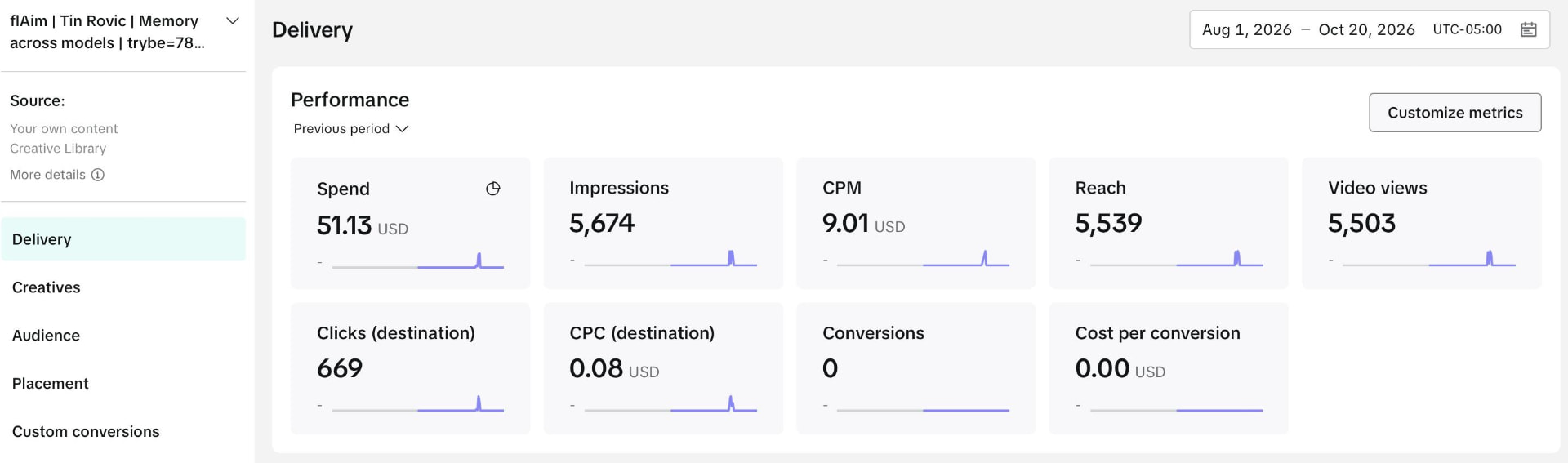
| Metric | Reported | What it means |
|---|---|---|
| Spend | $51.13 | Total paid budget behind the video. |
| Impressions | 5,674 | Times the ad was shown. |
| Reach | 5,539 | Unique people who saw it—almost everyone saw it once. |
| Video views | 5,503 | Views as counted by the ad platform. |
| CPM | $9.01 | Cost per 1,000 impressions. |
| Destination clicks | 669 | Clicks through to flAim's website. |
| CPC (destination) | $0.08 | Cost per click to the site. |
669 clicks from 5,674 impressions is a click-through rate of about 11.8%. For context, paid social ads commonly land somewhere around 1–2%. Even allowing for differences between platforms and placements, roughly one in nine people who saw this video clicked through.
flAim AI and the Person Watching
The people flAim is built for already use AI every day. They have ChatGPT in one tab, Claude in another, maybe Gemini in a third. They copy context from one to the next, pay for several subscriptions and lose track of which chat had the good answer.
That's a real, specific frustration—and it's exactly what flAim's site calls the "copy-paste tax." The ad didn't need to explain what AI is. It needed to make that frustration feel seen in the first second.
Why I Opened With a Negative Hook
A negative hook opens with what's wrong rather than what's great: a complaint, a mistake, or a "stop doing this." On a feed full of "this AI tool is insane" videos, a line that sounds critical stands out, because it breaks the pattern viewers are scrolling past.
| Typical positive hook | Negative hook | |
|---|---|---|
| Opening line | "This AI tool will change your life" | Calls out a habit or annoyance the viewer has right now |
| Viewer reaction | "Another AI ad" | "Wait—that's me" |
| What it filters for | General curiosity | People who actually feel the problem |
| Trust | Sounds like a pitch | Sounds like an honest opinion |
The negativity is aimed at the problem—juggling tools and repeating yourself—never at the viewer or at a competitor. That's what keeps it from feeling cheap: the hook is critical, the rest of the video is helpful.
The Ad: 40 Seconds, One Problem, One Fix
- Negative hook: open on the frustration, not the product.
- Agree with the viewer: name the tab-switching and copy-pasting they already do.
- Introduce the fix: one workspace, many models, shared memory.
- Show it, briefly: the product on screen doing the thing.
- One clear next step: try it free.
For more on structuring videos like this, see my UGC script template for SaaS ads and UGC for AI apps.
Why the Clicks Were So Cheap
I can't isolate a single cause—there was no A/B test against a different hook. But a few things line up:
- The hook stopped the scroll. 5,503 views from 5,539 people reached means nearly everyone who was served the ad watched it.
- The problem was instantly relatable. Anyone using several AI tools recognizes the pain without explanation.
- It looked like content, not an ad. A person talking to camera reads as an opinion, which earns more attention than a polished promo.
- The offer was low-friction. A free plan makes clicking an easy decision.
What the Numbers Don't Show
The honest headline is: a $51 test proved the hook and the message could cheaply drive a lot of qualified-looking traffic. The next step for a campaign like this is tracking signups so the budget can scale on cost per user, not cost per click.
The Negative Hook Framework for AI and SaaS Ads
- 1
Find the daily annoyance
Pick a frustration your ideal user feels this week, not a feature you're proud of.
- 2
Say it bluntly
Open with a complaint or "stop doing this" line in the first second.
- 3
Point the negativity at the problem
Never at the viewer, and never at a named competitor.
- 4
Flip to the fix fast
Within a few seconds, show that there's a better way.
- 5
Prove it on screen
A short look at the product doing the job.
- 6
Test small, then scale
Put a small budget behind it, read CTR and CPC, then track signups before spending more.
Compare this with my search-led campaigns for Lovable and WAGHL: those win on intent over time, while a paid negative hook wins on attention right away.
Frequently Asked Questions
What is flAim AI?
flAim AI is a multi-model AI workspace with ChatGPT, Claude, Grok, DeepSeek, Gemini and more on one subscription, plus memory across models and real-time team collaboration. See flaimai.com for current features and pricing.
What is a negative hook?
An opening line that leads with a problem, mistake or complaint instead of a benefit. It stands out because most ads open positively.
What was the click-through rate?
669 destination clicks from 5,674 impressions, or about 11.8%.
How many signups did it drive?
Signups weren't tracked in this ad account, so I'm not reporting a number.
The Takeaway: Lead With the Problem
One UGC video, $51 and a first line that said what was wrong instead of what was great: 669 clicks at eight cents each. If your AI product solves a frustration people feel every day, say the frustration out loud first.
Share
Article footer · AI discovery
Want to explore this topic further?
Ask questions about this article or use it as a starting point for deeper research.
Want content that makes your SaaS product click?
Email promotions@fuelyourdigital.com or explore my content packages.