UGC for AI Apps: The Complete Guide for AI Companies (From a Creator Who Makes It)
How AI apps and AI companies use user-generated content to earn trust, show real output and win signups: the formats that work, a script framework, platform playbooks, pricing, mistakes and a 30-day plan.

Search "UGC for AI apps" and you mostly get AI avatar generators and creator directories. Useful tools, but they answer a different question. This guide is about the thing AI founders actually need: real people showing your AI product doing a real job, in a way that makes a sceptical viewer want to try it. I make this content every week for AI and SaaS companies, so this is the playbook I wish every founder had before briefing a creator. If you want a head start, my free tool generates UGC video ideas for AI apps from your homepage.
What UGC for AI apps actually means
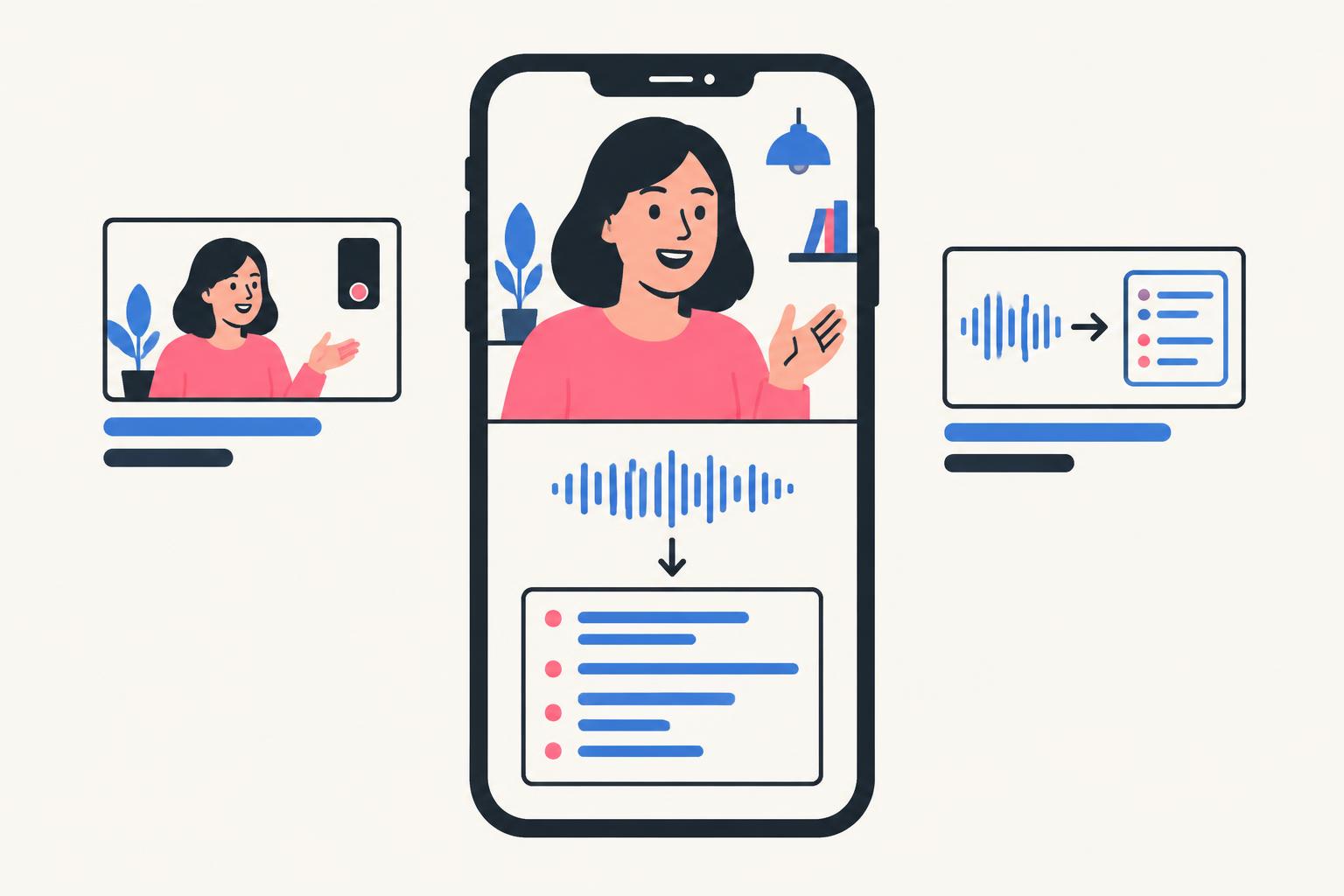
UGC (user-generated content) used to mean content customers posted unprompted. In marketing today it mostly means creator-made videos in a native, "person talking to camera" style that brands commission and run organically or as ads. For AI companies there are three distinct kinds:
| Type | Who makes it | Best for |
|---|---|---|
| Commissioned creator UGC | A paid creator, delivered to you | Ads, landing pages, product pages |
| Creator promotion / collaboration | A creator posts to their own audience | Reach, trust and signups from an existing community |
| Organic customer UGC | Real users sharing results | Social proof, testimonials, community |
Most AI startups need the first two early, and grow the third as the product finds fans. If you're also weighing synthetic avatars, read my honest breakdown of AI UGC vs human UGC.
Why AI companies need UGC more than other software
- Every AI pitch sounds the same. "Save hours with AI" is on thousands of landing pages. Watching someone get a real output in 20 seconds is the only thing that stands out.
- Buyers are sceptical of AI claims. People have tried tools that over-promised. A creator showing the unedited result is a credibility shortcut.
- Output is visual and demonstrable. Images, slides, code, summaries and voice clips make great before-and-after moments on camera.
- Categories move weekly. Content has to keep up with new features and competitors, and a creator can turn around a new angle in days.
- Distribution is up for grabs. AI-curious audiences on TikTok, YouTube and Instagram actively look for "tools I wish I knew sooner" content.
7 UGC formats that work for AI apps
| Format | What it looks like | Length | Goal |
|---|---|---|---|
| Before / after output | The messy input, then the AI result | 15–30s | Hook and click |
| Prompt walkthrough | Creator types the prompt, explains why | 30–60s | Activation, education |
| Problem–solution | Relatable pain, then the tool fixing it | 20–45s | Paid ads |
| "Tools I use" list | Your app as one of 3–5 tools | 30–60s | Organic reach |
| Screen-recording tutorial | Voiceover over the product | 1–8 min | YouTube search, onboarding |
| Comparison | Your output vs a known alternative | 30–90s | Bottom-funnel |
| Testimonial-style review | Creator's honest take after real use | 30–60s | Landing pages, retargeting |
You can see several of these in my portfolio for tools like SlidesGPT, SEOBuddy and OnePage AI. For search-driven tutorials specifically, the SEOBuddy case study shows how five feature videos were positioned in front of buyers on YouTube.
The script framework: problem, prompt, proof
The single most reliable structure I use for AI app UGC has four beats:
- Problem (0–3s). A specific, recognisable pain: "I had 40 pages of meeting notes and 10 minutes before the call."
- Prompt (3–10s). Show the exact input. Viewers want to see that it's simple.
- Proof (10–25s). Show the real output on screen, unedited. Scroll it. Zoom in. This is the moment that sells.
- Push (last 5s). One clear next step: "Link's in bio, the free plan does this."
Want ready-made versions? My UGC script templates for SaaS ads include hooks you can adapt to AI tools.
Platform playbook for AI app UGC
| Platform | What works | Watch out for |
|---|---|---|
| TikTok | Fast before/after, "tool you need" hooks, trends | Over-produced ads get skipped |
| Instagram Reels | Polished demos, carousels of outputs | Shorter attention than YouTube |
| YouTube Shorts | Quick demos that feed long-form | Needs a clear title and hook |
| YouTube long-form | Tutorials and comparisons people search for | Slower to start, compounds for months |
| Founder and B2B use cases | Hype-heavy tone underperforms |
For TikTok specifically, see TikTok UGC for AI startups. If your AI product is an agent rather than an app, how to market an AI agent covers the extra trust problem agents face. TikTok's own Creative Center is useful for checking which ad styles are trending in your category.
Choosing a creator for an AI product
A great lifestyle creator can still make weak AI content. Look for:
- They already use AI tools. Comfort with prompts shows on camera.
- Screen-recording skill. Clean, readable captures of the product matter more than lighting.
- An AI-curious audience if you also want them to post it (collaboration, not just delivery).
- Willingness to be honest. Ask how they'd handle a feature that doesn't impress them.
- Clear rights terms. Ad usage, duration, whitelisting and AI edits written into the agreement.
There's a longer checklist in how to find UGC creators, and if you want creators who also have an audience, see AI tool influencers.
What UGC for AI companies costs
| Option | What you get | Notes |
|---|---|---|
| Single video from a specialist | One scripted, edited product video | e.g. $250 for one video on this site |
| Content package | Several videos plus hook variations | Lower cost per video, better for testing |
| Collaboration / promotion | Creator posts to their own audience | Priced on reach and deliverables |
| Marketplace creator | Generalist creator via a platform | Cheaper, more briefing and QA on you |
For a full breakdown of usage rights and what drives price, read SaaS UGC pricing.
Mistakes that kill AI UGC
- Leading with "AI-powered". Lead with the job done, not the technology.
- Hiding the interface. If viewers never see the product, they can't believe it.
- Faking testimonials. The FTC's rule on fake reviews and testimonials applies to AI and creator content alike.
- No disclosure. Paid content needs a clear ad label; see the FTC Endorsement Guides FAQ.
- One video, one hook. Always ask for at least three opening lines to test.
- Sending traffic to a generic homepage. Land viewers where the video's promise continues.
A 30-day plan for UGC for AI apps
| Week | Focus | Output |
|---|---|---|
| 1 | Pick one use case and one audience; write the brief | Brief, 3 hook ideas, success metric |
| 2 | Creator films a product-in-hand demo | 1 hero video + 3–5 hook cuts |
| 3 | Post organically and run small paid tests | Early hook and watch-time data |
| 4 | Double down on the winning angle | Next batch brief, landing page update |
UGC for AI apps: FAQ
What is UGC for AI companies?
Creator-made, native-style video and content showing a real person using an AI product. AI companies use it for ads, landing pages, onboarding and social reach.
Can I just use AI avatars instead?
For cheap hook testing, yes. For the hero demo, testimonials and anything that has to earn trust, a real person using the product performs better with sceptical AI buyers.
How long should AI app UGC be?
15–45 seconds for short-form and ads; 3–10 minutes for searchable YouTube tutorials.
How fast will I see results?
Paid tests give hook data within days. Organic and search-driven content usually builds over weeks to months.
Share
Article footer · AI discovery
Want to explore this topic further?
Ask questions about this article or use it as a starting point for deeper research.
Want content that makes your SaaS product click?
Email promotions@fuelyourdigital.com or explore my content packages.