B2C Customer Acquisition: 8 Best Marketing Channels for Consumer SaaS
A consumer SaaS acquisition playbook covering UGC, YouTube, paid social, search, creators and referrals—with first-value journeys and retention-aware channel tests.
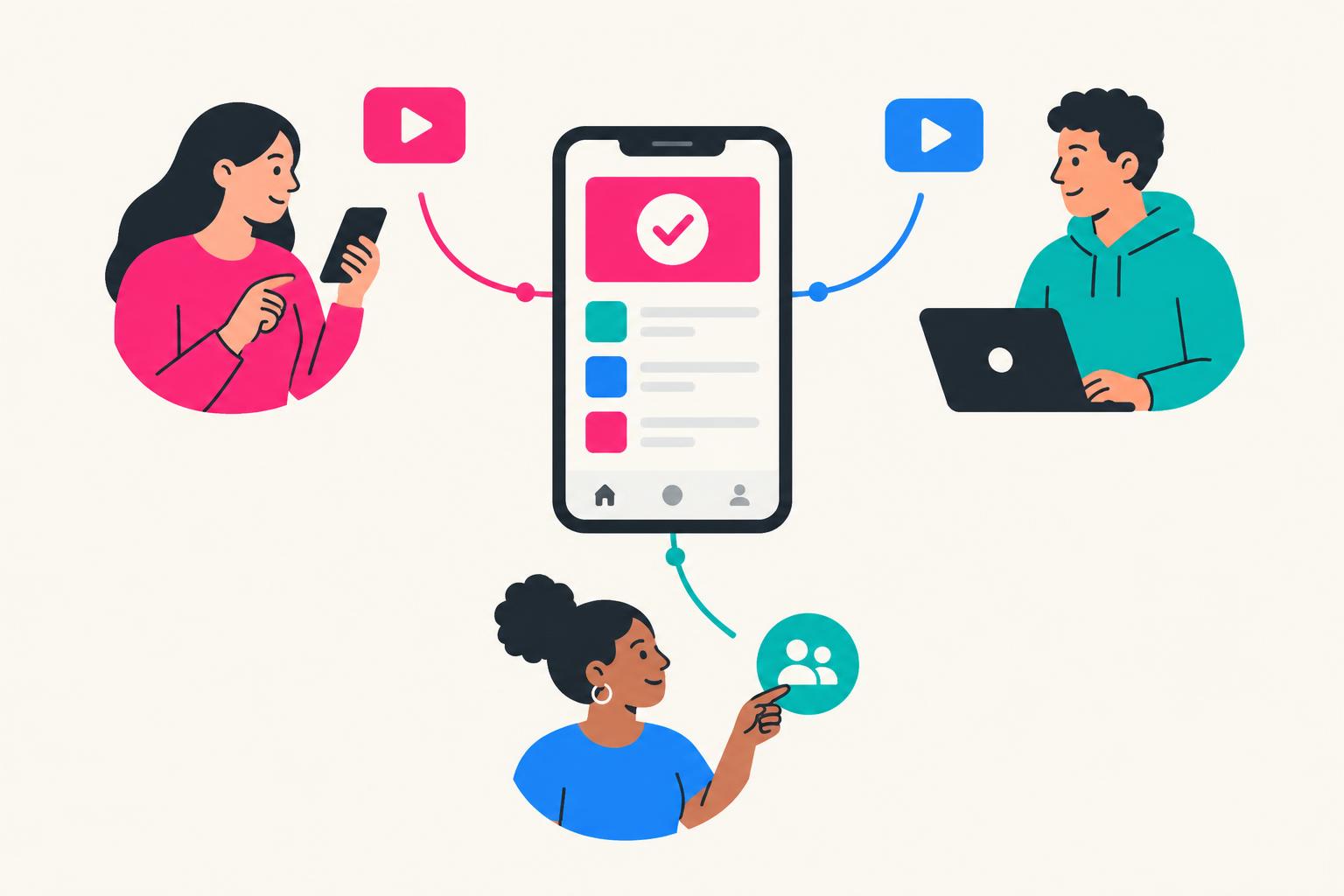
The best B2C customer acquisition channels for consumer SaaS usually connect a recognizable everyday problem to a result someone can experience quickly. My shortlist is UGC-powered paid social, organic short-form, YouTube, niche creators, problem-led SEO, paid search, referrals and app-store or extension discovery. Which one deserves your budget depends on the product, price, audience and retention—not the platform's popularity.
B2C SaaS includes tools people buy for themselves: learning subscriptions, personal productivity apps, creative software and consumer AI products. Some also serve professionals or teams. This guide covers the individual purchase journey. If security reviews, budgets and procurement drive your sales, use the B2B SaaS marketing channels guide instead.
Eight B2C Marketing Channels Worth Considering
| Channel | When it fits | Useful outcome | Common trap |
|---|---|---|---|
| UGC-powered paid social | The result is visually clear and relatable | Activated users from a measured creative test | Buying cheap curiosity clicks |
| Organic short-form | You can teach or demonstrate repeatable use cases | Relevant visits and useful first sessions | Optimizing for viral views unrelated to the product |
| YouTube | Users search for a task or need a fuller explanation | Task-specific visitors who complete the promised action | Hiding the demonstration behind a long introduction |
| Niche creators | A creator's audience already has the problem | Referred users who return and pay | Choosing follower count instead of use-case fit |
| Problem-led SEO | People search for a practical answer | New users from relevant non-brand searches | Publishing broad content with no useful product bridge |
| Paid search | A defined query maps to an honest offer | Paying customers within your cost limits | Paying for searches expecting a different product |
| Referral and sharing loops | The output naturally benefits or interests others | New users who experience value after a real referral | Rewards that attract abuse instead of customers |
| App and extension discovery | Installation is your genuine entry point | Installs that complete setup and first value | Treating every download as a customer |
Define First Value Before You Buy Attention
A signup is often only the start. Someone might create an account for an AI editing app, upload nothing, and never return. Another person might finish a useful edit within the first session and come back next week. If you report both as equally successful acquisitions, you cannot tell which channel brings people who actually want the product.
Define the action that demonstrates the promise was fulfilled. For a meal-planning app, it might be generating and saving a usable plan after reviewing dietary settings. For a language app, it might be completing a first lesson and returning for another. For an editing app, it could be exporting a result the user chose to keep. These are illustrative definitions; validate yours against customer behavior.
Amplitude's product-led growth guide connects acquisition with activation, engagement and monetization. That lifecycle framing is useful for consumer subscriptions, while also applying to some self-serve B2B products. The difference here is the individual buying journey, not an assumption that product-led growth is exclusively B2C.
| Stage | Illustrative creative-app journey | What to check |
|---|---|---|
| Creative | A creator turns their own ordinary photo into a clean poster | The result is real and the limitations are visible |
| Destination | A page for that exact poster workflow | Price, supported inputs and the next action are clear |
| First session | Upload a permitted image, choose a template, review and export | The user can complete the task without avoidable friction |
| Return visit | Create a second useful item | The product solves a repeat need, not only a novelty |
1. UGC-Powered Paid Social: Show a Result People Recognize
For consumer software, creator-led video can bridge the gap between a vague feature and an everyday use case. The person explains why they needed the tool, shows it working and gives the viewer one next step. UGC is the creative; paid social is the distribution channel. Your production budget and media budget are separate, and an effective video still needs a relevant audience and destination.
For the hypothetical poster app, I would start with three honest openings: the messy starting point, the finished output and the frustrating workaround. The body would use the same source image and show the actual steps. That creates a test of message framing, not three unrelated ads whose performance is impossible to compare.
A negative hook can work by challenging the inefficient method, but it should not shame the viewer or exaggerate the product. Try a specific observation such as ‘I kept changing the layout and still could not make this readable.’ Then demonstrate the improvement. Avoid claims about guaranteed earnings, instant expertise or perfect output unless you can substantiate them.
My flAim AI case study recorded 669 destination clicks from $51.13 in spend using a negative-hook video. That illustrates an attention test for an AI product, not proven B2C retention or sales. Tracked conversions were not established, so the campaign cannot tell us the cost of a paying subscriber.
Always state paid relationships clearly, agree on usage rights and avoid fake customer testimonials. A creator can demonstrate software without claiming a long-term experience they did not have. See the FTC disclosure guidance for US requirements and get appropriate guidance for your target markets.
2. Organic Short-Form: Build a Library of Useful Moments
TikTok, Reels and Shorts can introduce your product to people who were not actively searching for it. The strongest recurring content is often one useful moment: a finished output, a small improvement or a task completed in a clearer way. Create a repeatable series around that moment instead of rebuilding the entire product pitch for every post.
For a personal study app, a series could show how different learners organize one topic, test recall and spot a weak area. Each episode uses a distinct example. The content should be useful even to someone who does not sign up immediately. A broad joke might get more views, but the study workflow is more likely to attract someone who could use the product.
Read comments as research. If people ask whether the product works in their language or on their device, answer openly and reflect that information on the destination page. If the audience only comments on an unrelated visual joke, you may have found an entertainment format rather than an acquisition channel.
Track relevant profile visits, product visits and useful sessions where possible. A lack of direct clicks does not automatically make content worthless, but it does mean you need more evidence before scaling the production investment. The short-form video guide covers production and repurposing in more detail.
3. YouTube: Capture Task Intent and Explain the Trade-Offs
YouTube is not only a B2B channel. Consumers search for practical instructions: improving a photo, organizing a study schedule, learning a technique or comparing creative tools. A tutorial reaches the person while that task matters. It also gives enough time to show what the tool does well, what the user must still decide and what the paid version includes.
For a language-learning subscription, an original video could show setting up a week of practice around a specific trip. Show the plan, one lesson and the review flow. Do not promise fluency from a short demonstration. Link to the same starting path or explain how to recreate it, so viewers do not have to hunt through the product after clicking.
The opening should fulfill the title's promise quickly. The demonstration earns trust through visible steps rather than a feature montage. YouTube's performance guidance is useful for understanding appeal, engagement and satisfaction, but your own acquisition reporting must connect relevant viewers to product outcomes.
A searchable tutorial and a fast vertical clip serve different moments. I would not force the same edit into both contexts. Use the YouTube SEO for SaaS playbook for the search process and measure whether those visitors complete the task after signup.
4. Niche Creator Partnerships: Match the Habit, Not Just the Audience Size
Choose a creator who already talks about the task your product supports. A small educator demonstrating a study workflow may be more relevant to a learning app than a large general entertainment account. Inspect actual audience conversations, geography, language and previous demonstrations. Ask what story the creator would tell and why the software belongs in it.
Decide what you are buying: production for your own channels, a sponsored audience placement, an affiliate relationship or a combination. Those are different deliverables and should have different agreements. Do not assume that paying for a UGC video means it will appear on the creator's account.
Give the creator access and time to evaluate the real product. Agree on disclosure, claims, usage duration, edits and reporting. A partner should be able to mention genuine limitations. Restricting every sentence to glowing praise makes a demonstration less informative and can create trust problems.
Use a tracked link or code and follow the referred cohort beyond registration. If the promotion brings a large number of free users who never return, revisit the audience, offer or onboarding before hiring more creators. My SaaS influencer marketing guide explains how to scope the relationship.
5. Problem-Led SEO: Make the Answer Useful Before the Pitch
SEO fits consumer SaaS when people search for a task your software genuinely helps complete. A budgeting product can answer a planning question; an image editor can explain a format or process. The page should give a usable answer and then show where the product improves the work. Do not make the visitor sign up just to read a basic answer you promised in search.
Use real examples and describe constraints. If a free workflow has an export limit or a paid feature is required, say so before the user commits. Google's helpful-content guidance emphasizes useful, trustworthy content. A clear limitation often makes a product recommendation more credible than another list of unsupported benefits.
Avoid creating a broad free-tool audience if the paid subscription solves a different problem. Compare search-origin users by first value and later retention. An article can rank and still be a poor acquisition asset if its visitors have no reason to keep using your product.
6. Paid Search: Match Query, Price and First Action
Paid search captures active demand, but low-price subscriptions have limited room for waste. Inspect whether queries imply a one-time free task, a downloadable file, a competitor or an ongoing subscription need. Your ad and destination should state what the user can actually do, including material pricing or trial conditions.
Start with a narrow group of relevant queries and one matching journey. Reconcile reported conversions with actual new paying customers and refunds. Branded searches may reflect demand created by another channel, so do not assume a branded campaign proves that paid search generated the entire customer relationship.
7. Referral and Product-Sharing Loops: Let Useful Output Travel
A referral loop works best when sharing is a natural consequence of using the software. Someone sends a study deck to a friend, shares a planning document with a partner or publishes a permitted creative output. The recipient sees useful work and has a reason to try the product. This is different from asking every new user to invite contacts before they have experienced value.
Offer sharing after the first useful result. Make privacy choices clear, never upload address books without permission and do not expose private work by default. Rewards should be transparent and limited by rules that prevent self-referrals or fake accounts. Whether you need an incentive at all depends on the task and user motivation.
Measure how many new people arrive, experience value and remain active. A referral reward that buys low-quality signups can make acquisition dashboards look better while making the business worse. If the output is inherently private, referral promotion may be a poor fit; choose another route rather than forcing public sharing.
8. App and Extension Discovery: Win the Installation Decision Honestly
App stores and extension marketplaces matter when installation is the actual entry point. Your title, screenshots and preview should show the main job, required access and realistic output. Keep the message consistent with any external video or ad. A listing should not promise a capability that appears only after a subscription with undisclosed conditions.
For an extension, explain permissions in ordinary language and show what happens after installation. For a mobile subscription, make the first task and payment conditions understandable. Official Apple review guidelines and Google Play policy guidance are the starting points for platform requirements, not a guarantee your listing will be approved.
Treat store visits, installs, account creation and meaningful use as separate steps. If users install but do not complete setup, fix that drop-off before spending more on promotion. For the video asset itself, see my app promo video guide.
Compare Retained Customers, Not the Cheapest Signup
Consumer SaaS can generate impressive signup counts while losing money. Include creative production, media, partner fees and attributable acquisition work in your reporting. Keep a separate media-only metric if useful, but do not label it full customer acquisition cost. Follow comparable cohorts for the same period and state whether payment, activity or both define retention.
| Measure | Channel A | Channel B |
|---|---|---|
| Allocated acquisition cost | $600 | $600 |
| New signups | 300 | 120 |
| Cost per signup | $2 | $5 |
| New paying subscribers | 12 | 24 |
| Cost per new paying subscriber | $50 | $25 |
| Subscribers still paying at the stated follow-up | 6 | 18 |
| Acquisition cost per retained paying subscriber | $100 | About $33.33 |
In this invented example, the more expensive signup source brings more paying and retained subscribers. That does not establish profitability: you still need revenue, refunds, gross margin and the follow-up period. It shows why the first conversion metric is not enough to decide where to scale.
Email can support onboarding and return visits after someone has joined, but it is not automatically a new-customer discovery channel. Keep service messages separate from marketing, obtain appropriate consent where required and honor opt-outs. Do not add people to a promotional flow merely because they needed an account or requested a tool result.
A Four-Week B2C Creative and Channel Test
- 1
Week 1: Repair the first-value journey
Choose a single use case. Confirm the ad promise, destination, pricing and first product action match. Set up appropriate, privacy-respecting measurement.
- 2
Week 2: Produce distinct creative angles
Record the real workflow once, then make problem-led, result-led and workaround-led openings. Adapt the edits for one selected distribution channel.
- 3
Week 3: Compare attention with product use
Inspect which message attracts people who complete the task. Review comments and support questions for misleading promises or avoidable confusion.
- 4
Week 4: Choose the next experiment
Continue a promising angle, revise a weak destination or stop a poor-fit channel. Follow the cohort later before making claims about retention or profitability.
Four weeks is an illustrative review schedule. It does not mean a subscription cohort has matured or an organic channel has had enough time to prove itself. Keep the experiment limited enough that you can explain what changed and why.
Want Creator-Led Videos That Show Your Consumer SaaS Clearly?
I create UGC, demos and tutorials for SaaS and AI owners, supported by a creative team. My job is to turn the product into something a real person can understand and inspect: a recognizable problem, an actual workflow and a clear next step. I do not promise a viral video or a specific acquisition cost.
For a consumer product, we can scope short videos around distinct use cases and agree on the hooks, captions, aspect ratios and usage rights your test needs. If a longer explanation is necessary, a YouTube-style demonstration may be a better first asset. Creator-audience promotion can be discussed separately when my audience fits the product.
Need the broader channel-selection framework? Read SaaS marketing channels.
B2C Customer Acquisition FAQ
What is B2C customer acquisition?
It is the process of attracting individual consumers and turning suitable people into customers. For subscription software, evaluate the journey beyond signup: first value, payment and retention determine whether acquisition is useful.
What are the best B2C SaaS marketing channels?
UGC-powered paid social, organic short-form, YouTube, niche creators, search, referrals and relevant app-store discovery are candidates. Choose based on the audience's task, your product's buying journey and retained-customer economics.
Does YouTube work for consumer SaaS?
It can work when consumers search for a task or need to understand how a tool produces a result. Show a real example, explain limitations and send viewers to a matching starting path. Measure useful product action rather than views alone.
Is UGC better than polished brand advertising?
There is no universal winner. Creator-led content can make the use case relatable, while polished content can show other strengths. Compare honest creative approaches with the same audience, offer and product outcomes instead of assuming one format always converts better.
How should a B2C SaaS set an acquisition budget?
Start from available cash, observed gross profit, retention and a tolerable testing loss. Include creative and distribution costs. Do not scale only because signups are cheap; follow new paying customers and later cohort behavior.
Share
Article footer · AI discovery
Want to explore this topic further?
Ask questions about this article or use it as a starting point for deeper research.
Want content that makes your SaaS product click?
Email promotions@fuelyourdigital.com or explore my content packages.