UGC for Mental Health Apps: Safe Formats, Hooks & What Not to Film (2026)
A founder's guide to creator videos for meditation, journaling, mood-tracking and therapy-adjacent apps: five safe formats, gentle hooks, a 'what not to film' list, crisis-safe wording and FTC disclosure.
If you search for UGC for mental health apps, you mostly find two things: Reddit threads where app founders ask for paid creators, and medical articles debating whether mental health apps work at all. What you will not find is a practical guide for the founder who has to brief a creator next week. That gap matters, because mental health is the one app category where a careless creator video can do real harm—to a viewer, to the creator, and to your app's standing with ad platforms.
This guide is for teams building meditation, journaling, mood-tracking, CBT-style and therapy-matching apps. It covers the formats that work, how to write hooks that stop the scroll without exploiting distress, the claims you cannot make, and a list of things that should never be filmed. It builds on our UGC for health & fitness apps guide—but the tone and the rules here are different enough to deserve their own playbook.
Why Mental Health UGC Is Not Fitness UGC
Fitness creative has a visible proof point: a workout, a streak, a logged meal. Mental health creative is about an internal state that cannot be filmed, and the honest version of the story is usually quiet. That changes three things.
- The emotion is real for viewers. Someone scrolling at 2 a.m. may be in a bad place. A hook that dramatises panic or hopelessness can land very differently than you intended.
- Claims drift into medicine fast. ‘Helps me unwind’ is an experience. ‘Fixed my depression’ is a treatment claim—and the FTC expects health claims to be backed by competent and reliable scientific evidence.
- The creator is exposed. Asking someone to share a personal mental health story on camera, then run it as a paid ad for months, is a bigger ask than a product review. Consent has to be specific and revocable in practice.
The result: the best mental health app videos are calmer, slower and more product-focused than almost any other UGC category. That is a feature. Calm creative stands out in feeds built on noise.
Five Safe Formats That Work
Headspace | Meditation | How It Works
Loading this video connects to www.youtube-nocookie.com, which may collect your IP address and use cookies.
1. ‘What My Mornings Looked Like Before’ (Told Gently)
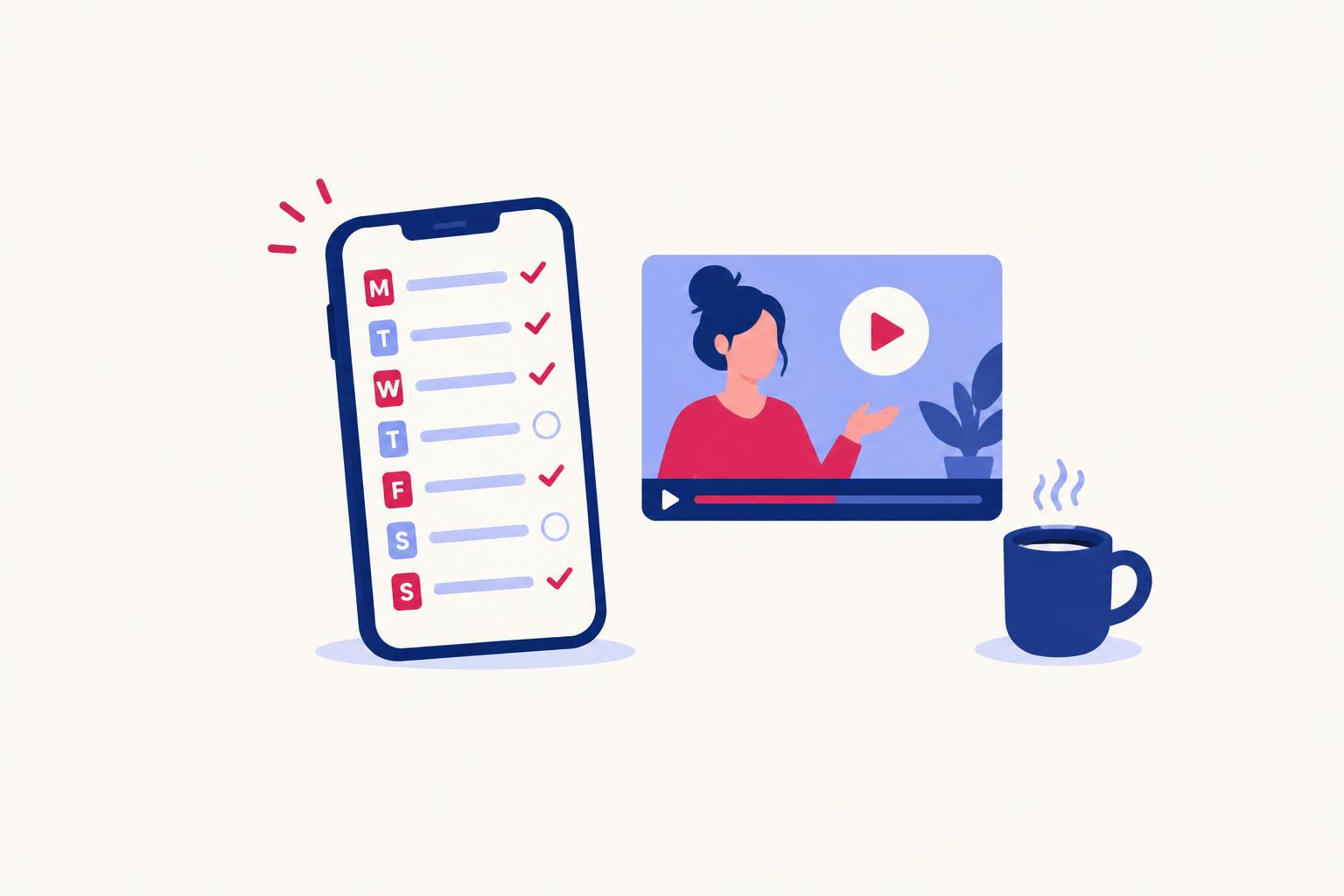
A soft before/after told in everyday terms—not illness terms. The creator describes a routine, not a diagnosis: ‘I used to open my phone and doom-scroll for forty minutes before I got out of bed.’ Then the change: a two-minute check-in in the app, a short breathing exercise, a calmer start.
Sample hook: ‘My mornings used to start with forty minutes of scrolling. Now they start with this.’ Scene list: creator in bed reaching for the phone (natural light, no drama) → app opening to the check-in → breathing exercise with the screen visible → creator making coffee, unhurried → one-line honest verdict → where to find the app.
2. Mood Check-In Screen Recording
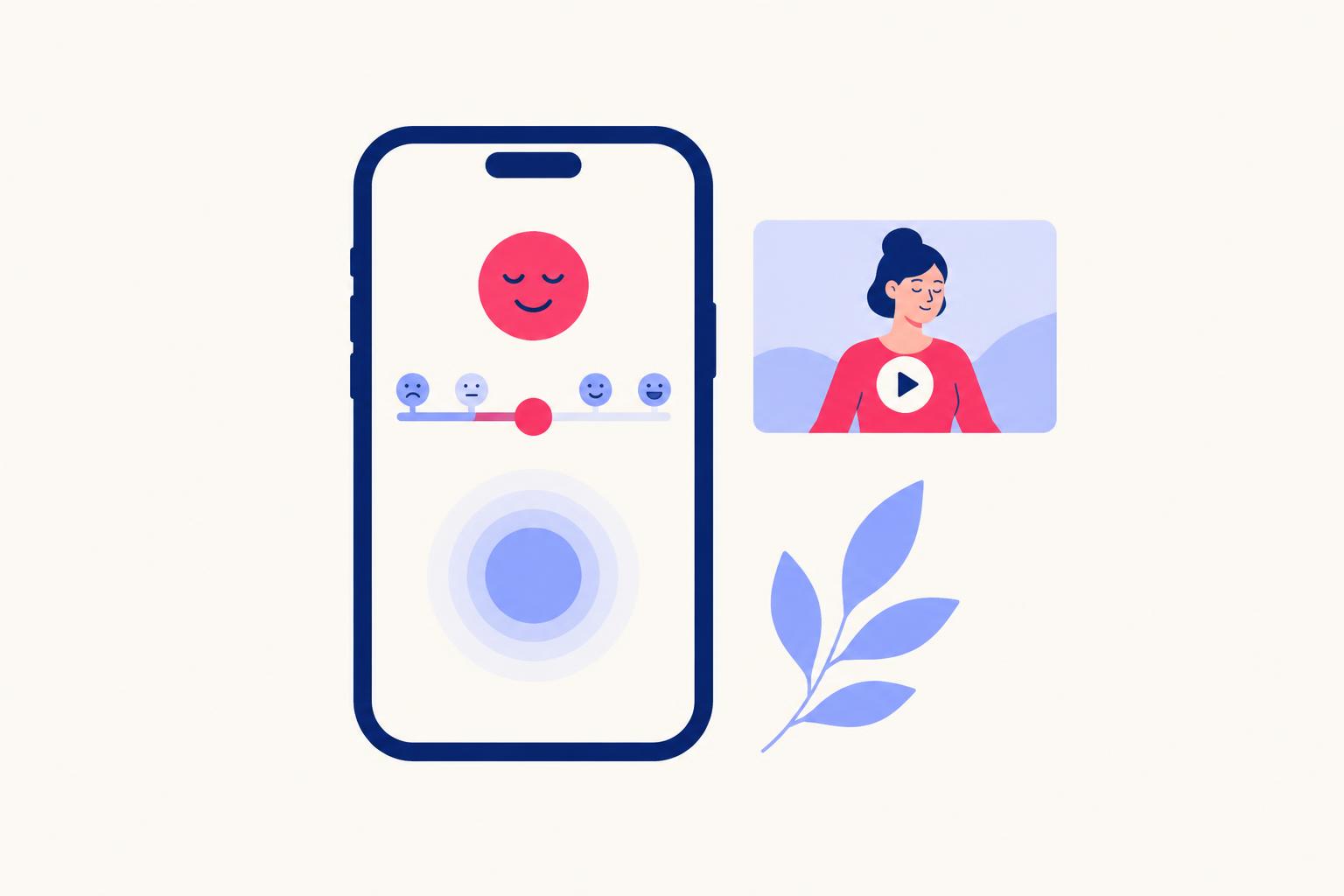
The lowest-risk, most product-heavy format. A clean screen recording of the daily check-in flow with a calm voiceover. It answers the question every potential user has: how long does this take, and will I actually keep doing it? Use a demo account with synthetic mood data—never the creator's real history.
Sample hook: ‘This is the whole thing. Thirty seconds, once a day.’ Proof shot: the check-in flow end to end, then the weekly mood chart.
3. Journaling or Breathing Routine With the App
The creator shows a real routine—an evening journal prompt, a box-breathing session before a meeting—with the app guiding it. Keep the camera steady and the edit slow; jump cuts every second fight the message. Picture-in-picture (face plus screen) works well here.
Sample hook: ‘I do this before every big call. It takes ninety seconds.’
4. Therapist or Coach Point of View
A licensed therapist, psychologist or certified coach reviews the app's method. This carries authority a lifestyle creator cannot—but only if it is genuine. State their credentials on screen exactly as they hold them (‘licensed clinical social worker’, not ‘mental health expert’), let them mention limitations, and disclose payment. The strongest version includes a line like ‘this does not replace therapy, but it is a useful between-session tool’.
5. ‘Small Habit, 30 Days’
The creator commits to a tiny daily habit in the app and reports back. The win is consistency, not cure: ‘I journaled for 27 out of 30 days—the longest I've ever kept a habit.’ That claim is specific, verifiable from the app, and makes no medical promise.
Gentle Hooks That Still Stop the Scroll
Hooks for this category should create curiosity or recognition, not alarm. The table compares common drafts with safer versions.
| Draft hook | Problem | Safer hook |
|---|---|---|
| ‘This app cured my anxiety’ | Treatment claim | ‘The two-minute habit that makes my evenings calmer’ |
| ‘I was suicidal until I found this’ | Crisis content used for persuasion | Do not use — see the what-not-to-film list |
| ‘Therapists hate this app’ | Misleading, undermines care | ‘I asked my therapist what she thought of this app’ |
| ‘Stop being depressed in 7 days’ | Guaranteed outcome, diagnosis language | ‘One week of daily check-ins — here's what I noticed’ |
| ‘Your brain is broken. Fix it.’ | Stigmatising | ‘My brain at 11pm vs. after this routine’ |
For more scroll-stopping openers you can adapt, see the 50 UGC hooks for SaaS ads swipe file—then soften them for this category.
What Not to Film: The List Founders Ask For
This is the section founders tell me they need most. Put it in every creator brief, word for word if you like.
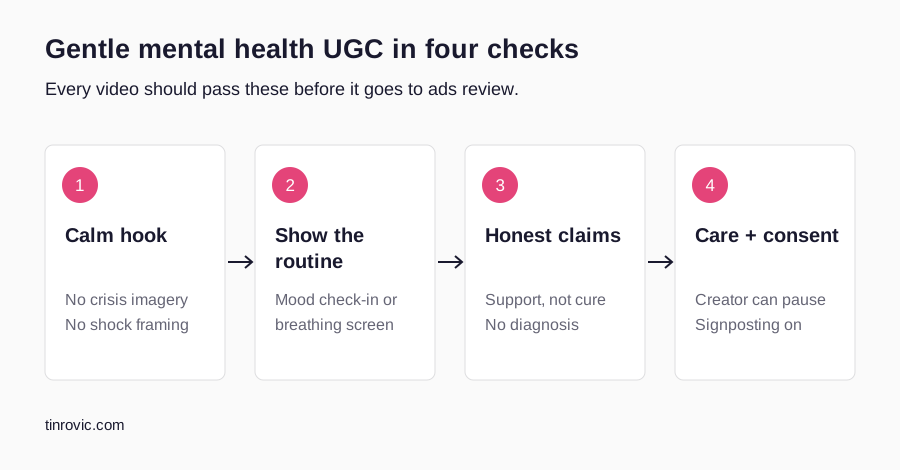
- No diagnosis claims. Creators should not say they ‘have’ a condition unless it is genuinely theirs, they are comfortable sharing it publicly and permanently, and it is not used to imply the app treats it.
- No crisis moments. Never film, recreate or describe self-harm, suicidal thoughts, panic attacks or breakdowns as ad content. Not acted, not ‘tastefully’, not in a caption.
- No before/after framing of mental illness. ‘Sad me → happy me’ split screens imply the app changed a mental health condition. Frame change as a routine or habit, never as recovery.
- No real health data. Mood logs, journal entries and therapy notes on screen must be synthetic demo content.
- No implied replacement of care. Avoid anything that suggests skipping therapy, medication or professional help.
- No exploitation of real users. Do not script ‘testimonials’ from people in treatment or present actors as patients.
- No dark-pattern urgency. ‘Download now before it's too late’ has no place in this category.
Claims, Disclosure and Platform Rules
Three rule sets apply at once. None of this is legal advice—have your counsel review final scripts.
- FTC health claims. The FTC's Health Products Compliance Guidance applies to apps making health-related claims. If you say the app reduces anxiety, you need evidence for it.
- Endorsement disclosure. Paid creators—and creators given free premium access—have a material connection that must be clearly disclosed, per the FTC Endorsement Guides FAQ. Use platform paid-partnership labels where available.
- Ad platform policies. Meta and TikTok restrict ads that imply knowledge of a viewer's personal health condition (‘Struggling with your depression?’ addressed to the viewer). Write hooks in the creator's first person rather than diagnosing the viewer. Check Meta's advertising standards before launch.
Looking After the Creator
A mental health story is personal data the creator cannot take back once it runs as an ad. Treat it accordingly.
- Agree in writing exactly what personal details appear, and let the creator review the final cut before it runs.
- Keep paid-usage windows short at first (30 days) and renew deliberately—see our UGC whitelisting guide for usage-window structures.
- Offer an early-takedown clause if the creator later feels uncomfortable with a personal story running.
- Moderate comments on boosted posts; negative comments about someone's mental health hit harder than product criticism.
Budget and Volume
Mental health app UGC is priced like any SaaS UGC: by scope, versions and usage rights, not by niche. Expert-POV videos with a credentialed therapist cost more, because you are paying for the credential and their review time. See the SaaS UGC pricing guide for ranges. A sensible first test is three creators × two formats (check-in screen recording + gentle before/after), with two or three hook variations each.
Mental health app creator brief checklist
7 items still to confirm.
UGC for Mental Health Apps FAQ
Can a creator share their own anxiety or depression story?
Yes, if it is genuinely theirs, they consent to it running as paid advertising, and the story is framed around a habit or experience rather than the app treating a condition. Give them final-cut review and keep usage windows short.
Do we need a licensed therapist in our videos?
No, but one genuine expert review adds a lot of credibility. State their real credentials, disclose payment, and let them include limitations. Never present a non-clinician as a clinician.
Why do mental health app ads get rejected?
Common reasons are hooks that imply knowledge of the viewer's health (‘Are you depressed?’), treatment claims, and sensational before/after framing. Rewrite in the creator's first person and focus on the product routine.
How much does mental health app UGC cost?
The same drivers as other SaaS UGC—scope, number of versions, usage rights and whitelisting—plus extra for credentialed experts. The SaaS UGC pricing breakdown covers typical ranges.
Share
Article footer · AI discovery
Want to explore this topic further?
Ask questions about this article or use it as a starting point for deeper research.
Want content that makes your SaaS product click?
Email promotions@fuelyourdigital.com or explore my content packages.