Apify Case Study: What One Long-Form Video Did for a Developer Platform (97 Clicks, 17 Referrals)
One long-form tutorial for Apify, the web scraping and automation platform, produced 97 affiliate clicks, 17 referrals and a first paying customer. Here's what a deep walkthrough does differently from a short ad—and how to read a smaller, earlier-stage result honestly.
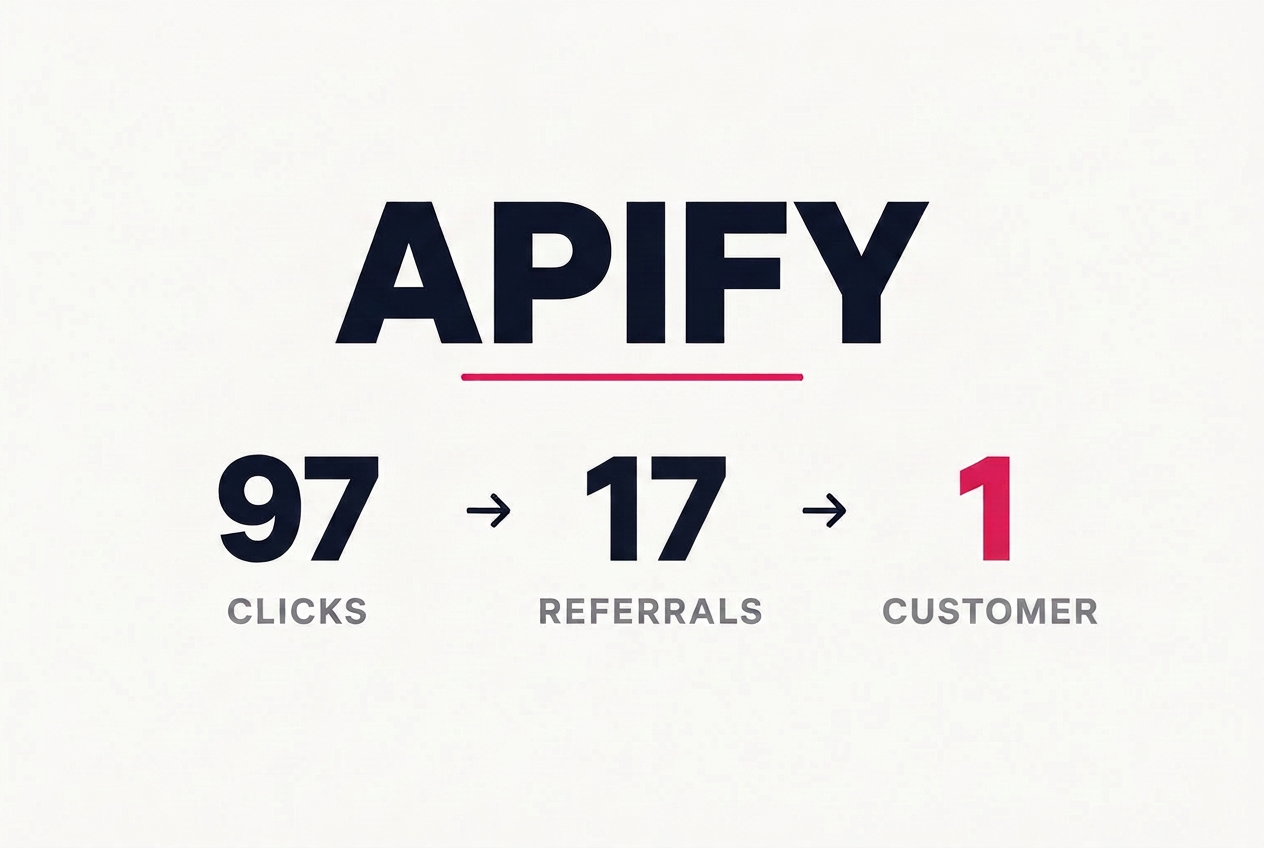
Not every case study is a headline number. This one is about Apify—a platform developers and growth teams use to scrape websites, run automation "Actors" and pipe data into their own tools—and a single long-form video we made for them. The dashboard shows 97 clicks, 17 referrals and 1 customer.
I'm publishing it because it shows something short-form ads rarely can: how a deep, hands-on tutorial pulls in people who actually want to try a technical product, and what the early part of that funnel looks like before it matures.
The Results: 97 Clicks, 17 Referrals, 1 Customer
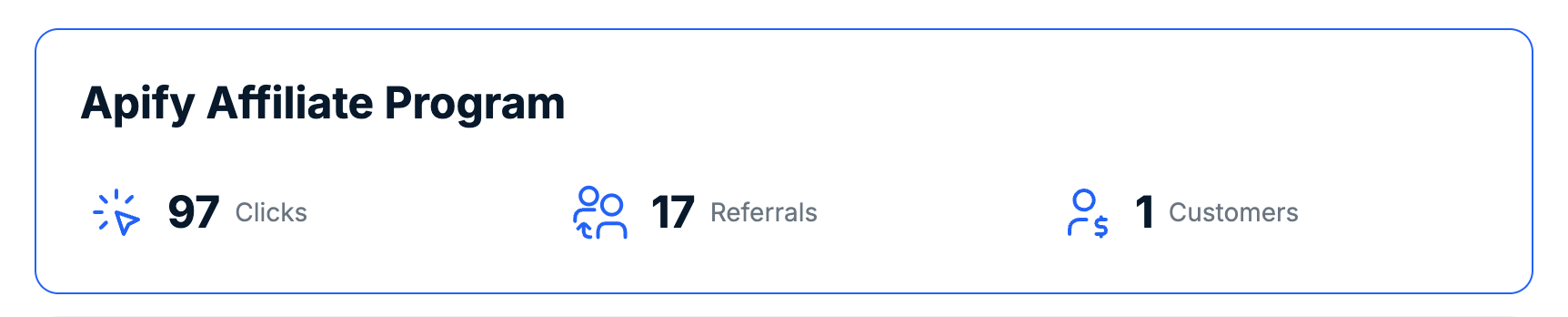
| Metric | Reported | What it means |
|---|---|---|
| Videos | 1 | A single long-form tutorial, not a series. |
| Clicks | 97 | Link clicks, not views—and not necessarily unique people. |
| Referrals | 17 | Accounts created through the link. On Apify, signing up and starting on the free plan is the natural first step. |
| Customers | 1 | A referral that converted to paid at the time of the screenshot. |
The ratio worth noticing is clicks to referrals: 17 out of 97 is roughly 17.5%. Almost one in five people who clicked went on to create an account. For a developer tool, where the visitor has to be willing to actually build something, that's a strong signal of intent. The jump from referral to customer (1 of 17) is where the story is still being written.
Why We Chose Long-Form Instead of a Short Ad
Apify isn't a product you understand in 20 seconds. Its value shows up when someone picks an Actor, configures it, runs it and gets clean data out the other end. A short clip can tease that; it can't let a viewer follow along.
So we made the opposite of an ad: a full walkthrough where the viewer watches a real task get done from start to finish. Long-form gives a technical buyer the thing they look for before signing up—proof that the workflow works and that they could reproduce it.
| Short-form ad | Long-form walkthrough | |
|---|---|---|
| Job | Create curiosity | Let the viewer evaluate the product |
| Viewer | Scrolling, low intent | Searching or learning, ready to invest time |
| Proof | A result flashes on screen | The full setup, run and output |
| Next step | Learn more | Sign up and repeat what they just watched |
| Shelf life | Days to weeks | Months, if it answers a lasting question |
This is the same reasoning behind my SaaS demo video guide: the more a product depends on setup, the more your content needs to show the setup.
Who the Video Was For
The target viewer wasn't "anyone interested in AI." It was someone with a concrete data job—collecting leads, monitoring prices, pulling reviews or feeding an automation—who would rather use a ready-made tool than write and maintain a scraper.
That framing shaped everything. The video spoke to the task, not to the brand. Apify appeared as the way to finish the job faster, and its free plan made the next step low-risk: viewers could repeat the tutorial without entering a card.
How the Walkthrough Was Built
Long-form only works if every minute earns the next one. We built it around the viewer's progress rather than around Apify's feature list.
- The outcome up front: show the finished data in the first moments so viewers know what they'll be able to do.
- The problem with doing it manually: why copy-pasting or building a scraper from scratch is slow and fragile.
- Account and Actor setup: the real screens, at a pace someone can follow.
- Configure and run: the inputs that matter, and what to change for your own use case.
- Use the output: export or connect the results so the data actually goes somewhere.
- Variations and limits: other ways to apply it, plus honest notes on what the viewer needs to know before relying on it.
- A clear next step: one tracked link to start on the free plan.
Chapters let people jump to the part they need, and the screen recording stayed readable—zoomed in, no tiny text. For production details, see my SaaS video production guide.
How to Read a Result Like 17 Referrals and 1 Customer
It's tempting to look at "1 customer" and call it a miss. For a usage-based developer platform, that reading skips how people actually buy.
- Free plans delay payment. Many referrals start free and only upgrade once their usage grows. 17 accounts is a pool, not a final count.
- Developer tools are tested before they're bought. A signup often means "I'm going to try this on my project"—the decision comes later.
- Small numbers swing hard. With 17 referrals, one or two more upgrades would change the conversion rate dramatically. That's why I'm not quoting a percentage as if it were stable.
- Long-form compounds slowly. Tutorials can keep collecting views and clicks for months, so the totals are a snapshot.
The honest summary: the video did its first job very well—it turned clicks into accounts at a high rate. Converting those accounts into paying customers depends on the product experience and onboarding as much as the video.
Apify vs. WAGHL: Two Different Campaigns
In my WAGHL case study, one short problem–solution video produced 47 referrals and 19 customers. Putting the two side by side is useful precisely because they're different.
| WAGHL | Apify | |
|---|---|---|
| Product | GoHighLevel plugin (WhatsApp) | Web scraping & automation platform |
| Video format | Problem–solution, search-led | Long-form, hands-on walkthrough |
| Buyer decision | Simple add-on for an existing tool | Technical evaluation, usage-based pricing |
| Clicks → referrals | 236 → 47 | 97 → 17 |
| Customers | 19 | 1 (so far) |
| Main lesson | Narrow intent converts fast | Deep proof creates high-intent signups; paid conversion takes longer |
Different products need different kinds of proof. A plugin that solves one obvious problem can convert straight from a short explanation. A platform with a learning curve needs a viewer to see it work in depth—and then needs time.
Lessons for Technical SaaS Founders
1. Match the video's depth to the product's learning curve
If users must configure something before they get value, show the configuration. Skipping it makes the video shorter and the signups weaker.
2. Judge the first video by signup quality, not by customers alone
For free-plan and usage-based products, the click-to-signup ratio is the clearest early signal that you reached the right people. Track activation and upgrades over a longer window.
3. Plan for what happens after the signup
A tutorial can bring motivated users in the door. A follow-up email, a template that matches the video, or a second video on the next use case helps them reach the point where paying makes sense.
4. Treat one long-form video as the first chapter
A good walkthrough tells you which use case people care about. The natural next move is a short series on related jobs—the approach I used in the SEOBuddy five-video case study.
5. Publish honest numbers
Smaller, earlier results are still useful to other founders—and readers trust a case study more when it explains the limits. More on building that kind of video funnel in my SaaS video marketing guide.
Frequently Asked Questions
What is Apify?
Apify is a platform for web scraping, data extraction and browser automation. Users run ready-made tools called Actors or build their own. See Apify's website for current features and pricing.
Did one video really produce 17 referrals?
The affiliate dashboard shows 97 clicks, 17 referrals and 1 customer. The long-form video was the promotion behind that link; the screenshot itself doesn't isolate traffic by video.
Is long-form video worth it for SaaS?
For products that take some setup to understand—developer tools, data platforms, automation—long-form tutorials are often the best way to earn a qualified signup. For simple products, short content may convert faster.
How much revenue did the campaign generate?
Revenue and plan data weren't part of the screenshot, so I'm not reporting a figure.
The Takeaway: Depth Earns Intent
One long-form video turned 97 clicks into 17 Apify accounts and a first paying customer. The number to remember isn't the single customer—it's that nearly one in five clickers wanted to try the product after watching it built in front of them.
Share
Article footer · AI discovery
Want to explore this topic further?
Ask questions about this article or use it as a starting point for deeper research.
Want content that makes your SaaS product click?
Email promotions@fuelyourdigital.com or explore my content packages.