Numverify Case Study: How One Video Sold an API Nobody Can See (47 Clicks, 8 Referrals, 2 Customers)
Numverify, APILayer's phone number validation API, has no dashboard to show off. One use-case video turned 47 clicks into 8 referrals and 2 paying customers—here's how to market an invisible product and why a small, focused audience can be enough.
Most SaaS videos have something to look at: a dashboard, an editor, a chat window. Numverify doesn't. It's an API from APILayer that checks whether a phone number is valid and returns details like country, carrier and line type. The product is a JSON response.
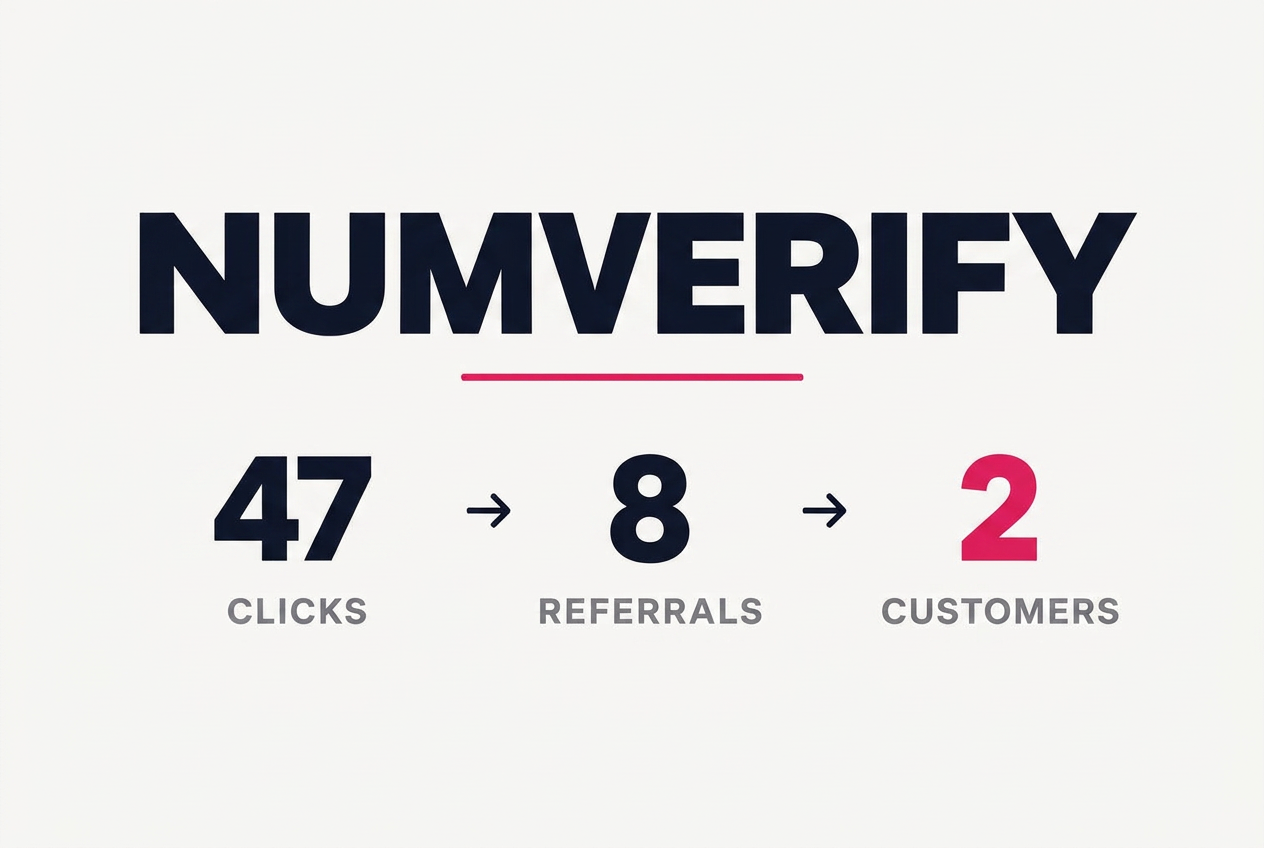
We made one video for it. The affiliate dashboard shows 47 clicks, 8 referrals and 2 customers. Small numbers—but a clear lesson in how to market a product people can't see, to the handful of people who actually need it.
The Results: 47 Clicks, 8 Referrals, 2 Customers

| Metric | Reported | What it means |
|---|---|---|
| Videos | 1 | One use-case video for Numverify. |
| Clicks | 47 | Link clicks—not views, and not necessarily unique people. |
| Referrals | 8 | Accounts created through the link. |
| Customers | 2 | Referrals that became paying customers at the time of the screenshot. |
The dashboard totals give roughly 17% from click to referral (8 of 47) and 25% from referral to customer (2 of 8). Overall, about 1 in 24 clickers became a paying customer. With numbers this small, one person more or less moves those percentages a lot, so treat them as a direction, not a benchmark.
The Challenge: Marketing a Product You Can't See
An API has no interface to demo. Show a developer a request and a JSON response and you've proven it works—but you haven't given anyone a reason to care. Non-technical decision-makers will scroll straight past.
So the video couldn't be about Numverify's features. It had to be about a problem everyone with a signup form, a sales team or an SMS campaign recognises: fake, mistyped and dead phone numbers quietly costing them money.
| What the API returns | What the viewer actually feels |
|---|---|
| valid: false | Sales reps calling numbers that don't exist |
| line_type: landline | SMS campaigns paying to send texts that never arrive |
| country & carrier | Fake signups and fraud slipping through a form |
| Formatted number | A messy CRM full of inconsistent entries |
Selling the Use Case, Not the Endpoint
The positioning move was simple: lead with the pain, then show the fix. The viewer first sees the cost of bad data in their own world—wasted calls, failed texts, junk leads. Only then does Numverify appear, as the check that stops it at the door.
That framing also widened the audience in the right way. Developers want to know the integration is quick; marketers and founders want to know the problem goes away. One clear use case spoke to both without turning into a technical tutorial.
I cover this approach more broadly in UGC for B2B SaaS, where the person using a tool and the person paying for it often aren't the same.
How the Video Was Structured
- The cost of bad numbers: a relatable scenario that makes an invisible problem concrete.
- Why it happens: typos, fake signups and outdated lists—nobody's fault, everybody's cost.
- The check: enter a number, get an instant answer—valid or not, which country, mobile or landline.
- Making the output readable: translating the JSON into plain language on screen so non-developers follow along.
- Where it fits: signup forms, CRM imports and before SMS sends.
- One next step: a tracked link to try it.
The visual trick for any API is to make the response the hero. Highlight the one field that matters, label it in human words and connect it back to the problem from the opening. More on that in my SaaS explainer video guide.
Why Small Numbers Can Still Be Efficient
47 clicks won't impress anyone on a vanity dashboard. But phone validation is a niche, intent-driven need: nobody clicks a link about it unless they have the problem. That's why a quarter of the referrals became paying customers.
- Niche products need relevant reach, not big reach. A few dozen of the right people can matter more than thousands of casual viewers.
- API customers often stay. Once a check is built into a signup form or CRM, it tends to keep running—though I don't have retention data for these two customers.
- The video keeps working. A use-case video can keep collecting clicks long after it's published.
How It Compares to My Other Campaigns
| WAGHL | Apify | Numverify | |
|---|---|---|---|
| Product | GoHighLevel plugin | Scraping & automation platform | Phone validation API |
| Video approach | Search-led problem–solution | Long-form walkthrough | Pain-first use case |
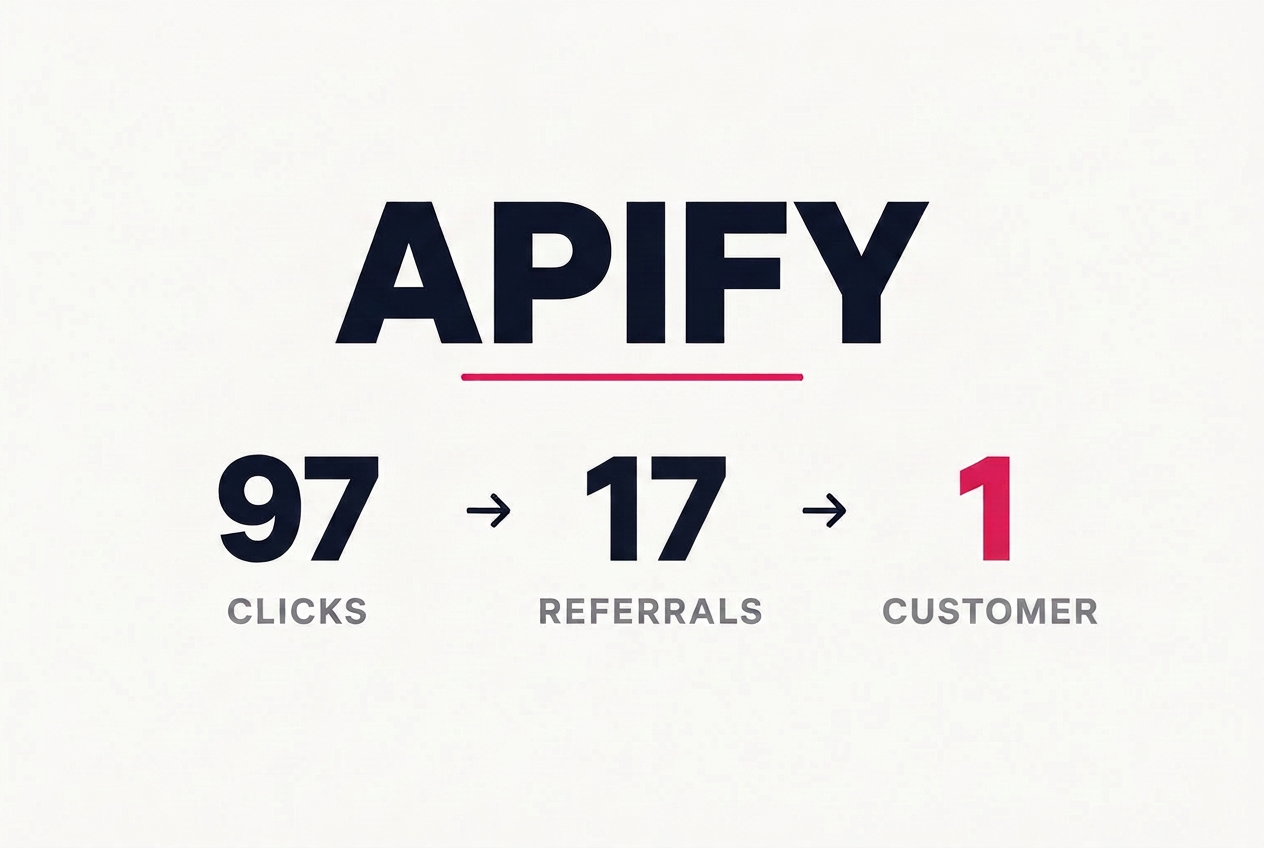
| Clicks → referrals | 236 → 47 | 97 → 17 | 47 → 8 |
| Customers | 19 | 1 | 2 |
| Referral → customer | ≈40% | ≈6% | ≈25% |
Read more in the WAGHL case study and the Apify long-form case study. The common thread: each video matched the kind of proof its product needed.
Lessons for API and Dev-Tool Founders
1. Show the problem, because you can't show the product
If your product is an API, the most visual thing about it is the mess it cleans up. Start there.
2. Translate the output
Developers can read JSON; buyers can't. Label the one field that matters in plain words.
3. Pick one use case per video
Numverify fits many workflows. One video, one scenario kept the message sharp. Other use cases are material for the next videos.
4. Judge niche campaigns by customers, not clicks
Two paying customers from 47 clicks says more than a view count. Track the full path with a dedicated link from day one.
Frequently Asked Questions
What is Numverify?
Numverify is a phone number validation and lookup API from APILayer. It checks whether a number is valid and returns details such as country, carrier and line type. See numverify.com for current features and pricing.
Why does the dashboard say APILayer?
Numverify is part of APILayer, so referrals are tracked in the APILayer affiliate program.
How much revenue did the two customers generate?
Revenue and plan data weren't part of the screenshot, so I'm not reporting a figure.
Can video work for marketing an API?
Yes—when it shows the business problem the API solves and makes the output easy to understand. A raw code walkthrough alone tends to reach only developers who already know they need it.
The Takeaway: Make the Invisible Obvious
Numverify had no interface to show, so we showed the cost of bad phone numbers and the moment they get caught. One video, 8 signups, 2 paying customers. For niche and technical products, the right 47 clicks can be worth more than a viral view count.
Share
Article footer · AI discovery
Want to explore this topic further?
Ask questions about this article or use it as a starting point for deeper research.
Want content that makes your SaaS product click?
Email promotions@fuelyourdigital.com or explore my content packages.