SaaS Go-to-Market Strategy: A Step-by-Step Framework to Launch and Scale
A practical SaaS go-to-market strategy framework: ICP, GTM motions (PLG, sales-led, community, creator-led), pricing, channels, launch plan, metrics and a 90-day template — with real examples.
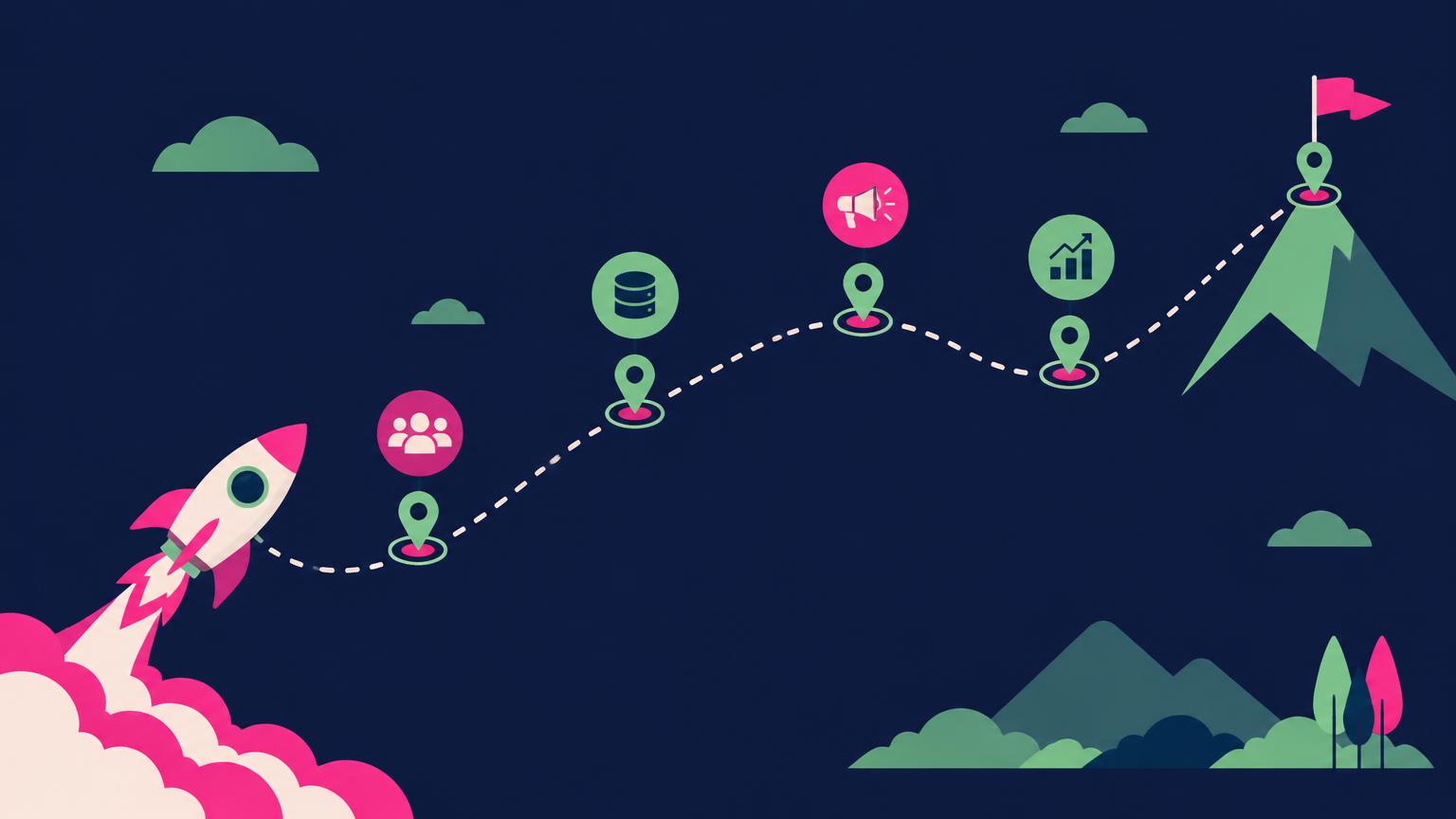
A great product with no go-to-market strategy is a well-kept secret. A SaaS go-to-market (GTM) strategy is the plan for how you'll reach the right buyers, convince them, and turn them into paying, retained customers — repeatably.
I've helped AI and SaaS companies get in front of buyers through video — from generating over $100K in affiliate revenue for GoHighLevel to search-led YouTube campaigns for SEOBuddy. This guide is the GTM framework I'd use if I were launching a SaaS today.
What Is a SaaS Go-to-Market Strategy?
A GTM strategy answers five questions: who are we selling to, what problem do we solve, how do they buy, where do we reach them, and how much do we charge. It's narrower than an overall SaaS marketing strategy — GTM is specifically about bringing a product (or new market, or new tier) to customers.
| GTM strategy | Marketing strategy | Product marketing | |
|---|---|---|---|
| Scope | Launch & scale into a market | Ongoing brand and demand | Positioning & messaging |
| Owners | Founders, sales, marketing, product | Marketing | PMM |
| Time frame | Launch + first 12 months | Continuous | Continuous |
| Key output | GTM plan | Channel plan & budget | Positioning, launches, assets |
Positioning sits at the core of any GTM plan — see SaaS product marketing for the full playbook.
Why Most SaaS Launches Stall
- No clear ICP. “SMBs and enterprises” is not a market.
- Motion mismatch. A $49/month tool sold through enterprise sales cycles bleeds cash; a $50K contract sold through self-serve never closes.
- Too many channels. Ten channels done badly beat zero, but lose to two done well.
- No proof. Buyers want to see it working — demos, testimonials, a trusted voice — before they commit.
- Launch day = strategy. A Product Hunt spike isn't a GTM. Distribution has to compound.
The 8-Step SaaS Go-to-Market Framework
| Step | Question | Output |
|---|---|---|
| 1. Market | Is there a painful, funded problem? | Market & TAM notes |
| 2. ICP | Who feels it most and buys fastest? | ICP + personas |
| 3. Positioning | Why us vs. their real alternative? | Positioning statement |
| 4. Motion | How do they want to buy? | PLG / sales-led / hybrid |
| 5. Pricing | How do we capture value? | Tiers, value metric |
| 6. Channels | Where do they already pay attention? | 2–3 priority channels |
| 7. Launch | How do we enter the market? | Phased launch plan |
| 8. Measure | Is it working and repeatable? | GTM dashboard |
Steps 1–3: Market, ICP and positioning
Start with 15–20 customer conversations. You're looking for a segment with a clear trigger, budget, and urgency. Validate with real behavior: waitlist signups, pre-sales, or demo requests. Then position against what they'd do without you — the April Dunford positioning method is the gold standard.
Step 4: Choose Your GTM Motion
| Motion | Best when | Typical ACV | Examples of key assets |
|---|---|---|---|
| Product-led (PLG) | Fast time-to-value, self-serve | <$5K | Free trial, onboarding videos, tutorials |
| Sales-led | Complex, high-stakes purchase | $15K+ | Demos, case studies, SDR outreach |
| Hybrid (product-led sales) | Self-serve start, upsell to teams | $5K–50K | PQL scoring, sales-assist |
| Community-led | Practitioners learn from peers | Any | Community, events, templates |
| Creator / partner-led | Buyers trust voices they follow | Any | UGC, YouTube reviews, affiliates |
OpenView's product-led growth research is a useful reference for PLG. Most modern AI tools start product-led and layer creator distribution on top.
Step 5: Pricing and Packaging for Your Motion
- Pick a value metric that grows with customer success — seats, credits, contacts, projects.
- Three tiers is usually enough: entry, core (most popular), and scale.
- Match the motion: PLG needs a free plan or trial; sales-led needs a “talk to sales” tier.
- Revisit quarterly. Early pricing is a hypothesis. Price Intelligently/Paddle's research shows most SaaS underprices.
Step 6: Pick 2–3 Channels Where Your Buyers Already Are
| Channel | Speed | Cost | Compounds? | Best for |
|---|---|---|---|---|
| YouTube search | Medium | Low–Med | Yes | Problem-aware buyers |
| Short-form video / UGC | Fast | Low–Med | Partly | Discovery, ads creative |
| Creator partnerships | Fast | Medium | Partly | Borrowed trust + reach |
| SEO / blog | Slow | Low | Yes | Evaluation-stage searches |
| Paid social / search | Fast | High | No | Scaling proven messaging |
| Outbound | Medium | Medium | No | Sales-led, high ACV |
| Affiliates | Medium | Rev-share | Yes | Tools with strong margins |
Channel details: SaaS video marketing, short-form video marketing, content marketing for SaaS and B2B SaaS marketing.
The Creator-Led GTM Layer
The fastest-moving GTM teams in AI and SaaS don't build an audience from zero — they borrow one. A creator who already reaches your ICP can demo your product, explain it in plain language, and drive trials from day one. And the same videos double as ad creative, landing-page demos and onboarding content.
Long-form works too. This GoHighLevel video kept ranking and driving affiliate revenue long after it was published — a GTM channel that compounds:
GoHighLevel tutorial
Loading this video connects to www.youtube-nocookie.com, which may collect your IP address and use cookies.
Want to hire creators yourself? Read how to find UGC creators and best UGC creators for SaaS.
Step 7: A Phased Launch Timeline
| Phase | When | What happens |
|---|---|---|
| Pre-launch | −6 to −2 weeks | Waitlist, beta users, record demo + creator videos, line up partners |
| Soft launch | −2 to 0 weeks | Beta testimonials, fix onboarding, tighten messaging |
| Launch | Week 0 | Product Hunt, email, creator posts go live, founder posts, PR |
| Amplify | Weeks 1–4 | Turn best organic clips into ads, publish YouTube tutorials |
| Compound | Months 2–6 | SEO, ongoing creator content, case studies, affiliates |
Product Hunt's own launch guide is worth reading before launch day.
Step 8: GTM Metrics That Matter
| Metric | Healthy early benchmark* | Why it matters |
|---|---|---|
| CAC payback | < 12 months | Capital efficiency |
| LTV:CAC | ≥ 3:1 | Unit economics |
| Activation rate | Rising week over week | Value is clear |
| Trial-to-paid | Varies by motion | Pricing + onboarding fit |
| Net revenue retention | > 100% | Expansion beats churn |
| Pipeline by channel | — | Where to double down |
*Directional ranges commonly cited in SaaS benchmarks; your numbers will vary by stage and ACV. See SaaS Capital's research for more data.
A 90-Day SaaS GTM Template
| Weeks | Focus | Deliverables |
|---|---|---|
| 1–2 | Research | 20 interviews, ICP doc, competitor map |
| 3–4 | Strategy | Positioning, motion choice, pricing v1 |
| 5–6 | Assets | Homepage, 90s demo, 5 UGC clips, onboarding videos |
| 7–8 | Pre-launch | Waitlist, beta, creator partnerships booked |
| 9 | Launch | Launch day across all priority channels |
| 10–13 | Amplify & measure | Ads from best clips, YouTube tutorials, GTM dashboard review |
Common SaaS GTM Mistakes
| Mistake | Fix |
|---|---|
| Targeting everyone | One ICP until you win it |
| Wrong motion for your price | Match motion to ACV |
| Spreading across every channel | Two or three, done well |
| Launching without proof | Beta testimonials + demos first |
| Treating launch as the finish line | Plan the 6 months after |
| Only building your own audience | Borrow audiences through creators |
Frequently Asked Questions
What is a go-to-market strategy for SaaS?
It's the plan for how a SaaS product reaches its target customers: the ICP, positioning, sales motion, pricing, channels, launch plan and metrics.
Should my SaaS be product-led or sales-led?
If users can get value alone in minutes and your price is low, start product-led. If the purchase is complex or high-value, go sales-led. Many companies end up hybrid.
How long does a SaaS GTM plan take?
A solid first version takes 4–6 weeks of research and planning, followed by a phased launch and roughly 90 days before you have reliable data.
Do creators work for B2B SaaS go-to-market?
Yes — especially for AI and SMB tools. Buyers trust people who use the product on camera, and the videos keep working as ads, demos and search content.
Final Thoughts
A SaaS go-to-market strategy isn't a document — it's a set of focused bets: one buyer, one motion, a few channels, and real proof. If you want a creator to bring your product to market with demos, UGC and long-form videos in front of software buyers, explore my packages or book a call.
Share
Article footer · AI discovery
Want to explore this topic further?
Ask questions about this article or use it as a starting point for deeper research.
Want content that makes your SaaS product click?
Email promotions@fuelyourdigital.com or explore my content packages.