SaaS Marketing Strategy: A Practical Framework for Founders Who Need Growth Without Wasting Budget
A clear, step-by-step SaaS marketing strategy: positioning, ICP, channel selection, content, video, creators, affiliates, paid ads, metrics, and a 90-day plan.
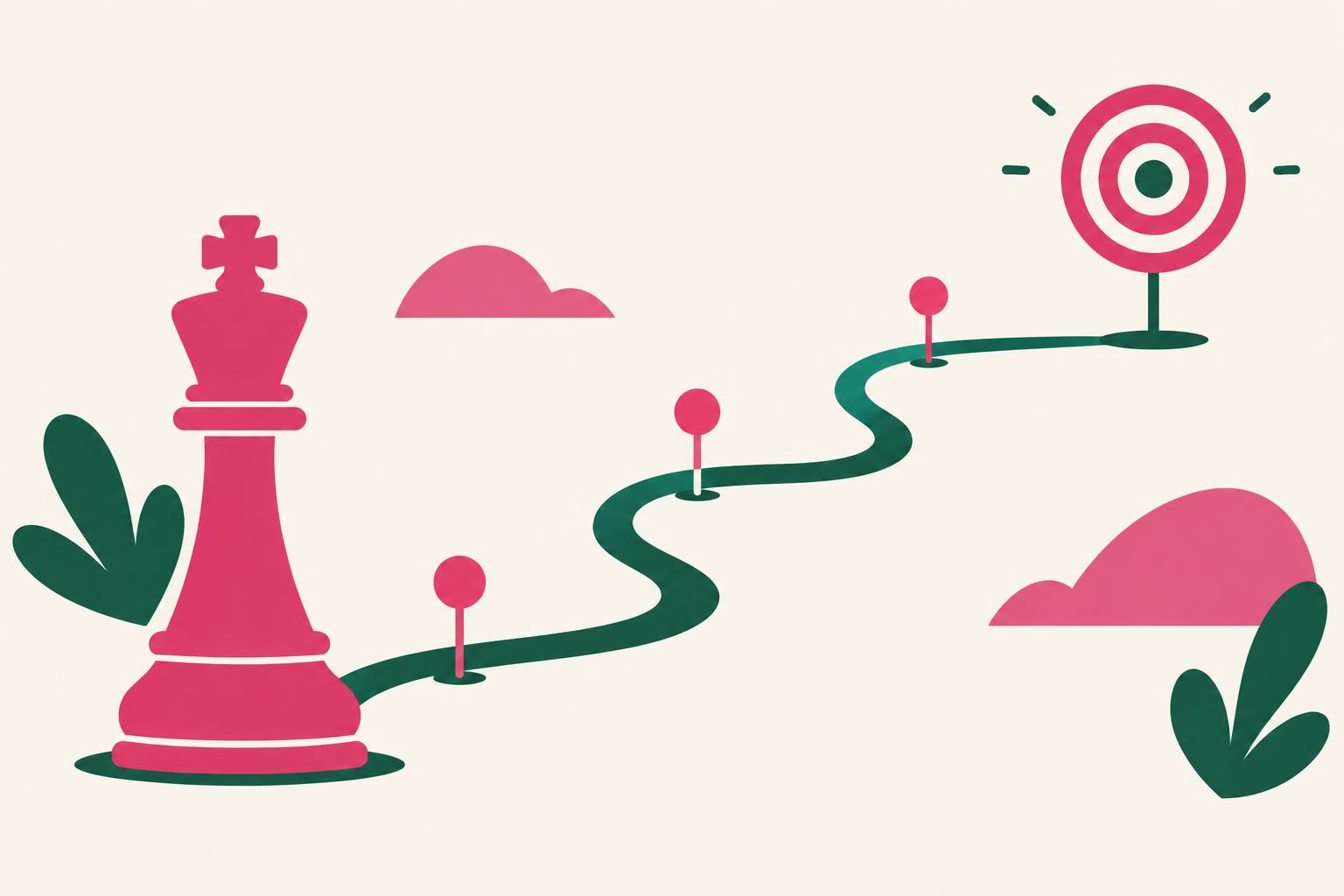
Most SaaS marketing “strategies” are really a list of tactics: post on LinkedIn, start a blog, try Google Ads, maybe do a Product Hunt launch. Each gets a few weeks of effort, none gets enough to work, and the founder concludes marketing is a lottery.
A real strategy is a set of choices: who you're for, what you say, and which few channels you commit to until they work. Having worked with SaaS brands like GoHighLevel, Semrush, Freepik, and Hedra as a creator, I've seen what the winners have in common — and it's focus, not budget.
What a SaaS Marketing Strategy Is
A SaaS marketing strategy is the plan for how a software company attracts, converts, and retains customers profitably. It connects your ideal customer, positioning, pricing model, growth motion, channels, and metrics into one system.
Why SaaS Marketing Is Different
- Recurring revenue: you earn over months, so retention matters as much as acquisition.
- Invisible product: buyers can't touch software — they need to see it working, which is why video is so powerful.
- Free trials and freemium: the product itself is part of the marketing funnel.
- Unit economics: customer acquisition cost (CAC) must be recovered by lifetime value (LTV).
A widely used benchmark is an LTV:CAC ratio of about 3:1, popularized in David Skok's SaaS Metrics 2.0 guide.
Step 1: Define Your Ideal Customer Profile (ICP)
Your ICP is the specific type of customer who gets the most value from your product and pays the most reliably. “Small businesses” is not an ICP. “Marketing agencies with 3–15 employees who manage client funnels” is.
| Question | Example answer |
|---|---|
| Who buys? | Agency owner |
| Who uses it daily? | Account managers |
| What triggers the search? | Losing clients to slow follow-up |
| What do they use today? | Spreadsheets + 4 separate tools |
| Where do they learn? | YouTube tutorials, Facebook groups, podcasts |
| What words do they use? | “all-in-one CRM”, “white label” |
Step 2: Positioning and Messaging
Positioning is how your product is understood relative to alternatives. April Dunford's positioning framework is the best practical resource: define competitive alternatives, unique attributes, the value they enable, and who cares most.
Step 3: Choose Your Growth Motion
| Motion | Typical price | How customers buy | Marketing focus |
|---|---|---|---|
| Product-led (PLG) | Low–mid | Self-serve trial or freemium | Content, SEO, video, creators |
| Sales-led | High | Demo + sales team | Outbound, events, case studies |
| Community-led | Varies | Peer recommendation | Community, creators, education |
| Hybrid | Mid–high | Self-serve + sales for larger accounts | Content + sales enablement |
OpenView's research on product-led growth is a good primer if you're deciding between PLG and sales-led.
Step 4: Pick One or Two Channels
Use the SaaS marketing channels comparison to choose by demand, proof and buying friction. For consumer subscriptions, the B2C customer acquisition playbook follows the journey through first value and retention.
The book Traction describes the Bullseye framework: brainstorm every channel, test a few cheaply, then focus on the one that works. Most early SaaS companies fail by spreading effort across ten channels.
| Channel | Time to results | Cost | Compounds? |
|---|---|---|---|
| SEO / content | 3–9 months | Low–medium | Yes |
| YouTube tutorials | 1–6 months | Low–medium | Yes |
| Short-form video / UGC | Weeks | Low | Partly |
| Creator partnerships | Weeks | Medium | Yes (if affiliate) |
| Affiliates | 2–6 months | Paid on results | Yes |
| Paid search | Days | High | No |
| Paid social | Days | Medium–high | No |
| Outbound | Weeks | Medium | No |
Step 5: Build a Content and Video Engine
Content is the backbone of most efficient SaaS marketing because it compounds: every useful article or video keeps bringing in buyers. I wrote a full SaaS content marketing playbook on this.
Video deserves special attention because software is hard to understand from text. Start with tutorials for your core workflows and short problem–solution clips. See the SaaS video marketing guide for channels and the SaaS video production guide for how to make them.
For SEO fundamentals, Google's own Search Essentials and its guidance on helpful, people-first content are the best starting points.
Step 6: Creators, UGC, and Affiliates
Creators give you two things you can't easily build yourself: trust and an existing audience. For SaaS, three models work especially well:
- UGC content: authentic videos you run on your channels and ads — covered in user generated content for SaaS products.
- Sponsored placements: your product featured to a niche creator's audience.
- Affiliate programs: creators paid on results, producing content that compounds. My GoHighLevel case study shows how one affiliate generated over $100K in lifetime value.
Creator tutorial example
Loading this video connects to www.youtube-nocookie.com, which may collect your IP address and use cookies.
Step 7: Paid Acquisition (When You're Ready)
Paid ads amplify what already works; they rarely fix unclear positioning. Run ads once you know which message converts organically. UGC-style creatives usually outperform polished brand ads on social feeds.
| Signal | Meaning |
|---|---|
| Organic content converts to trials | You have a proven message to amplify |
| Trial-to-paid rate is stable | Your funnel won't leak ad spend |
| You know your LTV | You can set a sane CAC ceiling |
Step 8: The Metrics That Matter
| Metric | Definition | Why it matters |
|---|---|---|
| CAC | Sales + marketing spend ÷ new customers | Cost of growth |
| LTV | Average revenue per account × gross margin ÷ churn | Value of a customer |
| LTV:CAC | LTV divided by CAC | Efficiency (aim for ~3:1) |
| CAC payback | Months to recover CAC | Cash efficiency |
| Activation rate | % of signups reaching the “aha” moment | Product-marketing fit |
| Net revenue retention | Revenue kept + expanded from existing customers | Long-term health |
If you want an experienced outside view on these choices, a SaaS marketing consultant can pressure-test your ICP, positioning and channel plan.
A 90-Day SaaS Marketing Plan
| Days | Focus | Deliverables |
|---|---|---|
| 1–15 | Foundations | ICP, positioning, homepage message, analytics + UTMs |
| 16–30 | Channel tests | 3 tutorials, 10 short videos, 2 SEO articles |
| 31–60 | Double down | Scale the winning channel, brief 2–3 creators or UGC videos |
| 61–90 | Systemize | Affiliate program, paid tests on winning creatives, monthly review |
SaaS Marketing Strategy FAQ
How much should a SaaS company spend on marketing?
It varies widely by stage and motion. Early companies should focus on cheap, compounding channels first, then scale spend once CAC and LTV are known.
What's the best first channel for a new SaaS?
The one where your ICP already learns. For many B2B and prosumer tools, that's YouTube tutorials and search-driven content.
How long until marketing works?
Short-form and paid can show signals in weeks. SEO, YouTube, and affiliates usually take months but keep compounding.
Share
Article footer · AI discovery
Want to explore this topic further?
Ask questions about this article or use it as a starting point for deeper research.
Want content that makes your SaaS product click?
Email promotions@fuelyourdigital.com or explore my content packages.