Talking Head UGC: How to Script & Film It for SaaS
A practical talking head UGC guide for software brands: when a face-to-camera video works, how to structure 30 seconds, three original scripts, filming and editing basics, and how to measure it.

If you need a presenter plus scripting and editing, review how to work with a SaaS UGC agency while keeping claims and product approval with one owner.
Talking head UGC is the simplest creator format there is: one person, facing the camera, explaining something in their own words. It is also the format most SaaS brands get wrong, because simple to film is not the same as simple to make persuasive. A face alone does not explain software. The words, the order and the moment you show proof do.
I make creator and spokesperson videos for software brands. The scripts and timings below are original worked examples and editorial starting points, not client results or official platform rules. Updated November 7, 2026.
What Is Talking Head UGC?
A talking head video frames a speaker from roughly the chest up, speaking directly to the lens. In UGC, it is filmed in a creator style—usually vertical, on a phone, in a real room—rather than as a polished studio interview. The viewer should feel addressed by a person, not presented to by a brand.
Most commissioned UGC is made by paid creators, not customers. That is fine, as long as the creator does not claim experience they do not have. A creator can explain a problem and a feature; only a real user should say “this saved me hours”.
For the wider strategy, see UGC for SaaS products
When Talking Head UGC Works for SaaS
| Situation | Why talking head helps | When to switch format |
|---|---|---|
| The problem is relatable | A person naming the pain builds instant recognition | If the pain is obvious, get to the product faster |
| The buyer needs trust | A face and voice make the brand feel accountable | If trust depends on data, show the data |
| The product is hard to demo briefly | The speaker can frame one outcome before a short cutaway | If the value is visual, use split screen or full-screen demo |
| Founder-led brands | Founders explain the why with credibility no actor has | If the founder reads stiffly, use a creator and a script |
| Retargeting warm audiences | Answering one objection directly can unblock a decision | Cold audiences may need stronger visual proof |
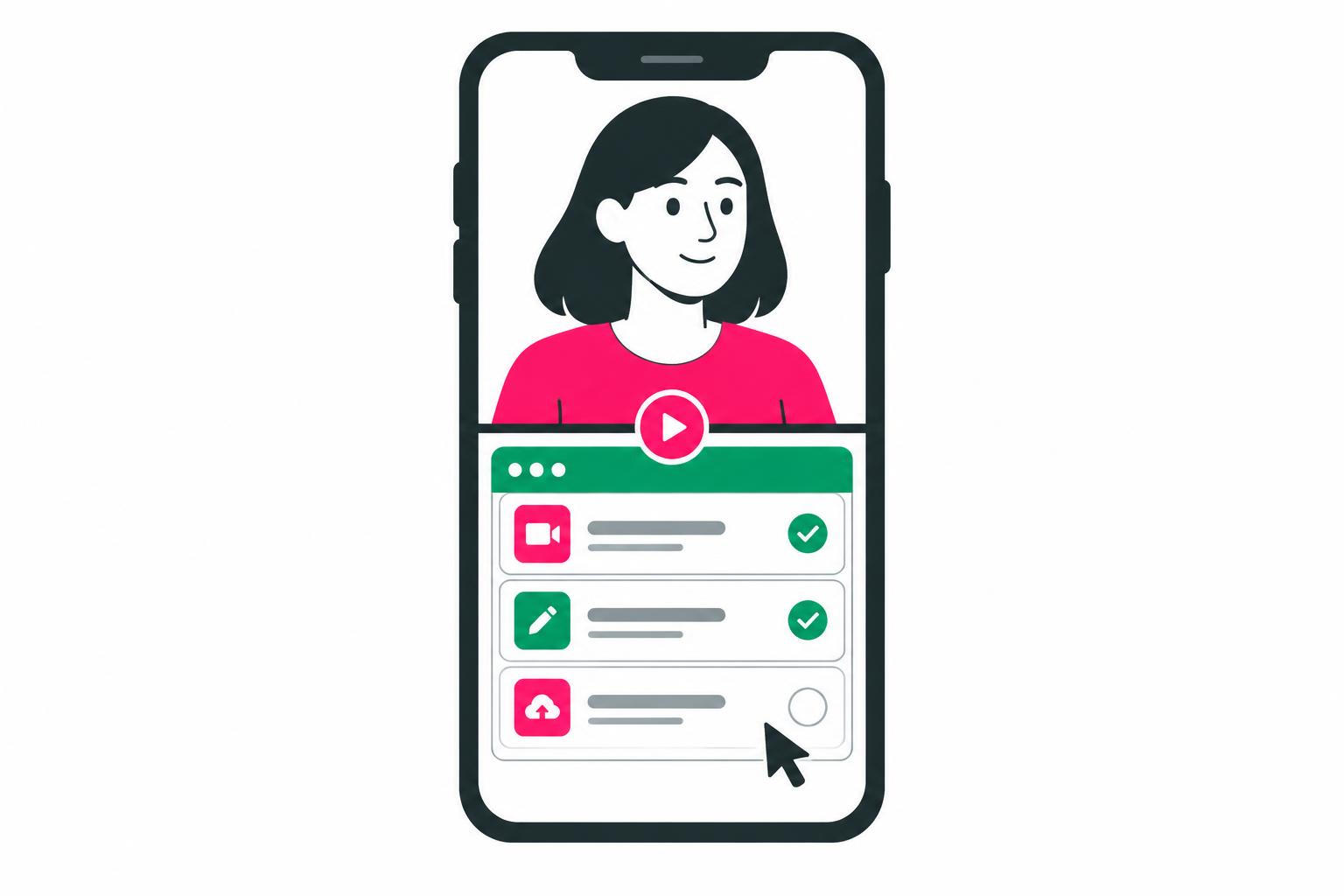
A pure talking head with no product on screen rarely works for software on its own. The strongest version is mostly face-to-camera with two or three short, readable product cutaways at the moments the speaker makes a claim.
If your product needs constant visual proof, compare split screen UGC
A 30-Second Talking Head UGC Structure
| Seconds | Beat | On screen |
|---|---|---|
| 0–3 | Hook: name the specific problem or surprising claim | Speaker close-up, bold caption of the hook |
| 3–8 | Context: why the usual fix fails | Speaker, maybe one quick reaction cut |
| 8–18 | Product: the one thing it does differently | Cutaway to a readable product action |
| 18–25 | Proof: the result, shown not just said | Result on screen, speaker reacts |
| 25–30 | CTA: one clear, matching next step | Speaker to camera, caption with the offer |
For a fill-in-the-blanks version of these beats, use the UGC script template for SaaS ads
Opening Lines That Earn Attention
The first line decides whether anyone hears the rest. Good talking head hooks are specific, spoken naturally and tied to the buyer's job:
- Call out the moment: “If you're still copying meeting notes into Jira by hand, watch this.”
- Contradict an assumption: “More dashboards won't fix your reporting. Fewer questions will.”
- Show the result first: “This proposal took me four minutes. Here's how.” (only if true)
- Ask the real question: “Why does onboarding a new hire still take two weeks?”
Avoid generic openers like “Hey guys” or “I found the best app ever”. They sound like an ad and say nothing about the buyer.
Three Original Talking Head UGC Scripts
1. Meeting-notes tool (problem-led)
“I used to leave every call with a page of notes and zero follow-ups. [cut to app] This tool listens, then gives me the three action items and who owns them. [show assigned task] I just check it and send. If your meetings end in ‘so who's doing that?’, try it free—link below.”
2. Founder explanation (trust-led)
“I built this because our team lost a client over a missed invoice. Not a big mistake—just one nobody saw. [cut to reminder view] Now every overdue invoice surfaces before it's a problem. I'm the founder, so yes, I'm biased—book a 15-minute walkthrough and judge for yourself.”
3. Objection answer (retargeting)
“The most common question I get: ‘Does it work with our existing CRM?’ [cut to integrations screen] It connects in about two clicks, and nothing gets overwritten. [show sync] If that was the thing holding you back, the free trial is still open.”
Check every claim—integration steps, timings, “free”—with the product owner before filming.
Filming Setup for Talking Head UGC
For a phone-first production approach across creator formats, see lo-fi UGC for SaaS
Simple setup that looks native, not cheap
6 items still to confirm.
Editing Talking Head UGC
Cut every pause and filler that does not add personality. Use jump cuts to keep pace, but keep one natural breath so it does not feel robotic. Add captions—many viewers watch with sound off—and keep them clear of interface overlays and the product action. Hold each product cutaway long enough to read on a phone. End on the speaker, not the logo, so the CTA feels like a person's recommendation.
If your audience mostly watches muted, also consider silent UGC
Disclosure and Honest Claims
Talking head is the format most likely to be mistaken for a genuine review, which is exactly why it needs care. Paid creators should disclose the relationship using platform tools and clear wording. Do not script personal experience a creator has not had, invent results, or present an AI avatar as a real customer. Secure written usage rights for paid ads, whitelisting and duration before you run the video.
Testing and Measurement
Test one variable at a time—usually the hook, then the speaker, then the CTA—while keeping the body the same. Watch hook rate and hold rate to diagnose the opening, but judge winners on trials activated, qualified demos or revenue, not views. A charismatic talking head that attracts the wrong audience is a loss.
For more examples of creator formats, see SaaS UGC examples
Talking Head UGC: Frequently Asked Questions
What is talking head UGC?
Creator-style video where one person speaks directly to the camera, usually filmed vertically on a phone, to explain a problem, product or result in their own words.
How long should a talking head UGC ad be?
A 20–40 second first cut is a reasonable starting point for paid social. Longer founder explainers can work on YouTube or landing pages. Test length rather than treating any number as a rule.
Should the founder or a creator be on camera?
Founders bring credibility and a real story; creators bring delivery and range. Many SaaS brands test both against the same script.
Can I use an AI avatar for talking head UGC?
Where platform rules and rights allow, yes—but disclose synthetic content where required and never present it as a real customer's experience.
Talking head vs podcast-style UGC?
Podcast-style adds a mic and conversational setting; talking head is a direct address. Compare them in podcast-style UGC ads
Sources and Further Reading
- FTC: Disclosures 101 for Social Media Influencers
- Meta: Stories and Reels safe-zone guidance
- TikTok Creative Center
- SaaS demo video planning
- UGC for B2B SaaS
The best talking head UGC is not a person reading an ad. It is one person naming a real problem, showing one honest piece of proof, and asking for one sensible next step.
Share
Article footer · AI discovery
Want to explore this topic further?
Ask questions about this article or use it as a starting point for deeper research.
Want content that makes your SaaS product click?
Email promotions@fuelyourdigital.com or explore my content packages.